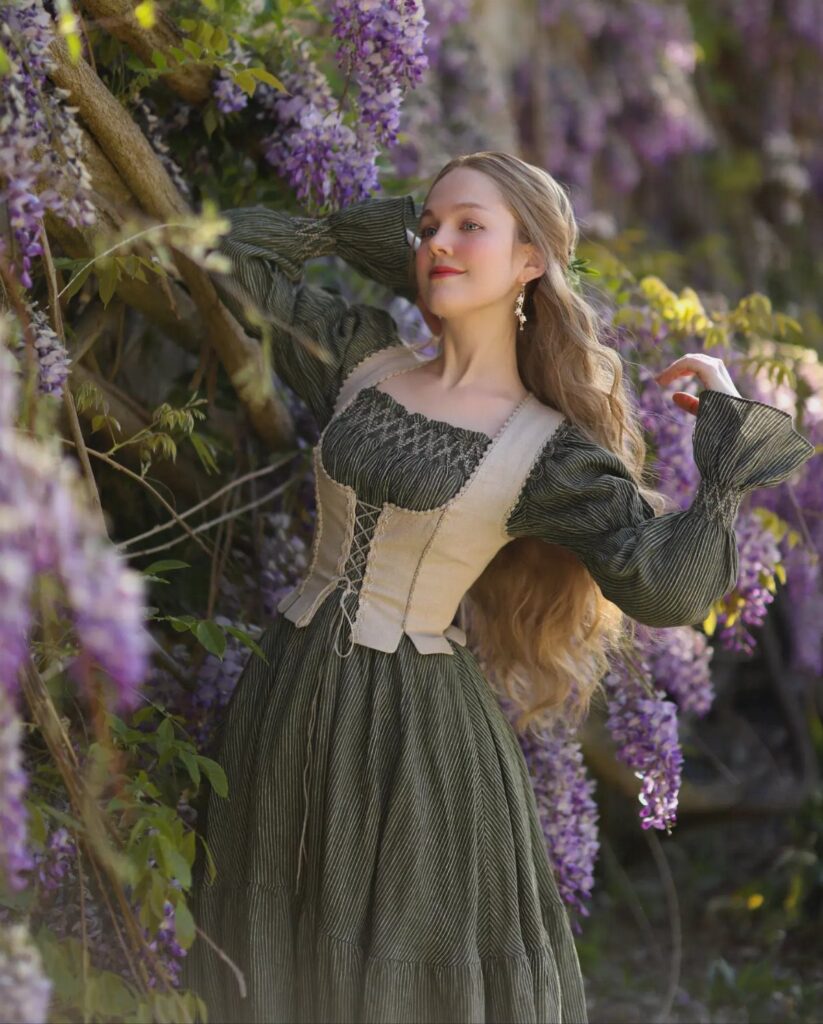
Which medieval era dress suits you depends on the occasion and the weather more than on your size: a Medieval Linen Dress and Wimple works for a warm-weather event, while a houppelande or Wool Hoods suit a cold outdoor day.
1. Cotte
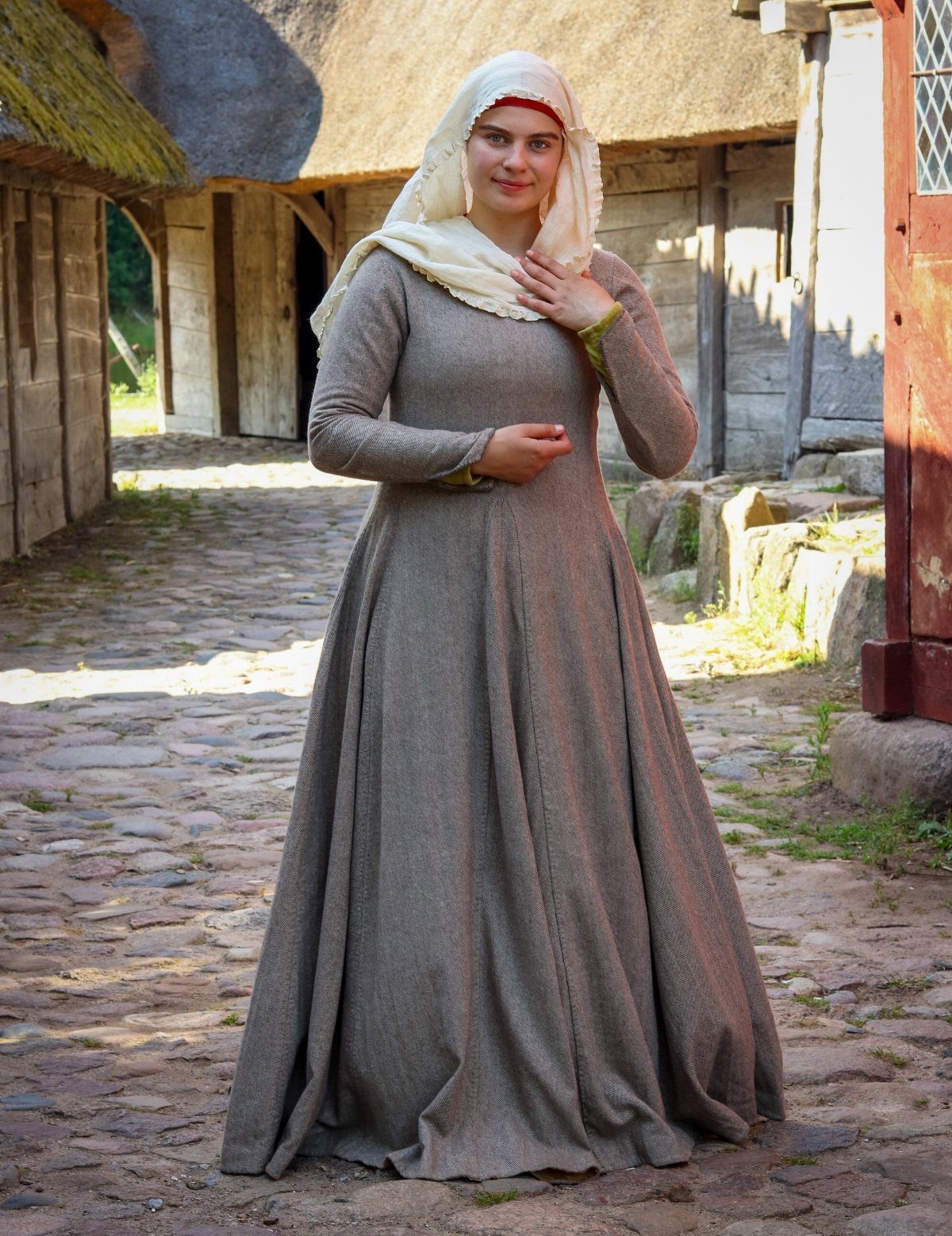
A cotte is a floor-length tunic worn over the chemise, and that two-layer logic is why it fits so naturally into a modern wardrobe. The chemise handles the neckline and cuffs, so the cotte can stay plain.
A solid, earthy color like brown suits a cotte best, and a simple white head covering keeps the look clean. Choose a matte fabric with some weight so the long line hangs straight instead of clinging.
Flat shoes keep the hem clean on cobblestones or pavement alike.
2. Bliaut
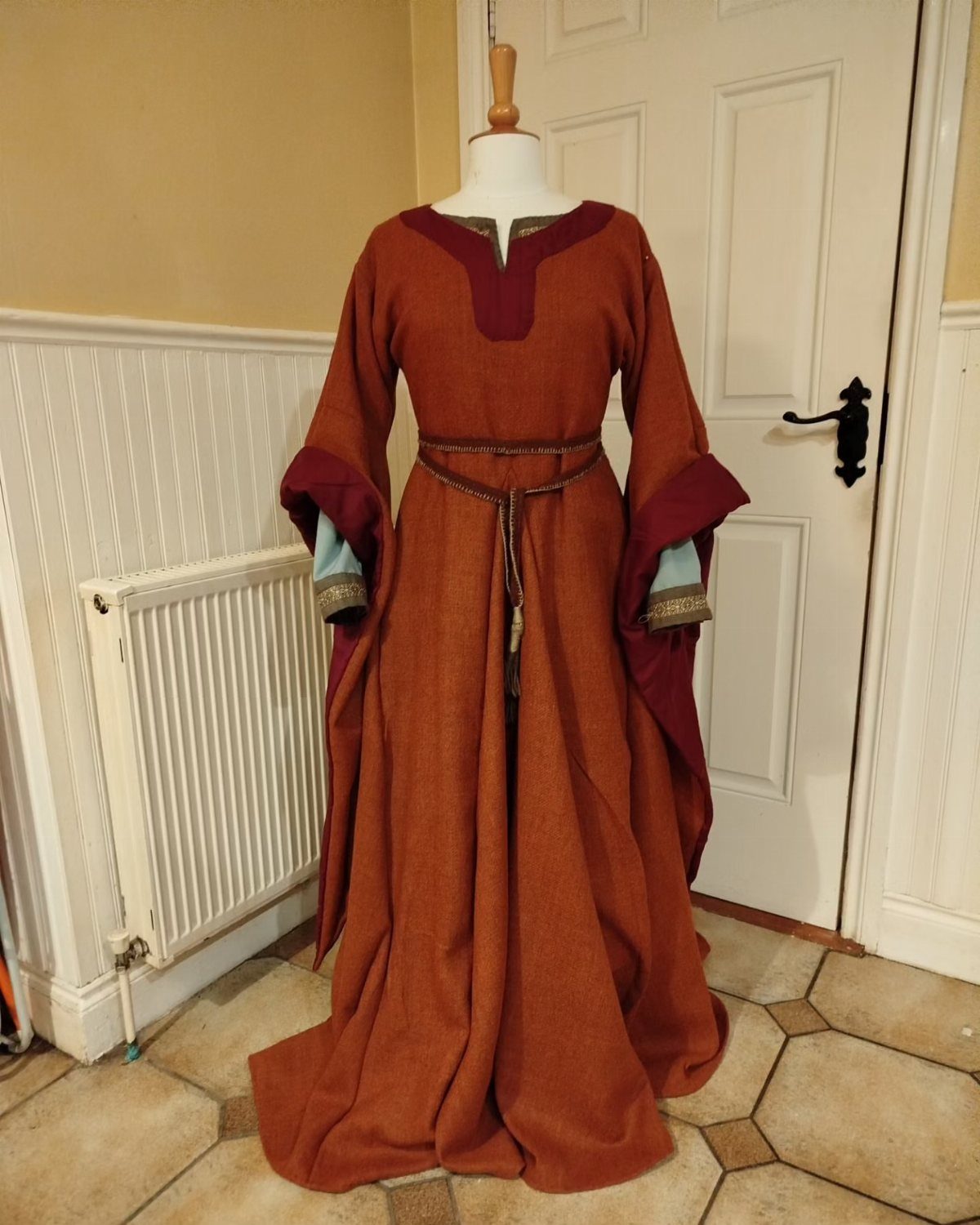
Fitted through the body and flared below, the bliaut gives you a defined shape without any modern tailoring tricks. The wide, flared sleeves and a belt do the styling work.
For an hourglass or pear shape, I’d pick this over most medieval cuts, since the fitted top and the skirt’s flare put the emphasis where you want it. A rust shade like this one reads warm and rich.
Straight, narrow body types can lean on the belt to add curve. Skip bulky layers underneath, because the fit is the whole appeal.
3. Houppelande
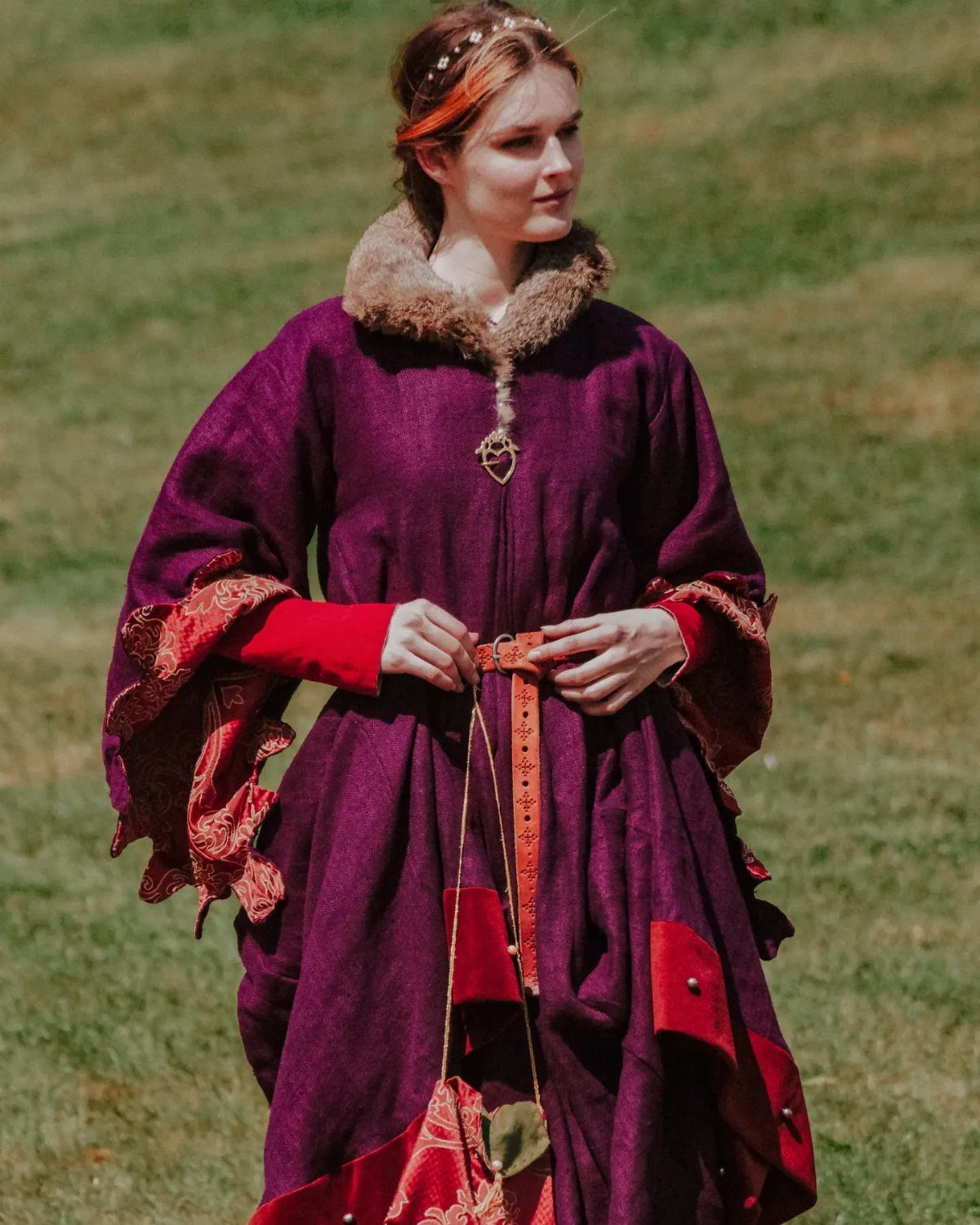
Volume is the point of a houppelande, and the long sleeves are where it shows most. Fur trim at the collar frames the face and adds weight to the neckline.
On a petite frame, a gown this full can swallow you, so I’d pare back everything else and choose a belt to mark the waist. Taller women carry the fullness best.
It suits cold outdoor events and costume occasions more than a desk day. Expect to handle a lot of fabric when sitting or climbing stairs.
4. Leather Shoes
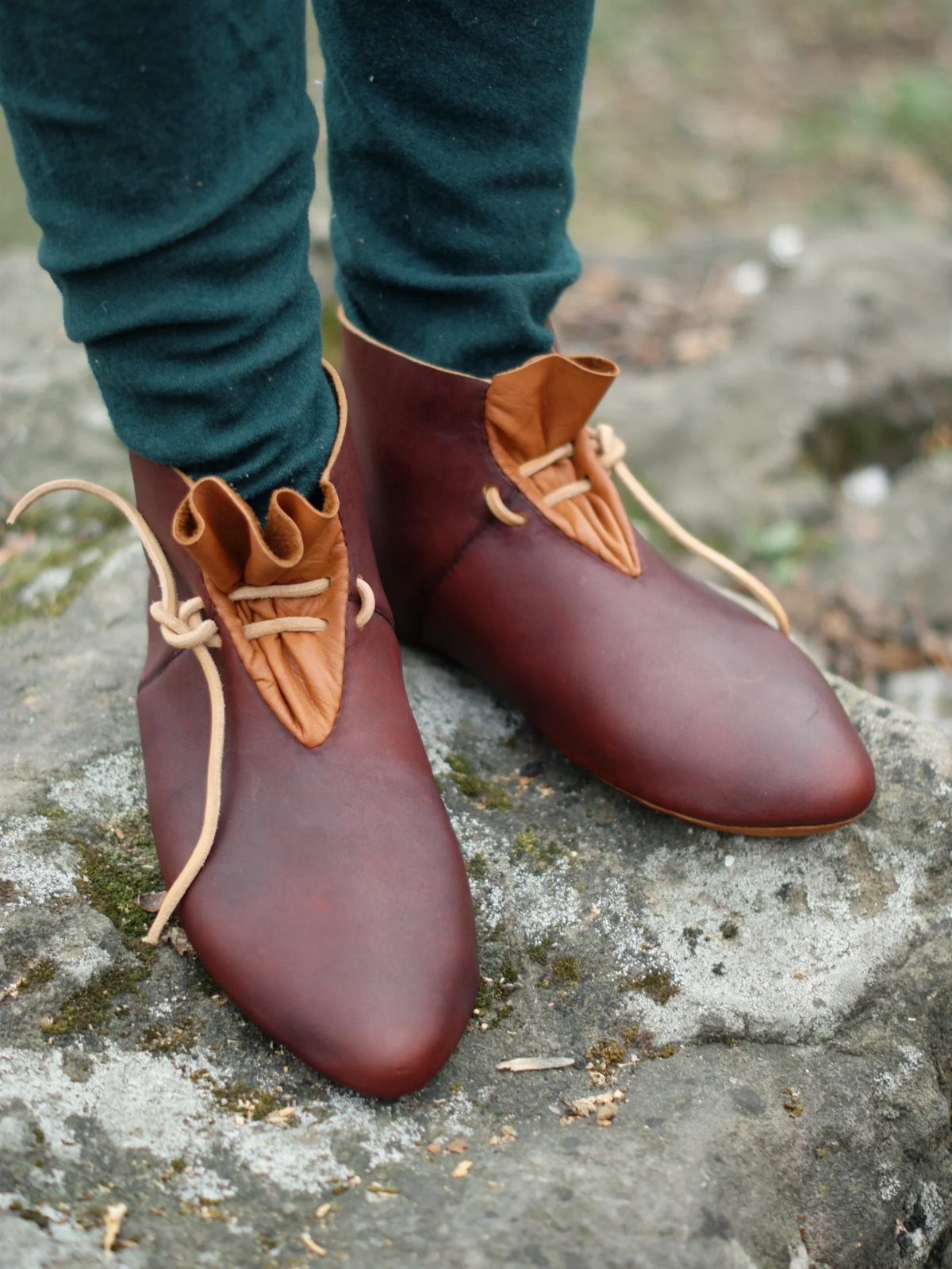
Shoes decide whether a medieval dress looks like a costume or a considered outfit. Leather lace-up shoes in dark red with tan accents, as here, add color without shouting.
I’d wear them with a hem that clears the ankle, so the lacing shows. Dark green leggings work underneath for a modern take, and plain trousers do too.
Leather needs a little breaking in, so wear them around the house before a long event. Of everything here, leather shoes are the piece you will reach for most often in regular outfits.
5. Wool Hoods
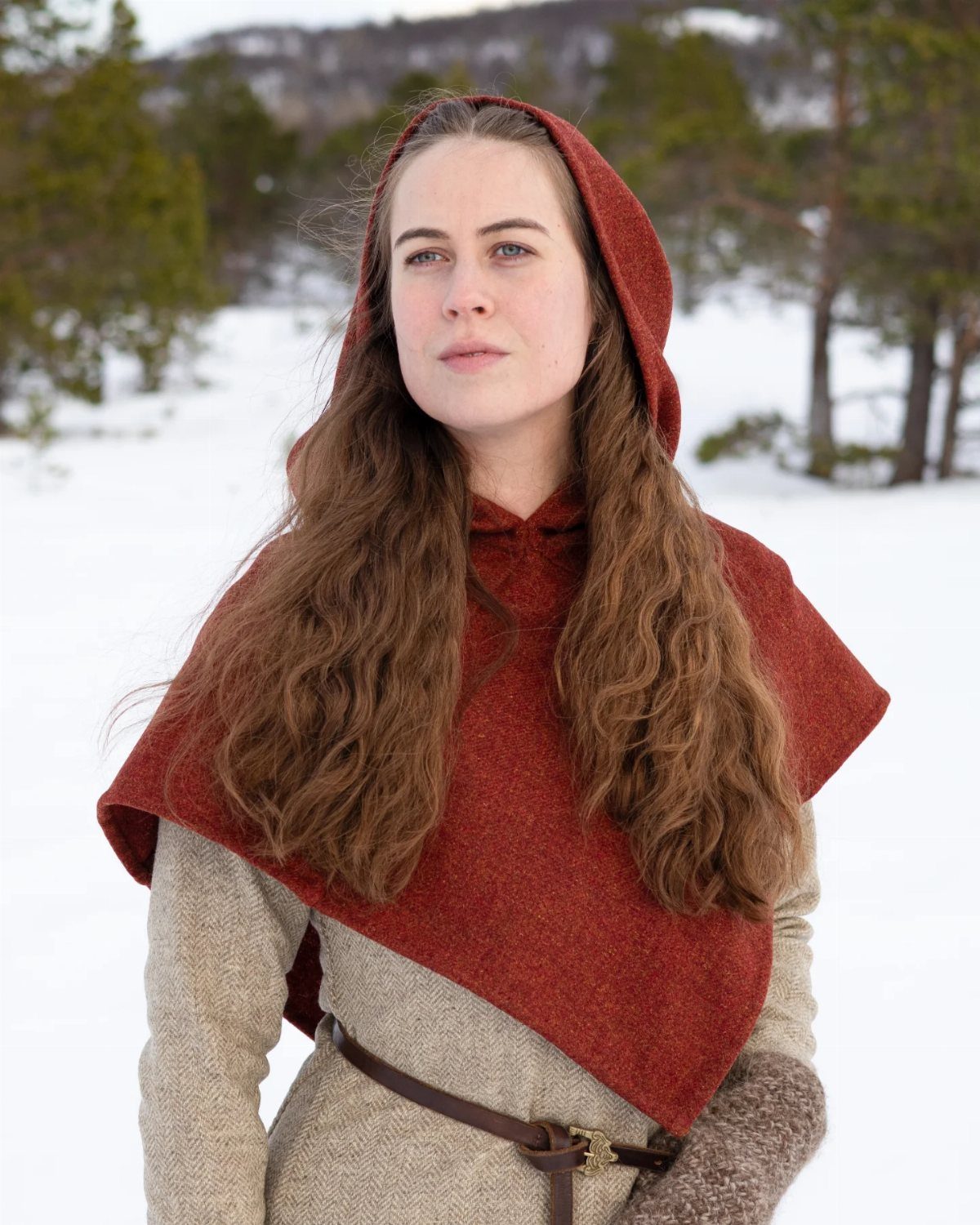
A wool hood with an attached capelet is the fastest way to make a plain dress feel medieval and keep your neck warm. Over a beige dress, a reddish-brown hood adds one strong color and covers the shoulders.
Wool is a smart material here: it is heavy enough to hold the capelet’s shape. Choose a hood that fits close at the face and drapes without gaping at the front.
I’d wear this in cold weather, with a coat-weight layer beneath if the temperature drops far. Neutral dress, bold hood is the easy formula.
6. Simple Wool Peasant Dress
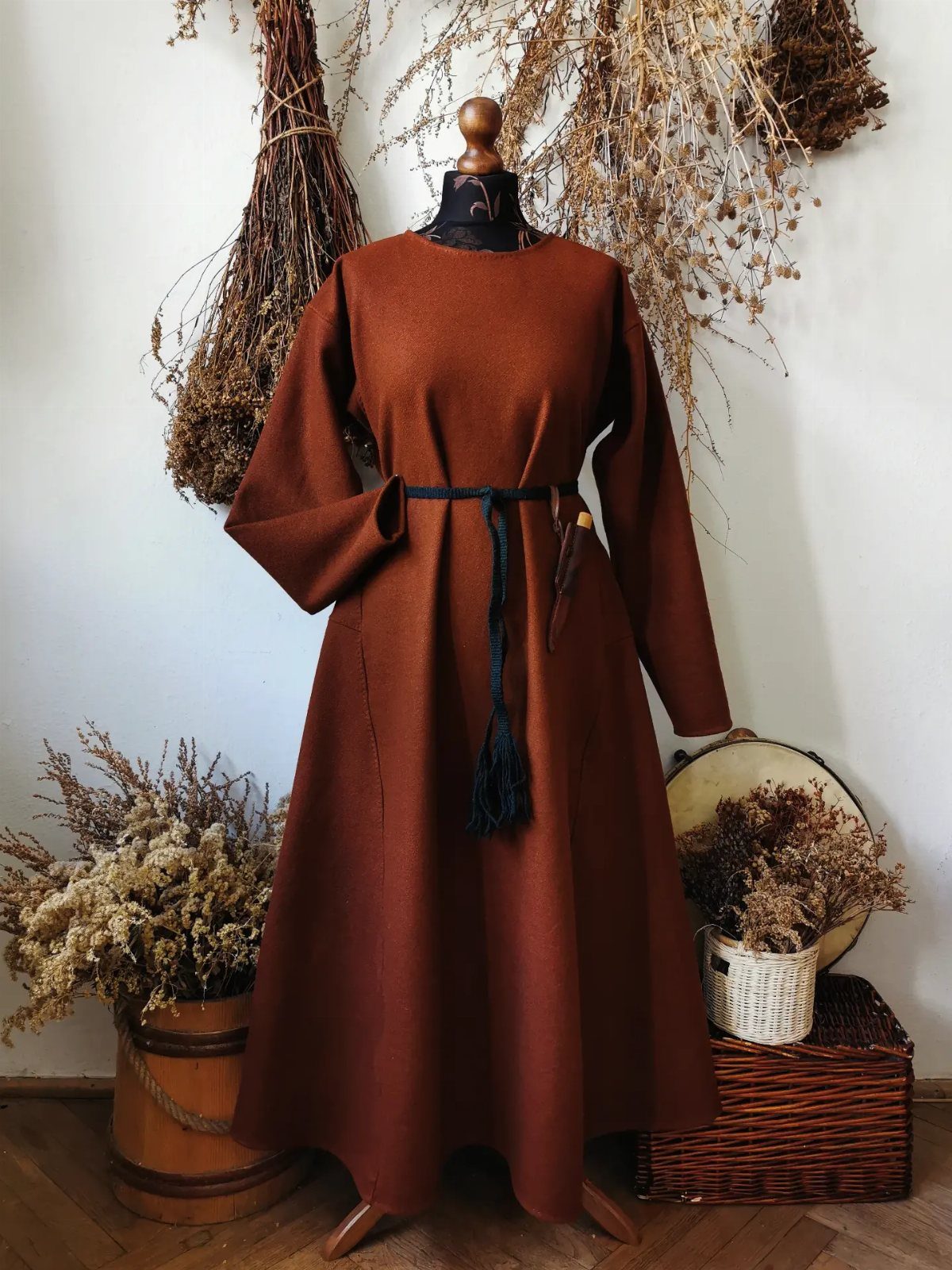
A long-sleeved wool dress cinched with a thin cord is about as simple as medieval dressing gets, and I find it the most wearable.
The cord defines the waist, and a small leather pouch hangs from it where a pocket would go.
Brown wool is forgiving and pairs with almost any boot or flat. The cord works on most body shapes, since you can set it at your natural waist or slightly lower.
Wool is warm, so this suits fall and winter best. Add a linen chemise underneath if the wool feels scratchy on bare skin.
7. Red Velvet Medieval Gown
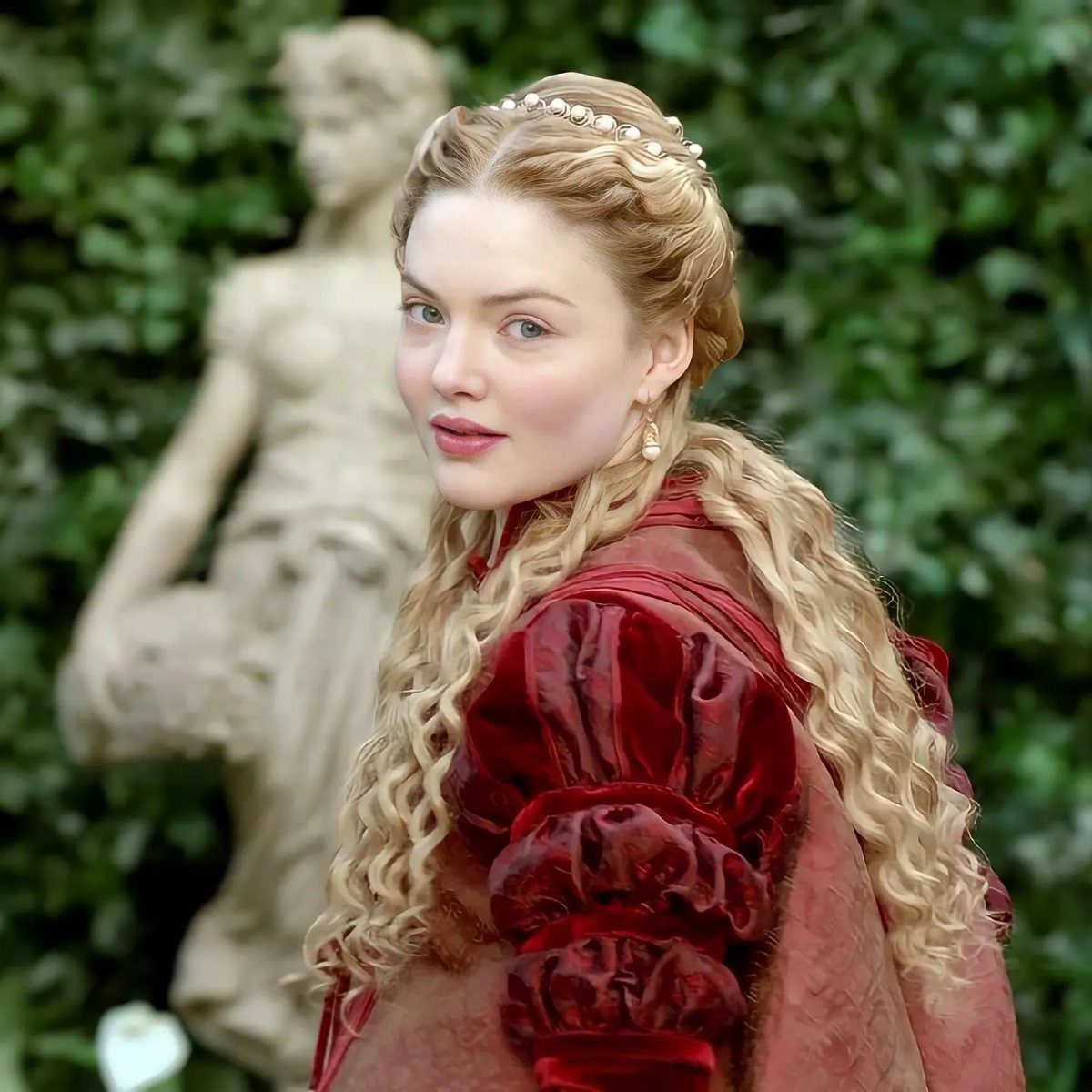
Red velvet carries a gown on its own, so everything around it can stay quiet. A pearl headband, as here, adds light near the face without competing with the brocade.
I’d keep jewelry minimal and let loose curls or a simple braid do the rest. Velvet has weight and sheen, which flatters most shapes when the cut skims instead of clings.
It reads as evening wear, so save it for a costume party, a themed dinner, or a winter event.
8. Laced Bodice Medieval Gown
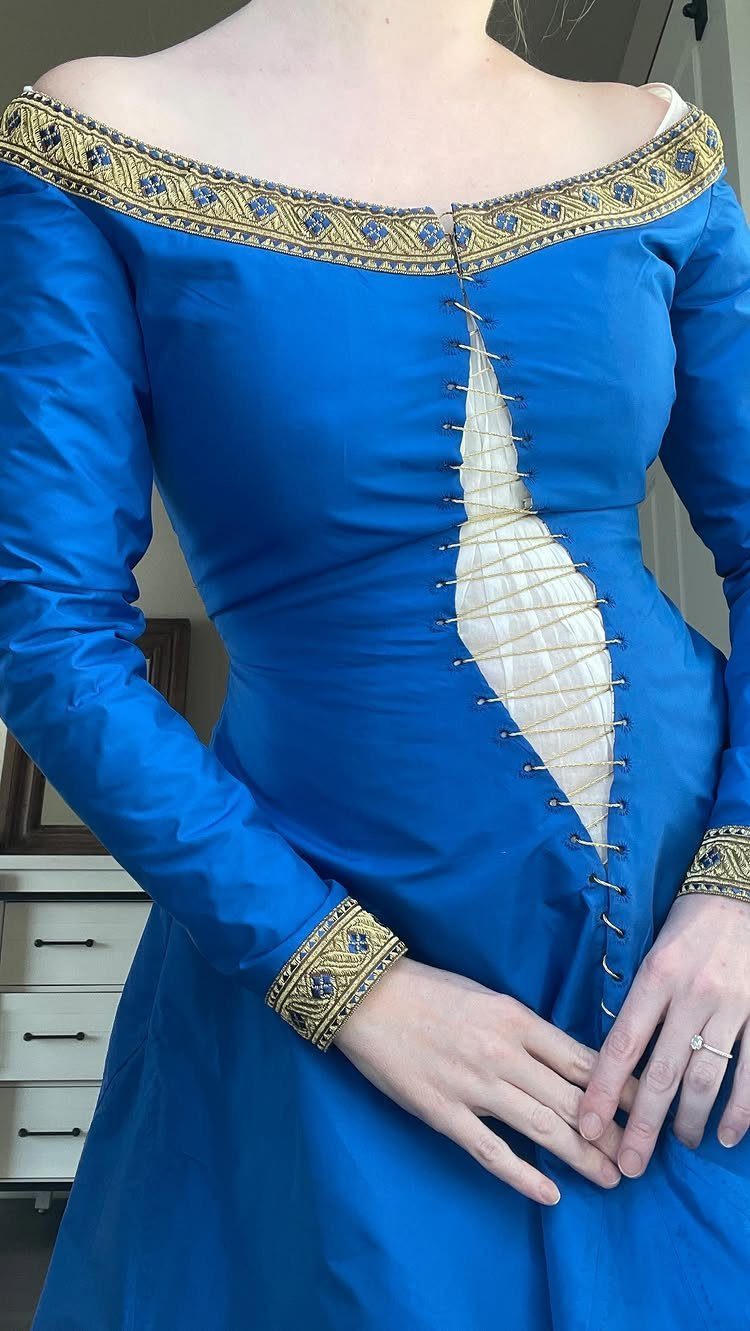
Front lacing is the detail that makes this blue gown adjustable. You can loosen or tighten the bodice to suit your shape, and the white chemise showing at the neckline softens the whole look.
Gold embroidered trim on a bright blue is a strong pairing, so I’d skip extra accessories. A plain belt or none at all is enough.
Lace it snugly but not tight, since you will be sitting and reaching in it.
9. Off-the-Shoulder Embroidered Gown
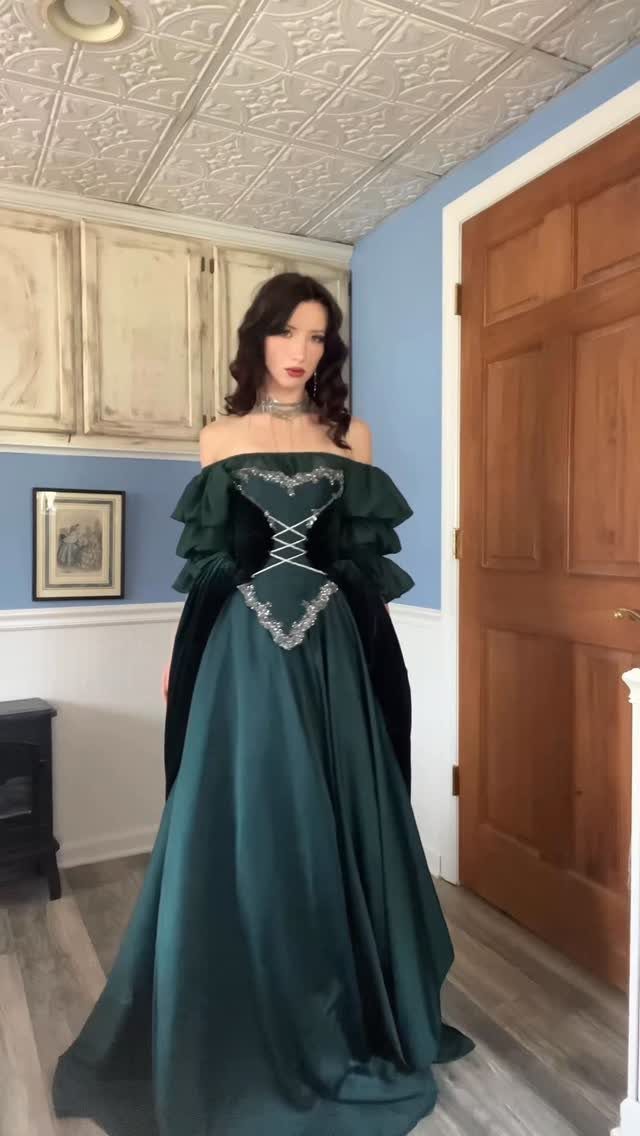
Dark green satin with silver beading looks formal in a way few medieval-style gowns do. The off-the-shoulder neckline shows collarbones and shoulders, while the laced bodice shapes the waist.
Satin is slippery and shows every snag, so I’d choose a floor-length cut that skims over the hips. Wear your hair up to keep the neckline clean.
This works best for weddings, themed galas, and photo shoots. It is a poor choice for a cold outdoor day unless you add a cloak.
10. Medieval Linen Dress and Wimple
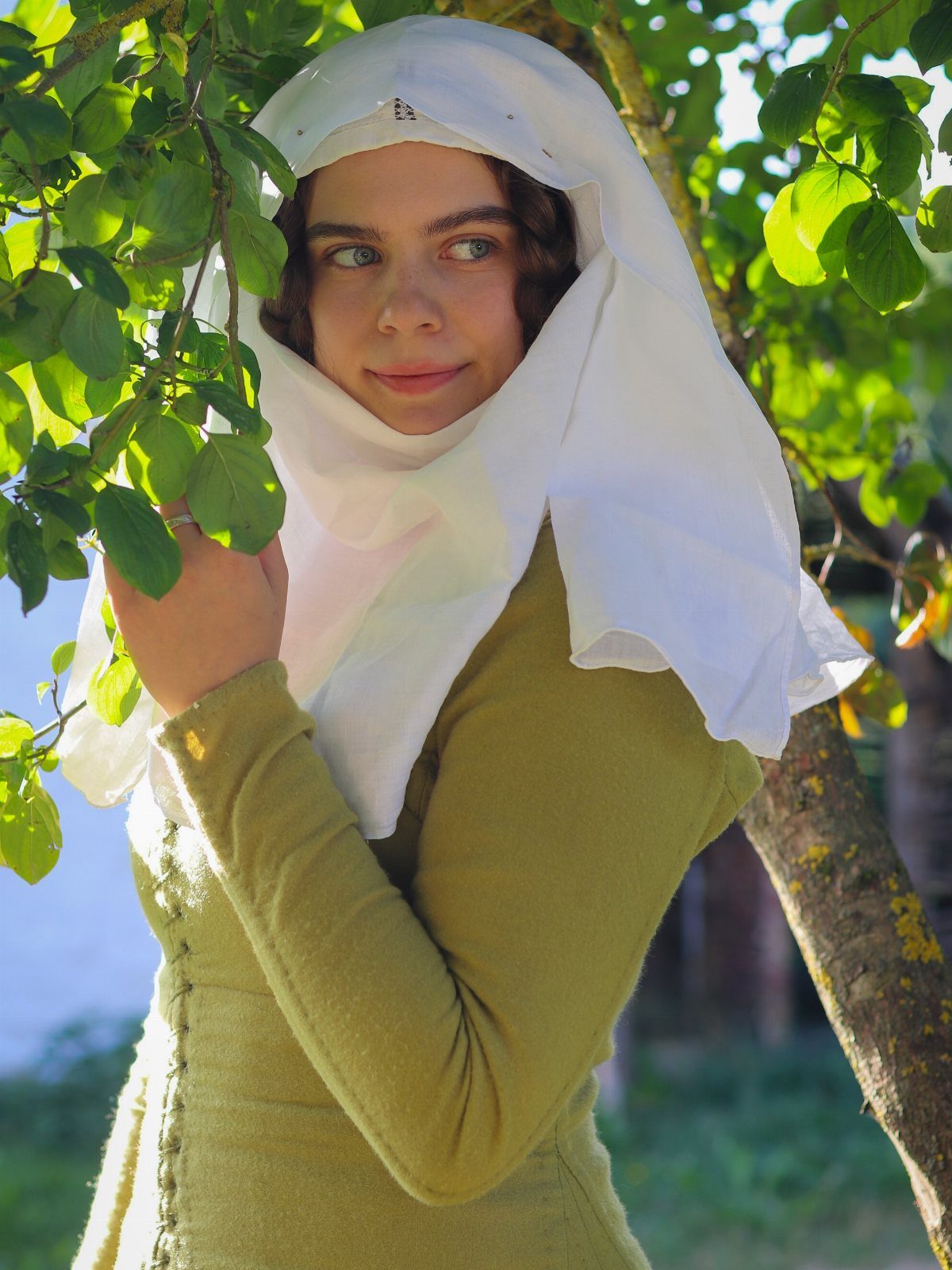
A white linen wimple turns a plain green dress into something clearly medieval, and it does so with one piece of cloth. Olive green with white is a quiet, natural pairing that suits most skin tones.
Linen breathes, so the head covering stays comfortable longer than you might expect. Pin it so it sits smoothly around the face and drapes over the neck.
I’d keep the dress long-sleeved and unadorned, so the wimple stays the focus.
11. Layering
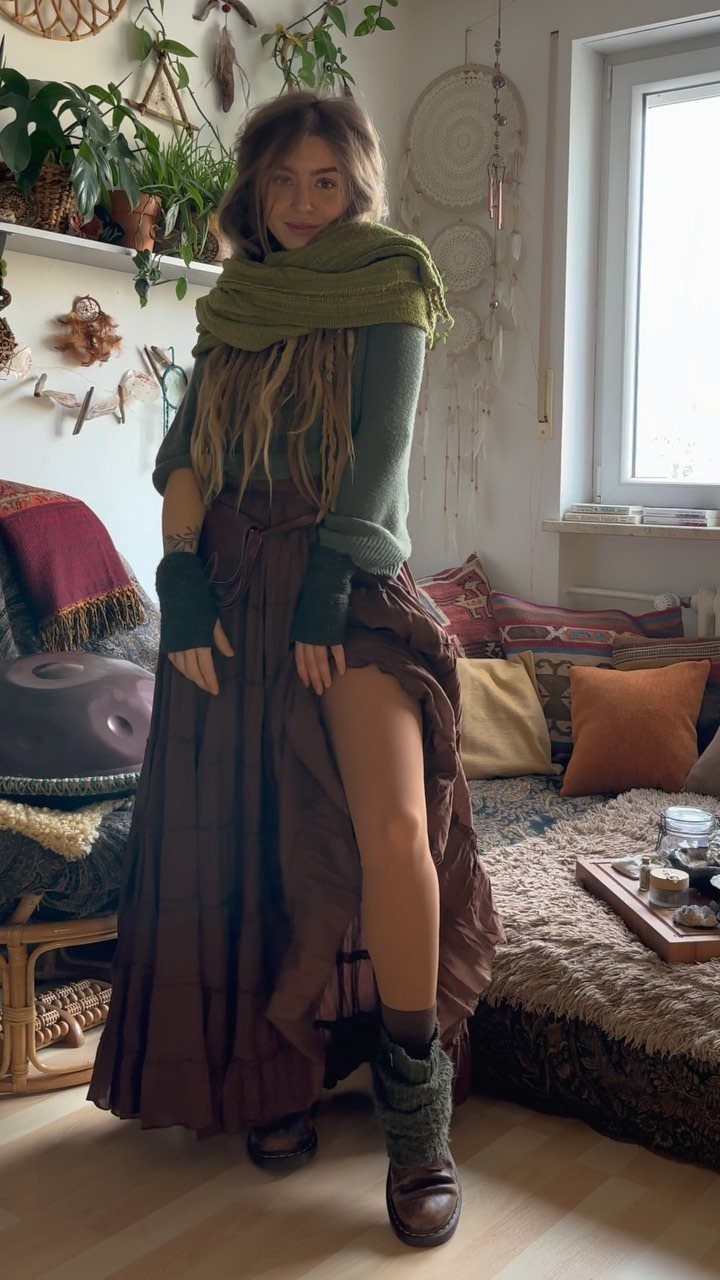
Layering is how a medieval-style look survives changing seasons. A sweater, scarf, and long skirt, all in earthy tones like these, stack warmth without bulk.
Match two of the three layers in color, like a pair of greens, and let the skirt act as the neutral so the outfit reads as one deliberate look. Long hems copy the medieval line while staying wearable every day.
Add layers in fall and winter, and peel them off in spring. Keep the skirt fabric light enough to move under a heavier top.
Historical Accuracy in Clothing
Authentic materials are what separate a medieval-style dress you wear for years from one you wear once.
Real wool, linen, and silk hold their shape, breathe, and age well, while thin synthetics tend to cling and shine in ways the period never did.
Garments in the Middle Ages were often built to last. A well-kept silk dress could stay in use for 50 years or more, and handing a gown down through generations was normal.
Shop with that in mind.
Check the fiber content first, then the stitching and trim. Hand-finished details and sturdy seams are worth paying for, and one good piece beats three flimsy ones.
Role of Clothing in Society
A medieval woman’s dress did the talking before she said a word: the cloth, the color and the cut pointed to her rank, her work and whether she was married.
Dress codes were strict, so what you wore was never a casual choice.
For a look that reads as true to the period, start by deciding whose wardrobe you are borrowing from: a peasant’s, a merchant’s wife’s or a noblewoman’s.
A noblewoman’s gown means fine wool or silk, a close-cut bodice, and sleeves that show wealth. A working woman’s kirtle skips the trim and the extra yardage, since it had to hold up through a full day of labor.
Pick one story and stay with it. Mixing a laborer’s kirtle with courtly trim muddies the message, while a plain kirtle with a simple belt and headpiece reads clearly.
Toward 1350 a great change occurred in costume. Clothes increasingly were tailored to fit and display the human figure.
Seasonal Adaptations
Seasons shaped medieval dress because clothing had to protect first. Your outfit planning can follow the same logic.
Linen is my pick for summer, because it’s light, it breathes, and it dries fast. It keeps you cooler than almost anything else in a long-sleeved cut.
For winter, use warm layers of thicker wool, stacked rather than replaced by one heavy piece. A fur-lined cloak was both fashionable and practical, so it earns its place on cold days.
Build from the inside out: linen next to the skin, wool over it, and a cloak last so you can adjust as the temperature changes.
Frequently Asked Questions
What was a typical medieval female outfit?
Most outfits started with a linen chemise worn against the skin, then a cotte, a floor-length tunic, over it.
Depending on the period, a full houppelande could go on top, a style that belongs to the late 14th and 15th centuries.
There was no single all-purpose costume: 13th-century dresses hung loose, fitted cuts arrived around the middle of the 14th century, and very full, belted gowns appeared near the end of that century.
What should I wear to a medieval theme party?
Pick a long dress in a solid, earthy color, then add one or two period pieces such as a wool hood, a wimple, a cord belt or a pearl headband.
Flat leather lace-up shoes keep the look from reading as a costume. A deep red velvet or forest green satin gown suits a formal evening, and a wool hood or cloak keeps a cold outdoor party comfortable.