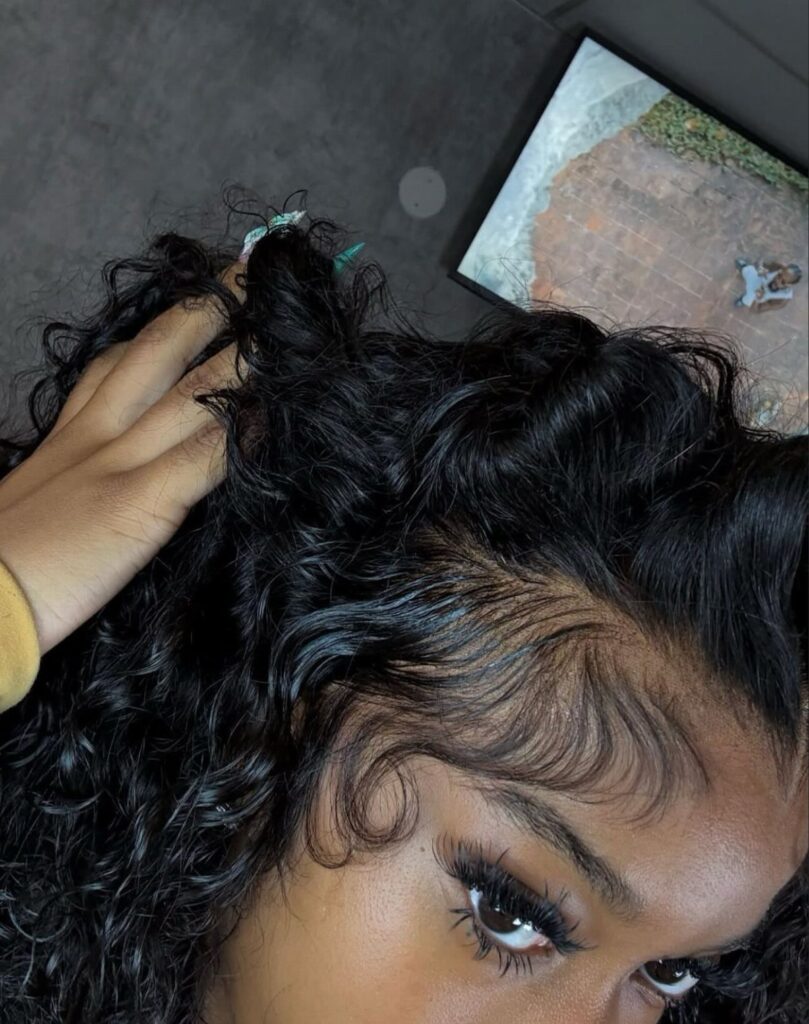
The 6 styles run from curls left almost alone, with only a tiny brush smoothing the hairline, to two high buns that need a clean part and matching height.
Time decides the pick: laid edges or a deep side part take a few minutes, while the paired buns and the face-framing tendrils ask for a mirror and some patience.
If your curls are freshly defined and you don’t want to touch them, choose the style that leaves the pattern alone.
1. Curly Hair with Laid Edges
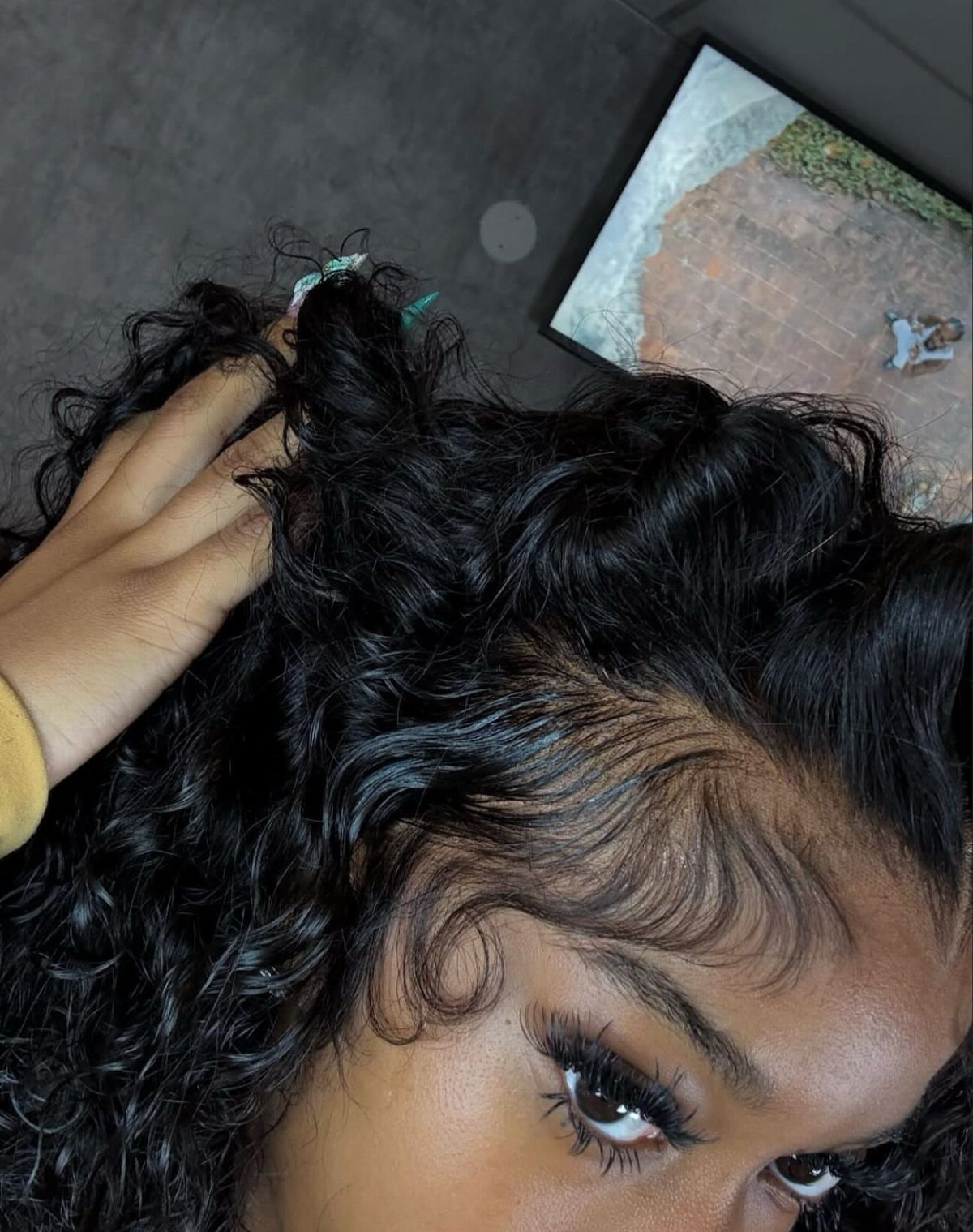
Laid edges work because they give big curls a clean frame. Volume on top and a smooth, sculpted hairline are opposites, and that contrast is what makes the look read as polished.
Keep the curls full and let the edges stay small and deliberate.
Heavy, stiff edges fight with soft curls, so I prefer a light touch and a tiny brush. Smooth them flat along the hairline and leave the rest of the hair untouched.
This suits a casual day, since the curls need almost no extra styling.
2. Half-up Ponytail
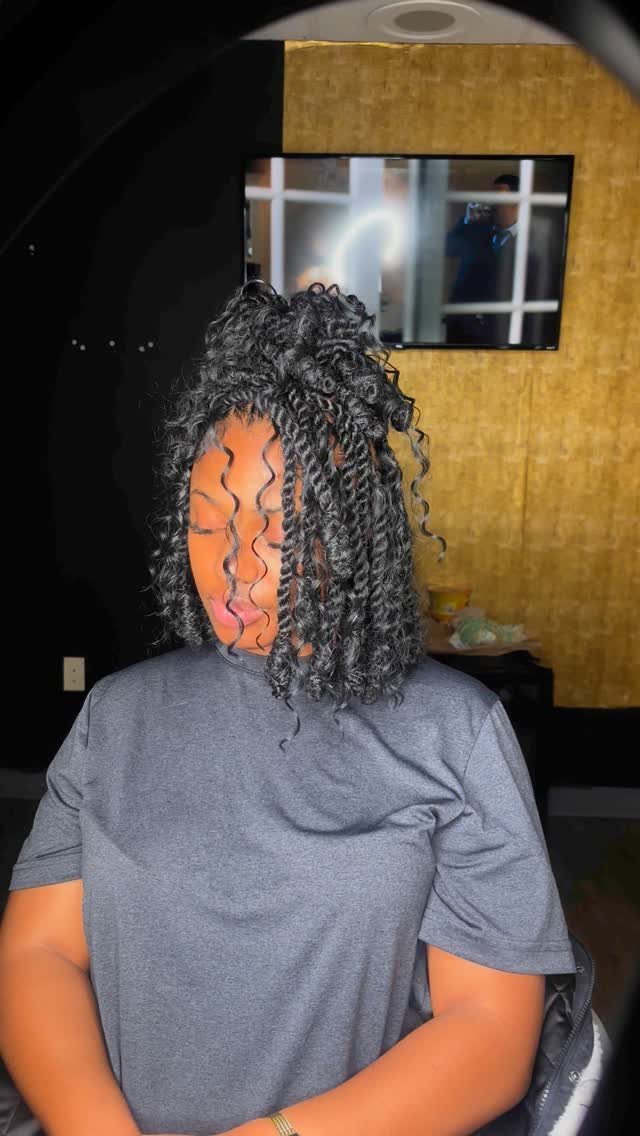
Half-up ponytail is the style I reach for when the hair should look styled but not worked on. With the crown pulled up and the rest hanging in loose curls, the face stays clear and the length stays full.
Gather only the crown section and secure it with a hair tie that matches your hair. Pull a few curls loose around the ponytail so it doesn’t look flat.
It pairs easily with a plain tee, which makes it a good pick for a simple wardrobe.
3. High Curly Bun
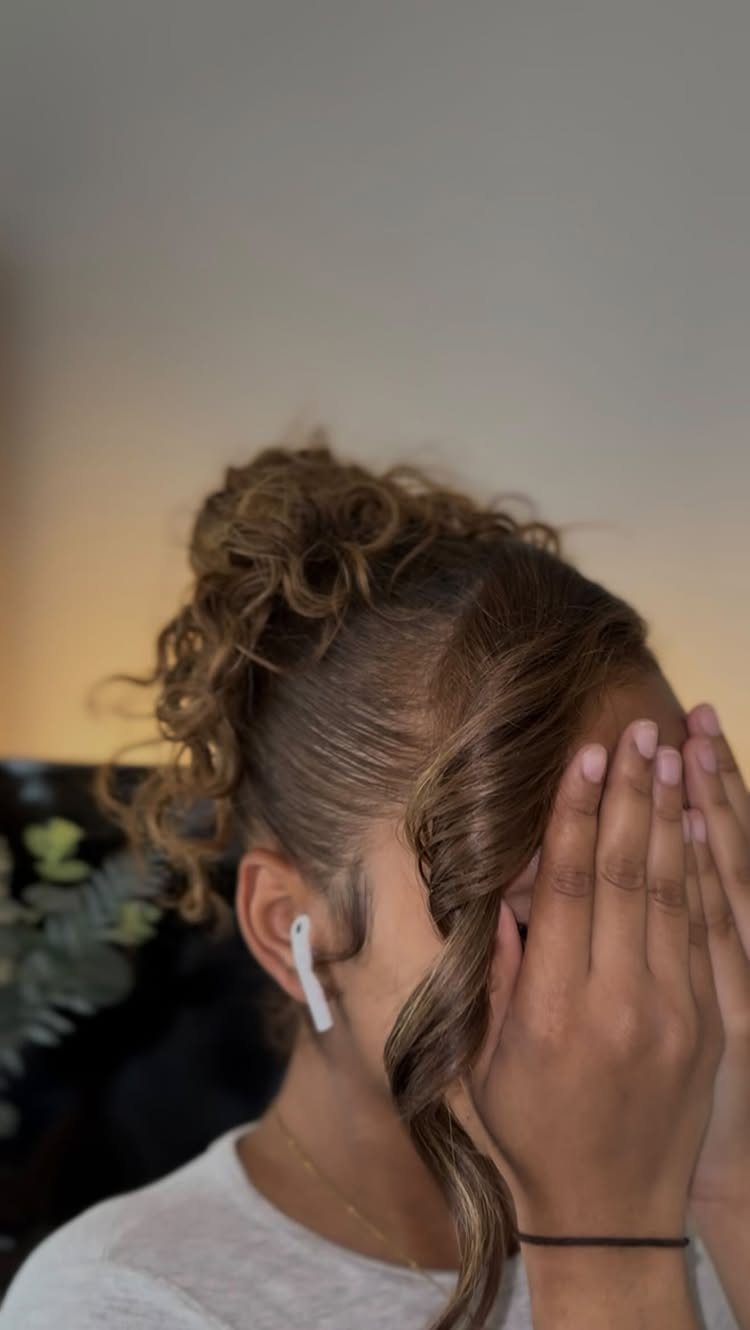
A high curly bun puts all the volume at the crown, and a few loose tendrils keep it from looking severe. Curls make a better bun than straight hair because they pile up into a full shape without any padding.
Pull the hair up high and wrap it loosely. Tight wrapping flattens the curl pattern, so stay gentle.
Leave out one or two strands near each ear for the tendrils. Without them, the bun can feel stiff.
4. Two High Curly Buns
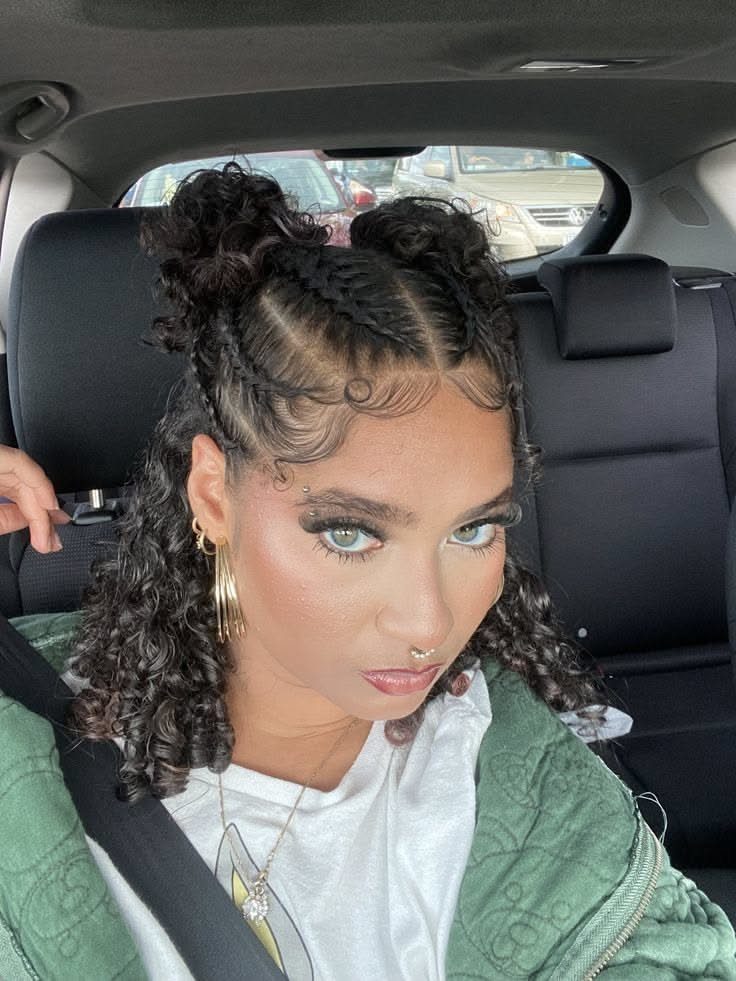
2 high buns turn curls into something playful. Splitting the hair down the middle gives you two compact, rounded shapes, one on each side of the crown.
Part the hair cleanly first, since a crooked part makes the buns look uneven.
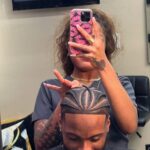
Then match their height and size by eye in a mirror. Adding braids to the style, along with laid edges, gives it a more finished look.
This one skews young and fun, so I’d wear it with simple, casual layers.
5. Loose Curls with Deep Side Part
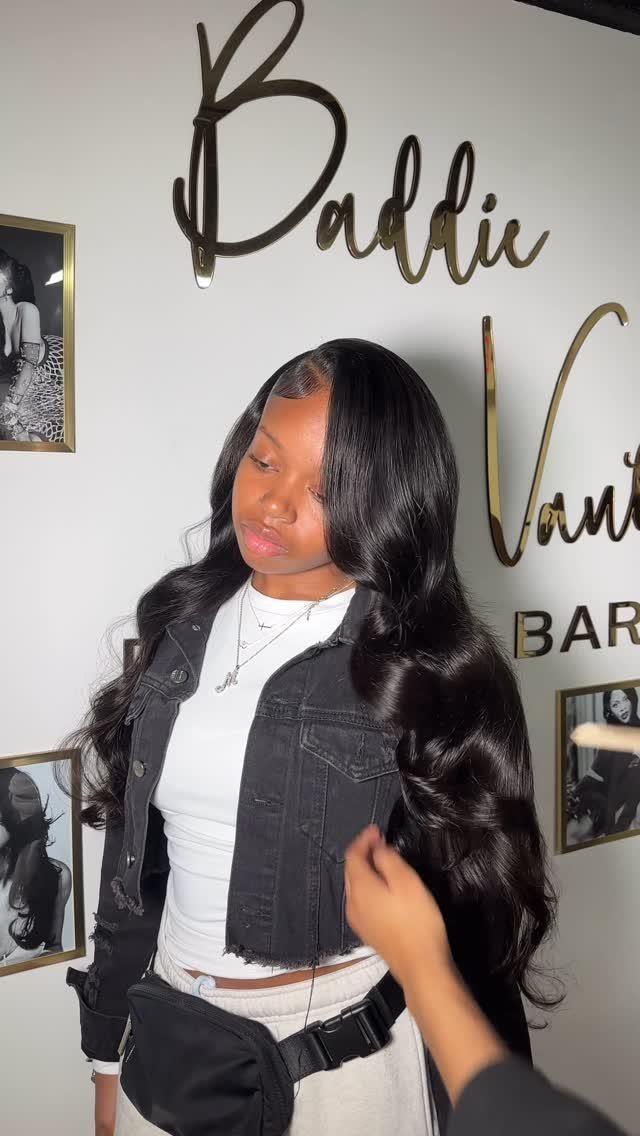
A deep side part gives loose curls instant lift on one side and a sweeping fall of hair on the other.
Of all the styles here, this one asks the least of you: the curls do the work, and the part sets the shape.
Part the hair on the side where it naturally wants to fall, deep enough to leave one heavy section. Then fluff the roots a little for volume.
A deep part does leave one side of the face partly covered by hair, and that is the price of the look.
6. Curly Hair with Face-framing Tendrils
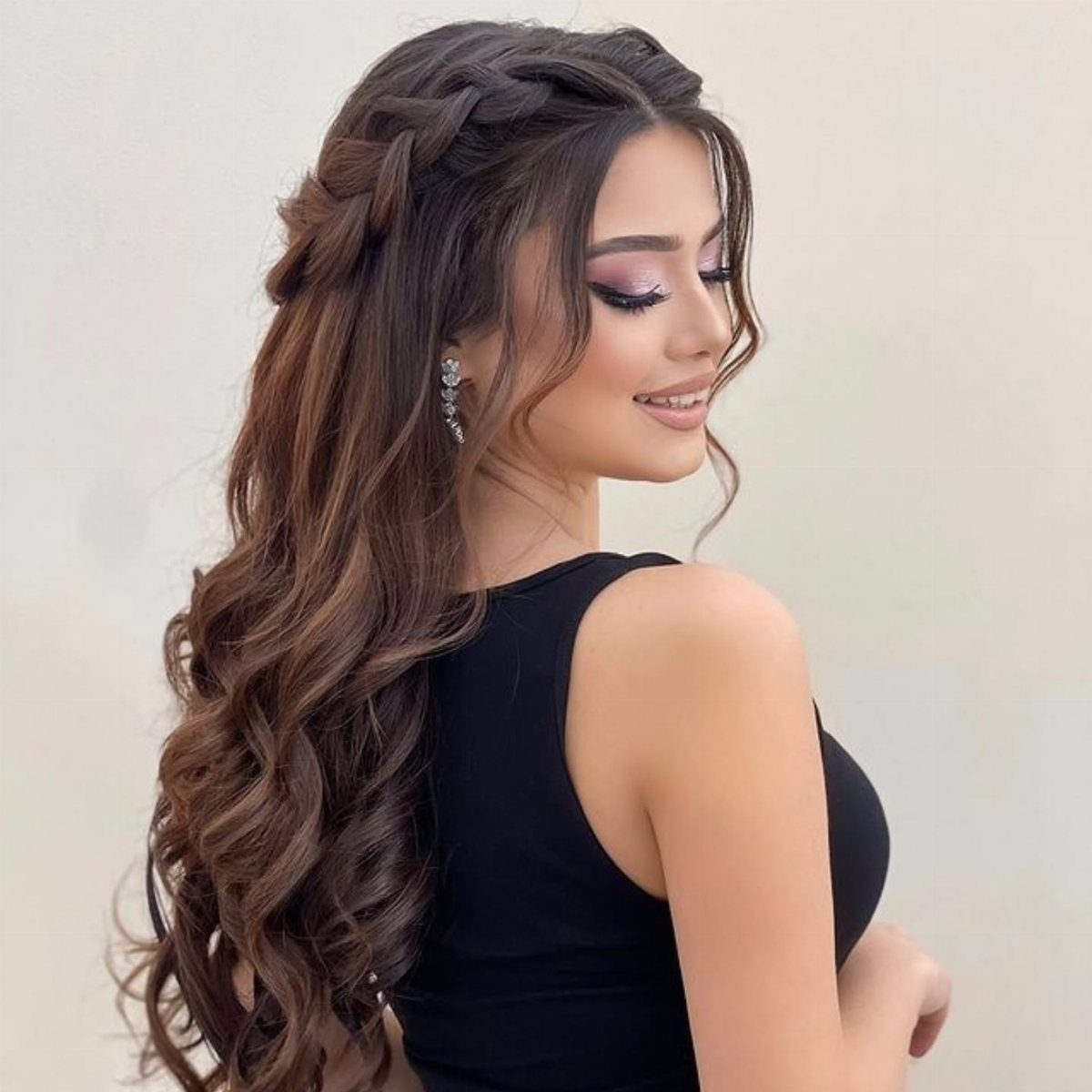
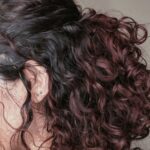
Face-framing tendrils soften everything around them. Pulling out a few delicate curls at the hairline blurs the line between hair and face, which flatters nearly any style.
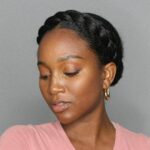
Here the tendrils pair with a half-up braid, and I like that combination. The braid keeps the hair tidy while the loose curls add softness.
Pull out the pieces last, after the style is secured. Pulling them earlier means they usually get tugged back in.
Tips for Styling Curly Hair
Curl definition starts with product, and the 2 jobs are different.
A curl-defining cream or gel shapes each clump, while a light oil or serum on the surface calms frizz. Use the first on damp hair and the second once the hair is dry.
Apply product to soaked or very wet hair, then scrunch upward instead of raking through. Touching curls while they dry breaks up the clumps, so wait until they are fully set.
Trying different styles is worth the time, because the same curls behave differently with a part in another spot or with the hair up.
Test one change at a time in a mirror, and keep the version that makes your curl pattern look intentional.
Maintaining Curly Hairstyles
Healthy curls hold a style longer, so upkeep matters as much as the styling itself. Regular trims remove split ends before they travel up the strand and unravel the curl pattern.
A moisturizing treatment, such as a deep conditioner or a leave-in, keeps curls from drying out. Dry curls frizz faster and lose their shape by midday.
A simple routine works well: trim on a steady schedule, condition deeply on wash day, and sleep with the hair loosely covered or gathered high so the curls stay put overnight.
Accessorizing Curly Hairstyles
Accessories let one set of curls look different from day to day. Hair clips, ribbons and headbands each add a personal touch without changing the style underneath.
A clip is the easiest place to start. It holds back one side and adds a small detail, and a few curls left out keep it from looking flat.
Ribbons work best tied around a ponytail or woven through a braid. Choose a color that picks up something in your outfit.
Headbands suit curls that need to stay off the face. Pick a soft, wide one that doesn’t pull at the hairline, since tight bands can leave dents in the curl pattern.
Frequently Asked Questions
What haircut should I get if my hair is curly?
A curly bob or layered cuts are the usual picks, since both are meant to enhance natural curls.
A cut only lasts as long as the ends stay healthy, so I book a trim every 8–12 weeks; split ends climb the strand and loosen the spiral well before the length looks damaged.
Does curly hair make you look older or younger?
Curly hair can add a youthful look, though it depends on the style.
Playful shapes like two high curly buns skew young and fun, while a deep side part with loose curls or a half-up ponytail reads more relaxed and polished.
How to layer curly hair for women?
Layering curly hair helps reduce bulk and improves curl definition.
Once the layers are in, work a curl cream or gel through soaking-wet or damp hair, scrunch up toward the scalp, and keep your hands out of it until it dries completely, since touching too soon breaks up the clumps.
Which haircut is best for rough hair?
Layers or a curly bob suit textured hair, because they take out bulk and let the curls form clumps.