Which of these styles fits depends on how long you can sit in a stylist’s chair and how long you want the braids to stay in.
The list runs from a High Ponytail with Cornrows to Cornrows Transitioning Into Long Twists, and the detailed styles, like Two-Tone Cornrows and Twists, take a skilled hand and a long salon sitting.
1. High Ponytail with Cornrows
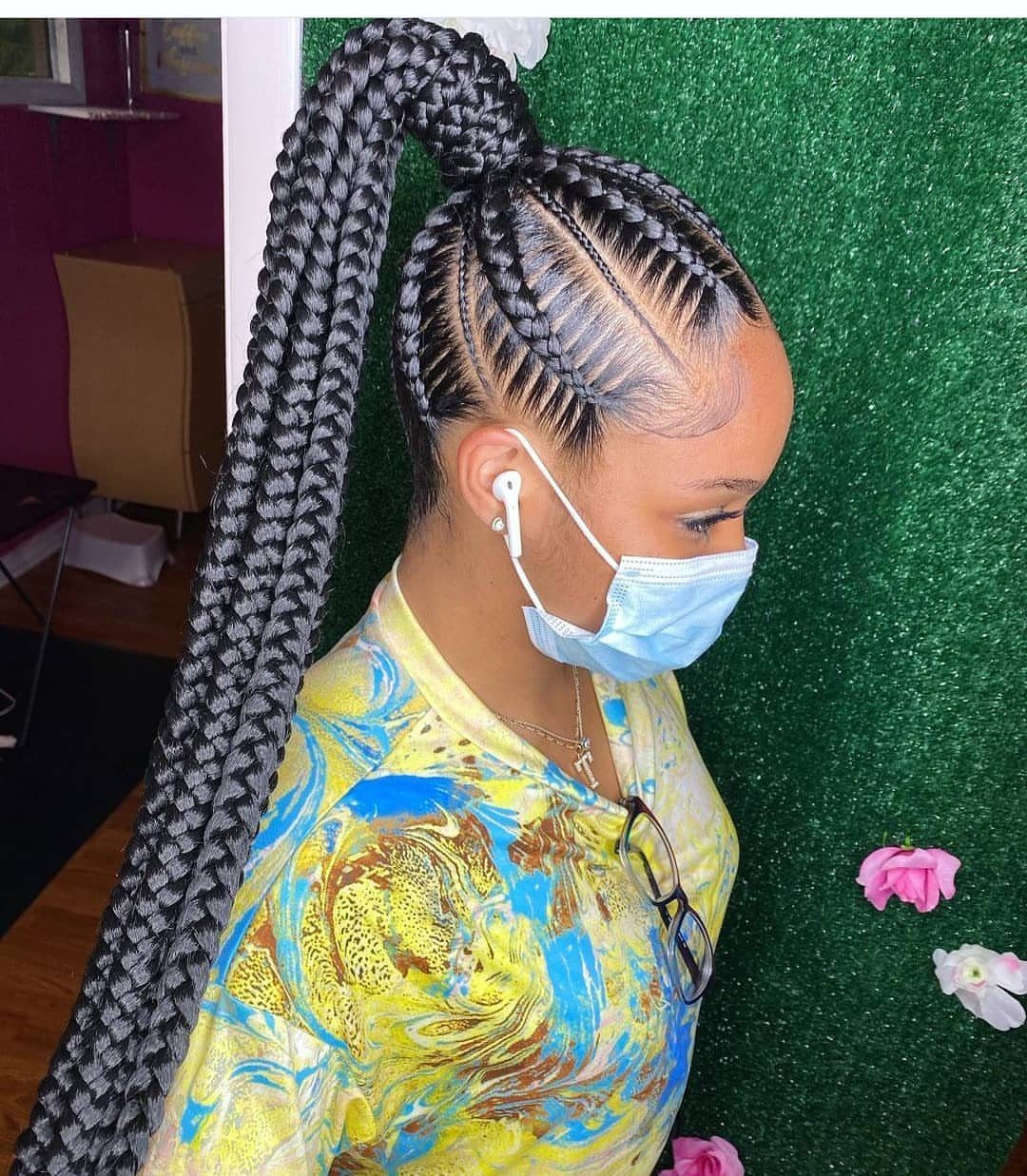
A high ponytail turns cornrows into a clean, lifted shape, and long braids give it real swing. Because the braids carry all the length, the ponytail stays light at the crown instead of pulling in one heavy clump.
For the sleekest finish, I’d keep the cornrows straight back from the hairline so they feed into the ponytail without a visible break. A scrunchie or a wrapped section of braid hides the base.
2. Beaded Cornrows
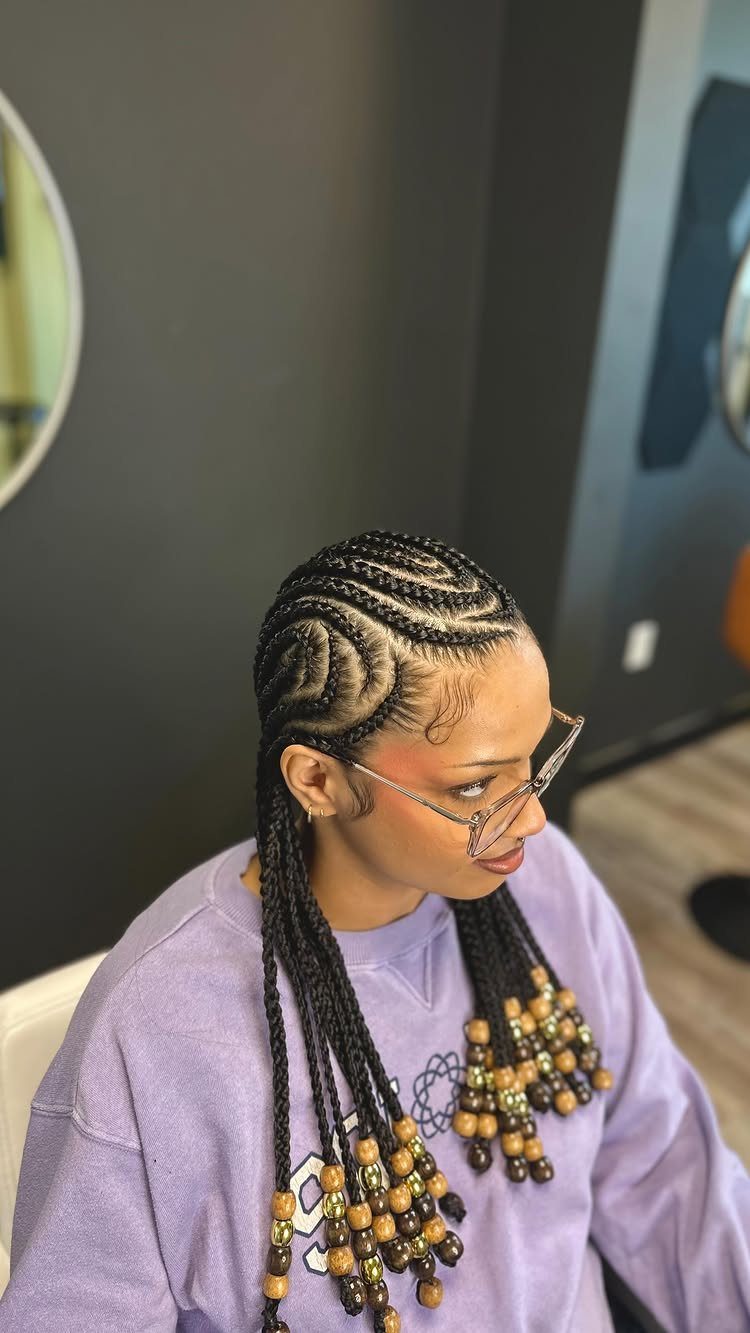
Beads are the quickest way to give plain cornrows a personal finish. Brown and gold sit softly against black hair and read as jewelry rather than costume.
Keep them at the ends, as in this style, so the beads don’t tug at the roots.
A few per braid looks deliberate; a full row of them gets noisy fast. Choose a bead opening wide enough to slide on easily.
3. Cornrows Bob
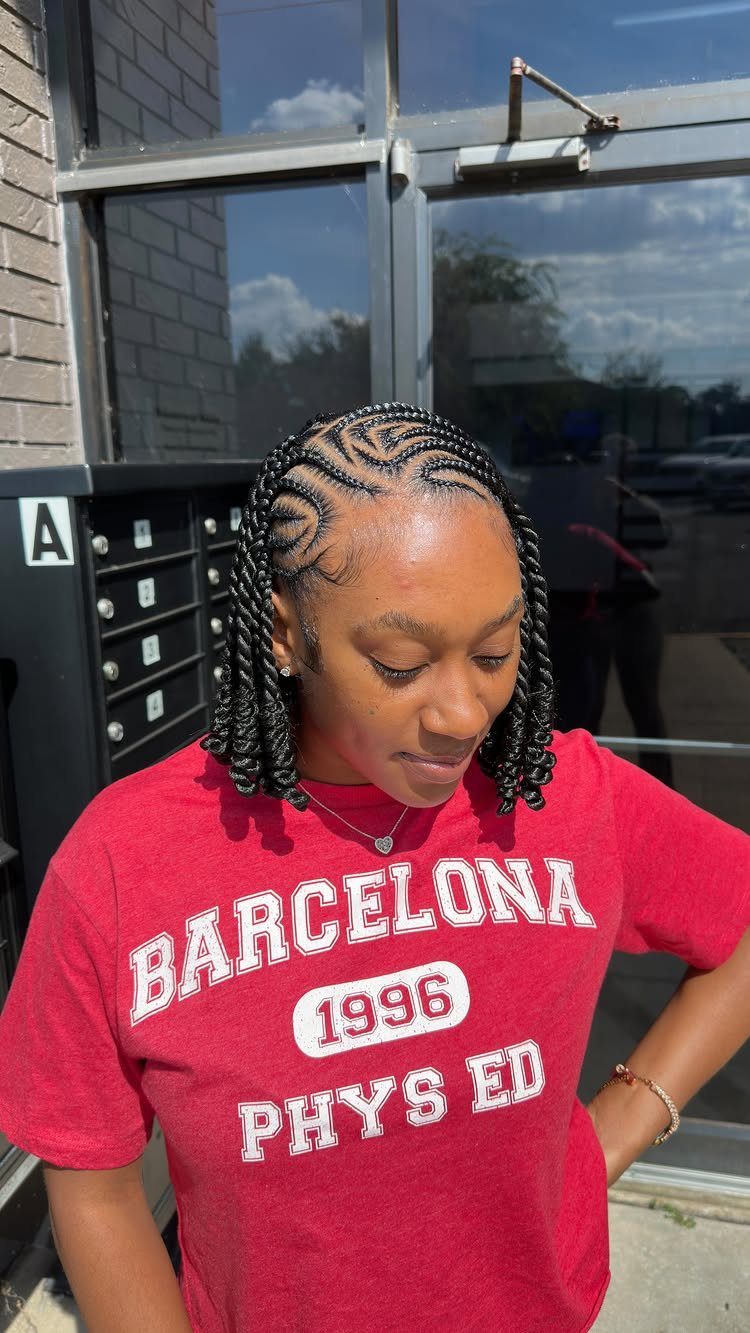
Medium-length hair finally gets its own cornrow style here: cornrows across the top, then a chin-length bob of twists. The bob ends right at the jaw, which frames the face without the weight of waist-length braids.
A cornrow bob works well as a protective style that stays light on the neck in warm weather. Ask your stylist to cut the twist ends blunt so the bob keeps a crisp line.
4. High Bun
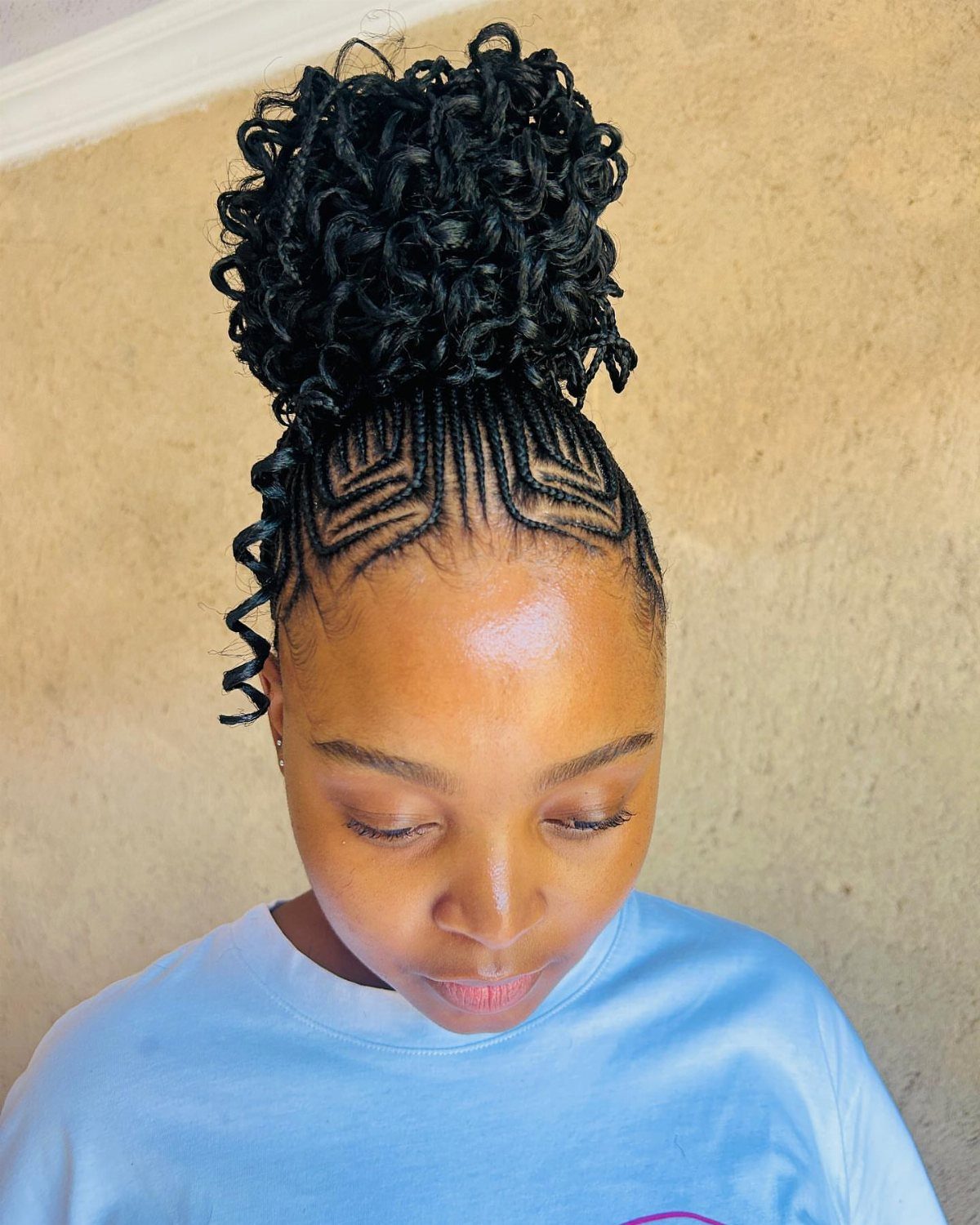
Cornrows leading into a big bun of twists is the version of the high bun I’d pick for a busy morning. The cornrows keep the front flat and tidy, while the twists pile into a full, curly shape on top.
It’s comfortable and quick to wear, and it works with a T-shirt or something dressier. Place the bun high on the crown for the most lift.
5. Cornrows
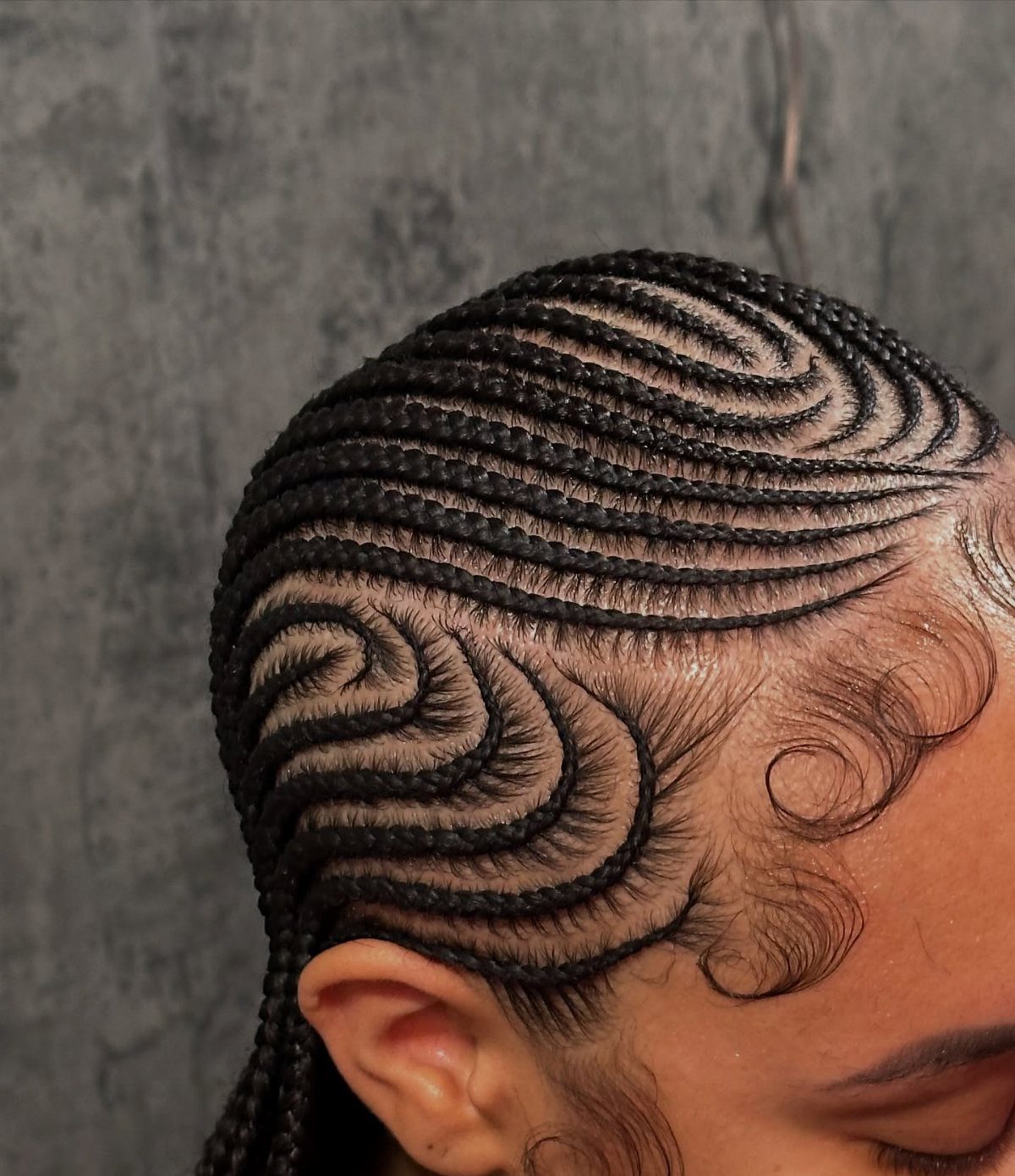
Plain cornrows are the foundation of nearly every braided style, and the pattern you choose sets the look. Straight lines read clean and sporty; curved or zig-zag paths feel more detailed and artistic.
Curves take more skill, so book a stylist who has done them before. Tidy edges matter as much as the braids, since they frame the whole design.
6. Cornrows and Twists
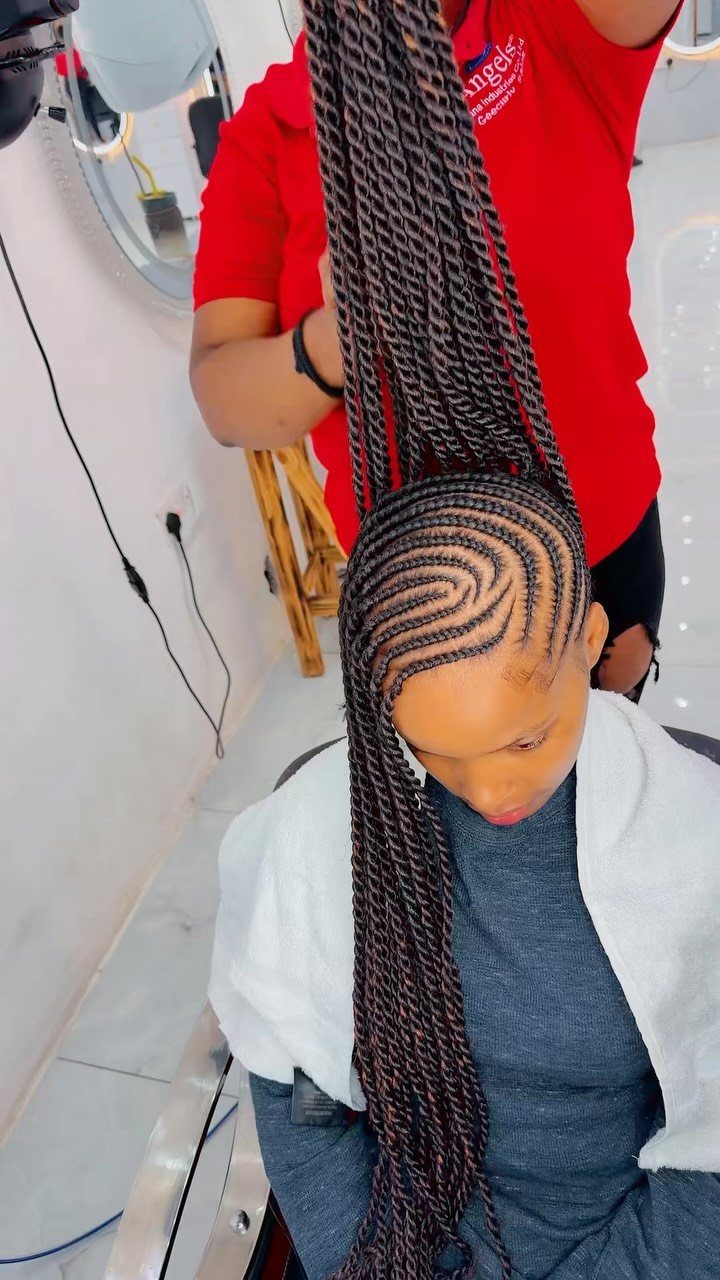
Cornrows at the front with long twists falling from them give you two textures in one style. The cornrows lie flat and neat against the scalp, and the twists add length and movement.
Curved cornrow lines make the transition look planned rather than abrupt. Expect a salon sitting, so bring a photo and plan to stay put for a while.
7. Half Up Half Down Cornrows
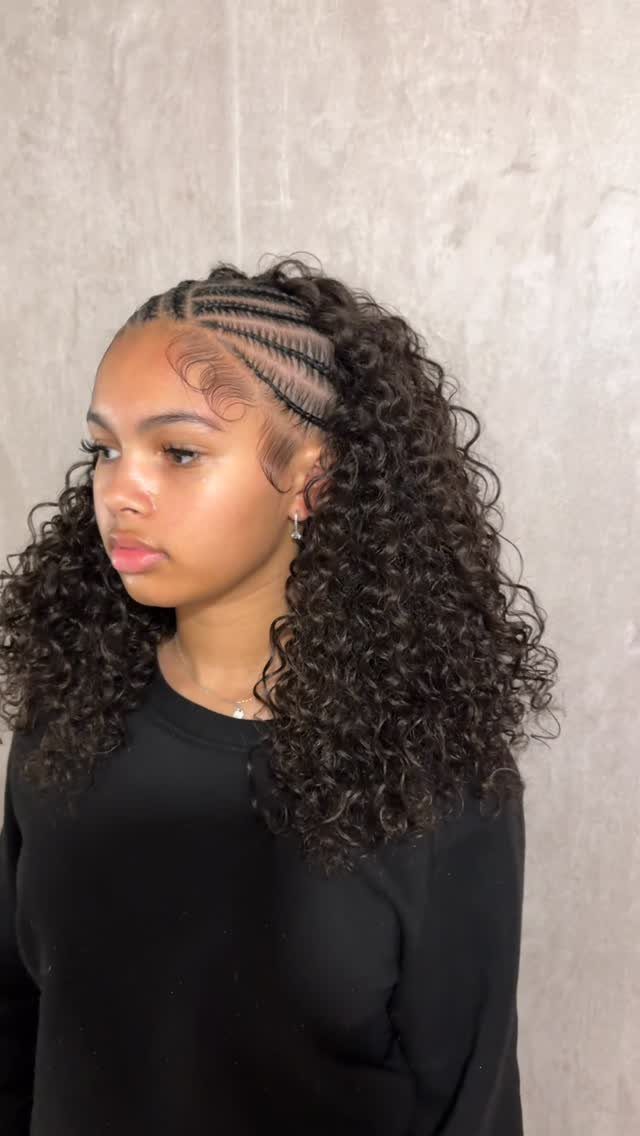
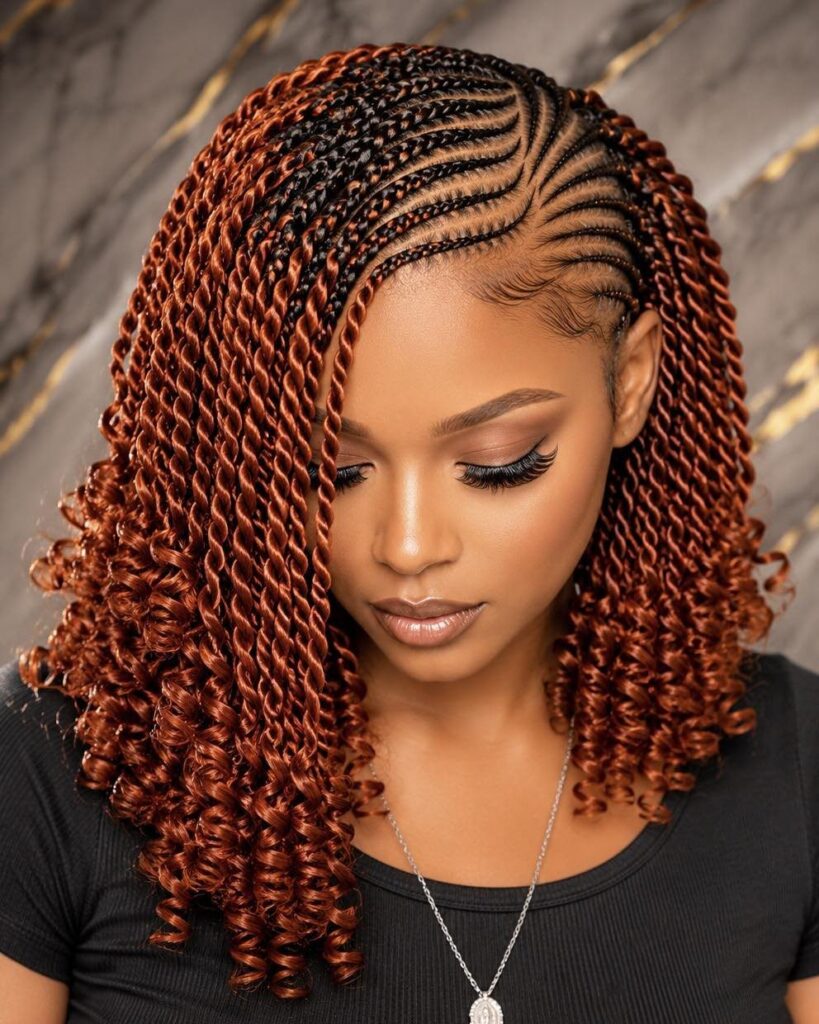
Cornrows across the top with curls left loose below give you a neat front and a full, soft back in one style. The braids keep hair off the face, so the curls can stay big without getting in the way.
I like this for a day that moves from errands to dinner, since the curls look dressed up with very little effort.
Moisturize the loose section before you part it into braids so the contrast between flat and fluffy stays clear.
8. Colorful Cornrows
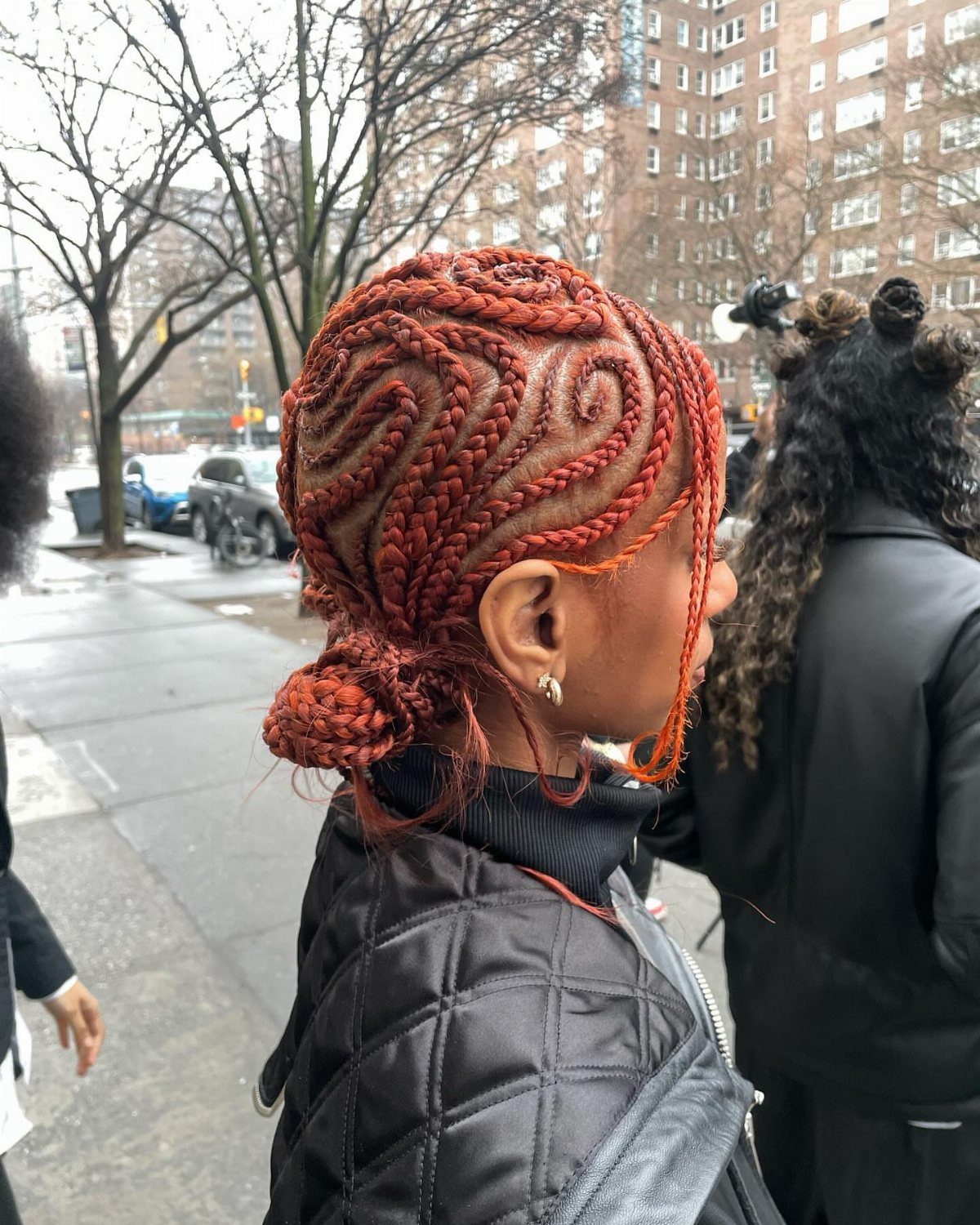
Reddish-orange braiding hair turns cornrows into the loudest part of an outfit, so I’d wear it with quiet neutrals.
Pick one bold shade rather than several; it reads as intentional. Color adds to the stylist’s workload, so ask about the price and the time before you book.
A low bun also leaves the back of the braids fully visible, so the pattern reads from behind as well as from the front.
9. Cornrows Transitioning Into Long Twists
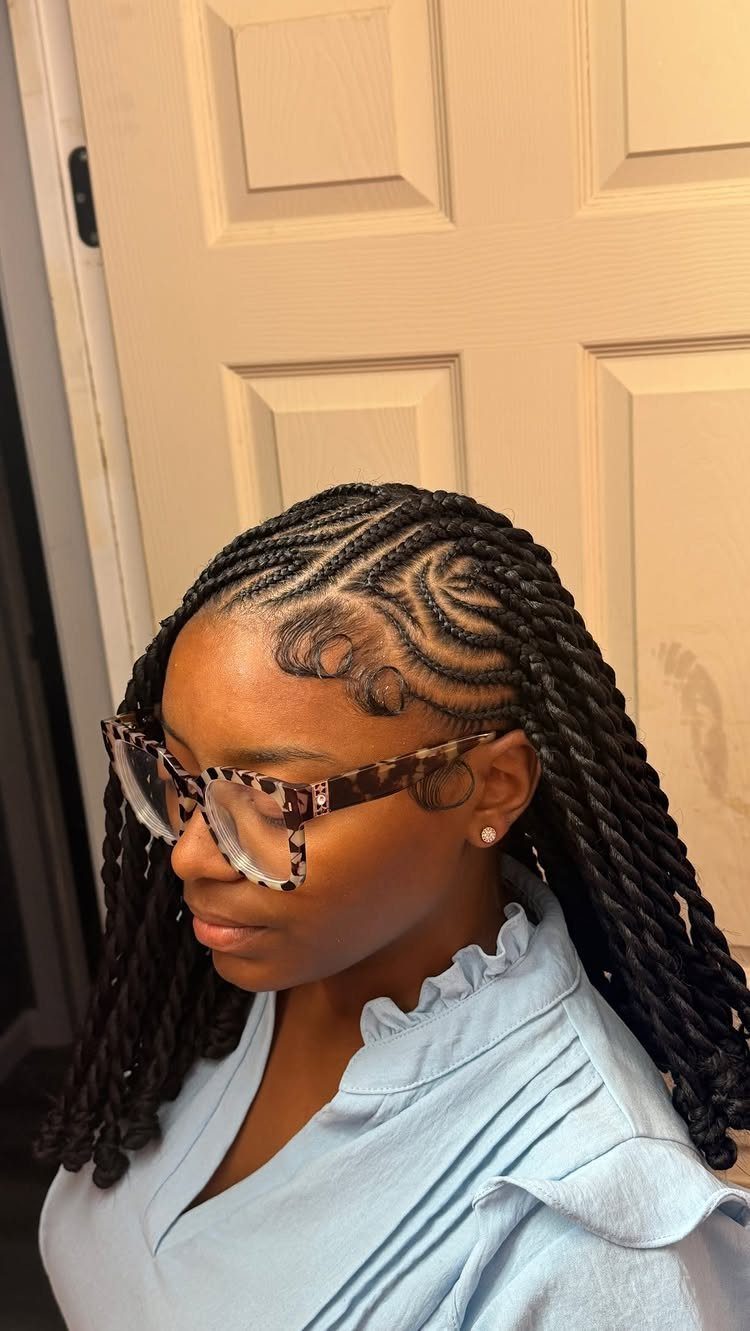
Curved cornrows that flow into thick, long twists give you the detail of a pattern up top and the weight of rope twists below.
The shift from flat braid to twist should happen in the same line, with no visible gap.
Ask for the cornrow paths to end exactly where each twist begins. Thick twists hang heavier than thin ones, so I’d choose a size you can comfortably wear all day.
10. Two-Tone Cornrows and Twists
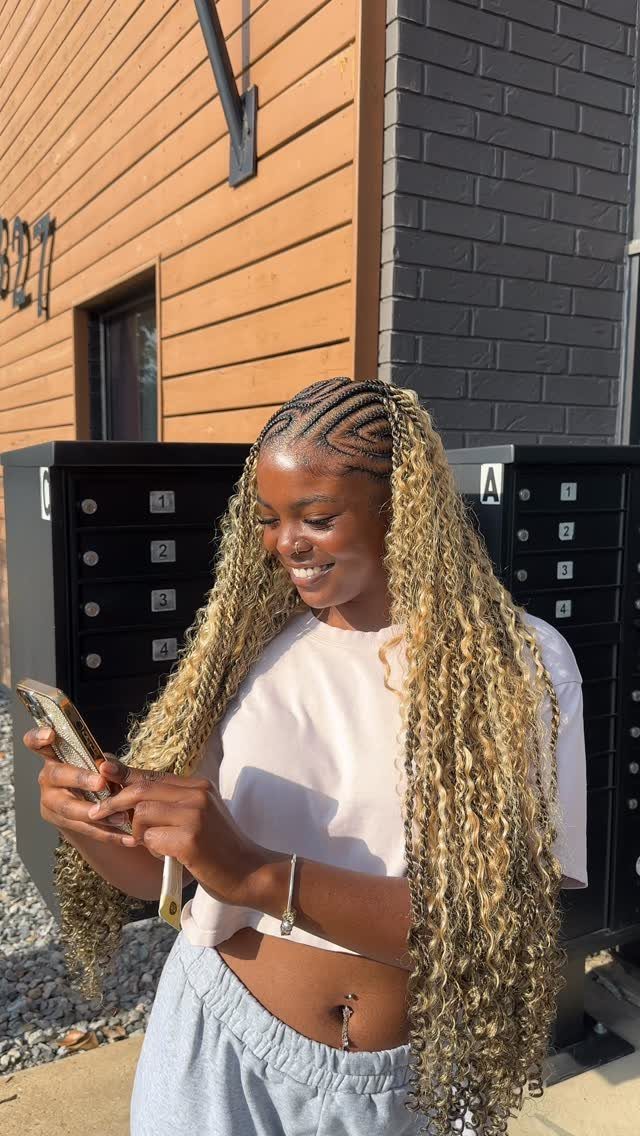
Mixing blonde and brown braiding hair makes long cornrows and twists look dimensional, almost like highlights, without any dye on your own hair. Because both shades are added hair, your natural strands stay untouched.
I’d keep the 2 tones close in warmth so the blend looks soft rather than striped. Bring a photo to your stylist and say which shade should lead at the roots.
11. Side Cornrows with Wavy Hair
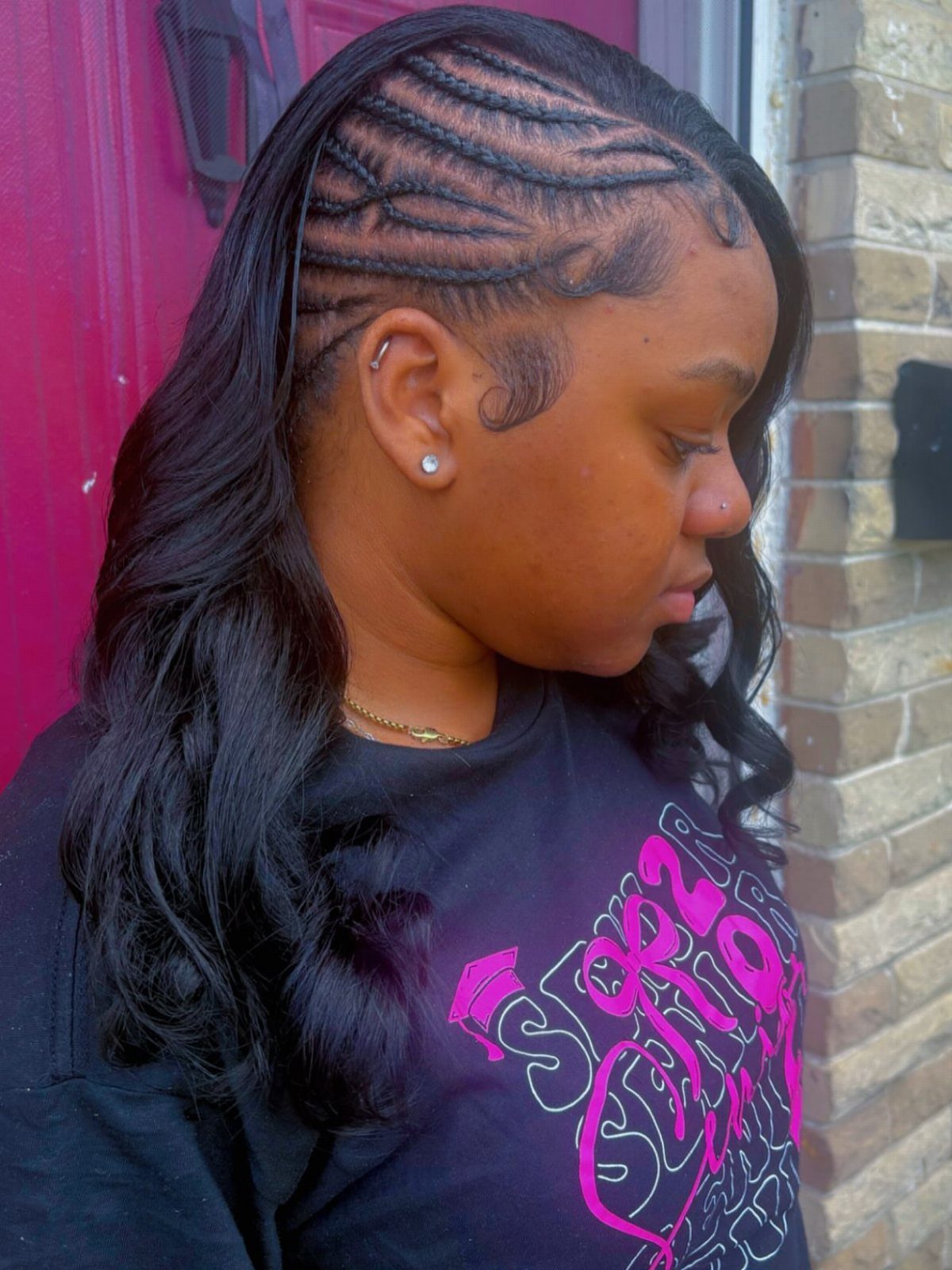
Detailed cornrows along one side with long, wavy hair left loose is a lopsided look in the best way: the braids add structure and the waves add movement. It suits anyone who wants a statement without covering the whole head.
Intricate patterns take a skilled hand, so check a stylist’s past work first. Keep the waves moisturized and detangled, since they will be on show next to very tidy braids.
Maintenance Tips for Cornrows
Moisturizer comes first: a lightweight oil or leave-in conditioner on the scalp and along the braids prevents dryness and itching. Heavy products tend to build up, so keep the layer thin.
A silk or satin bonnet or scarf over your braids at night cuts friction against the pillow, which means less frizz and a style that stays neat for longer.
It cuts down on friction and frizz, which is what makes cornrows look tired first.
Wash gently.
Dilute your shampoo, work it into the scalp only, and skip drenching the braids, because too much water loosens them and brings on frizz. A braid spray or anti-frizz serum helps keep the surface neat between washes.
Touch the braids as little as you can. Constant pulling and adjusting does more harm to neatness than a few flyaways ever will.
Plan to take cornrows out after 4–6 weeks. Wearing them longer adds tension and risks breakage.
Braiding Techniques
Start with natural hair that is fully detangled. Knots left in will fight you halfway down a braid, and moisturizing first makes the hair easier to grip and slide.
Choose braiding hair in a texture that suits the style and the length you want: silky, coarse, deep wave, curly or coily all behave differently.
Section carefully. Parts should be even and clean, since a crooked part shows through the finished braid no matter how well you braid.
To add braiding hair, split it into equal parts and lay it over your natural hair so the sections stay balanced.
Hold all 3 strands firmly as you begin, then feed in more braiding hair gradually so the thickness stays even.
Keep your tension consistent from the first stitch to the last. Uneven pulling gives lumpy, uneven braids, and it is the hardest mistake to hide.
Cultural Importance of Cornrows
Across African societies, people wore them for centuries to show who they were, where they ranked, and which community they belonged to.
Beyond that, a pattern could carry personal, social or spiritual meaning, and it spoke to the wearer’s family roots and their own sense of self.
Under slavery, enslaved Africans kept their traditions alive through cornrows, and some accounts say the patterns doubled as maps marking routes to freedom.
Braiding has long been a social act too, with families and communities sitting together, which strengthens cultural ties. Now the style stands for Black pride, heritage and resilience, and you’ll see it on people in every part of the world.
If you are not Black, wear them with that history in mind, and credit the culture they come from.
Cornrows are an essential part of Black culture and the history of Black hair globally.
Frequently Asked Questions
How long does it take to do cornrows?
Plan on a long sitting, up to about 5 hours for the braiding itself.
Curves, zig-zags and long added twists stretch the appointment well past a simple straight-back set, so screenshot the exact pattern you want and clear a big chunk of your day.
Do cornrows help hair grow?
Cornrows protect natural hair and the growth it already has, rather than making it grow faster. Natural hair tends to be dry and brittle, and braiding it away guards against moisture loss and breakage.
Four to six weeks is my limit for a set; past that, the pull at the roots keeps building and strands start to snap.
How much do cornrows usually cost?
I can’t give a reliable figure, because price depends on the stylist, the pattern and the time it takes.
Since adding color means extra work at the chair, I’d ask for a quote and a time estimate together before putting down a deposit. Intricate designs also take a skilled hand, which can change the quote.