Tension is the test: if your edges feel pulled on day one, the braid is too tight for your scalp, no matter how good it looks in the mirror.
Some of these styles take a few bobby pins, like a halo braid or a braided ponytail, while others, like box braids, Ghana braids or a goddess bun, mean a long appointment in the chair.
1. Box Braids
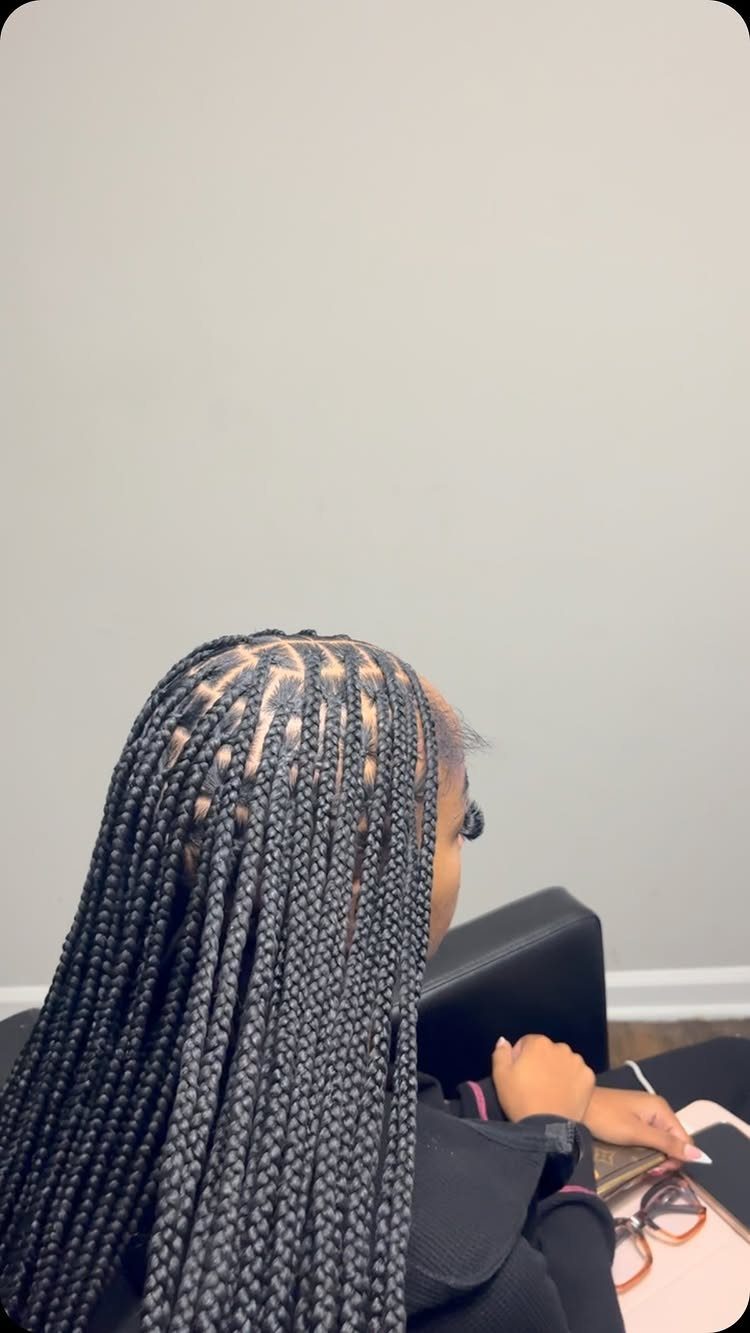
Box braids come down to the parting. Each plait grows from its own square section of scalp, and clean, even squares give the whole style its grid-like order.
Long and black, as here, they hang heavy and read as polished with almost anything.
Ask your stylist for sections sized to the look you want: smaller squares look finer, larger ones look bolder. Because the roots are knotted, I’d pick this version for a sharp, structured finish, and a gentler option is covered next.
2. Knotless Braids
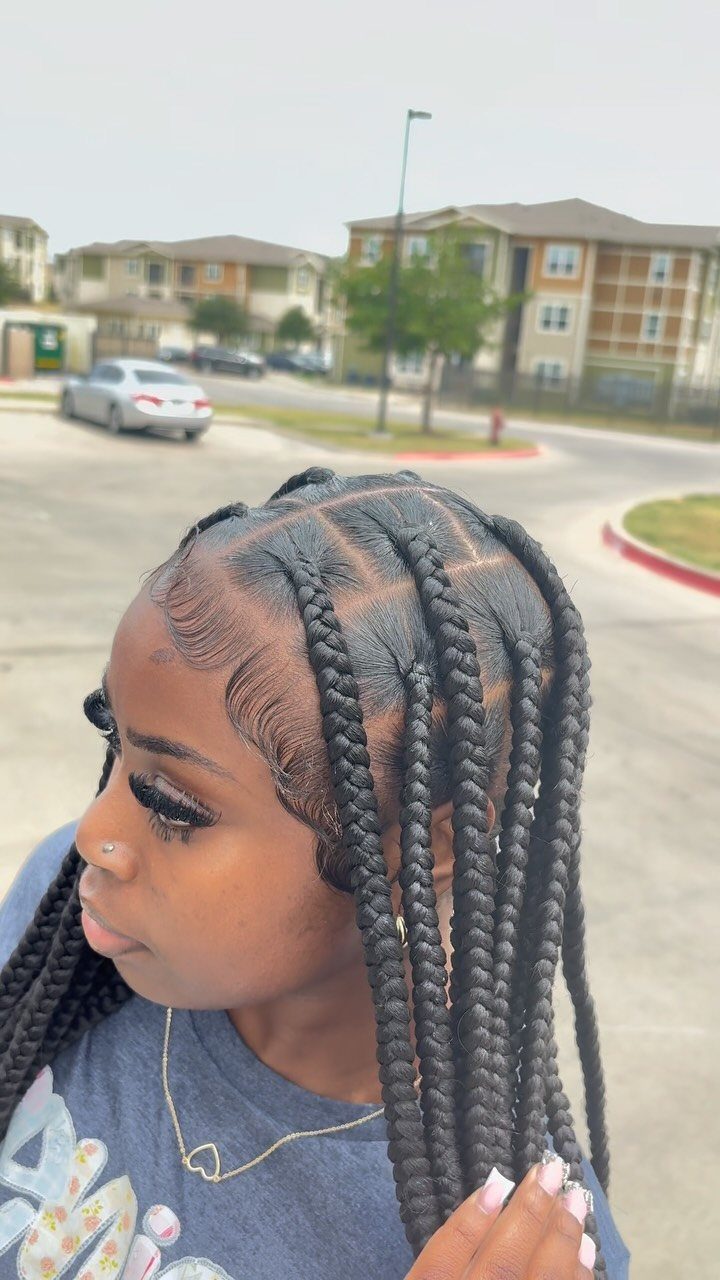
Knotless braids start with your own hair and add the extra length gradually, so the root has no bulky knot. That makes the scalp area flatter and lighter than on classic box braids.
Smoothed, gelled edges keep knotless braids looking neat from the first day, and a soft edge brush plus a light mousse is usually enough to hold them for the first week.
For a woman who wants long braids with a softer feel at the part, I’d choose this over knotted sections. Tell your stylist you want the feed-in method so the tension stays gentle.
3. Halo Braid
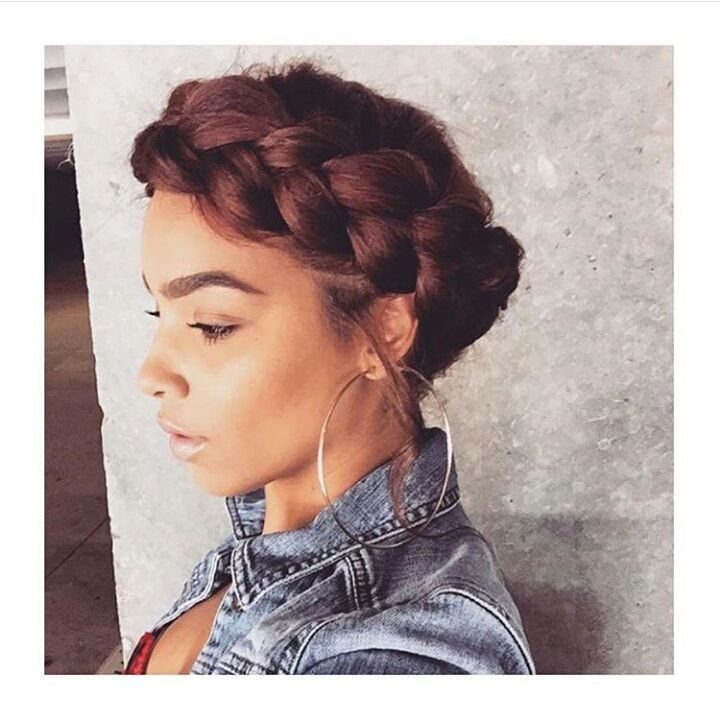
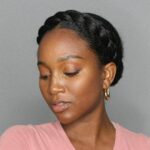
A halo braid circles the head like a crown, so it keeps hair off your neck and puts the attention on your face and shoulders.
Thick plaits, like this one, look best with a simple neckline or an open jacket, and big hoops balance the round shape.
Pull the braid loose after you finish; a slightly puffed plait looks fuller and forgives uneven sections. Tuck the loose tail under the braid and secure it with a couple of bobby pins, so no end peeks out.
4. Braided Ponytail
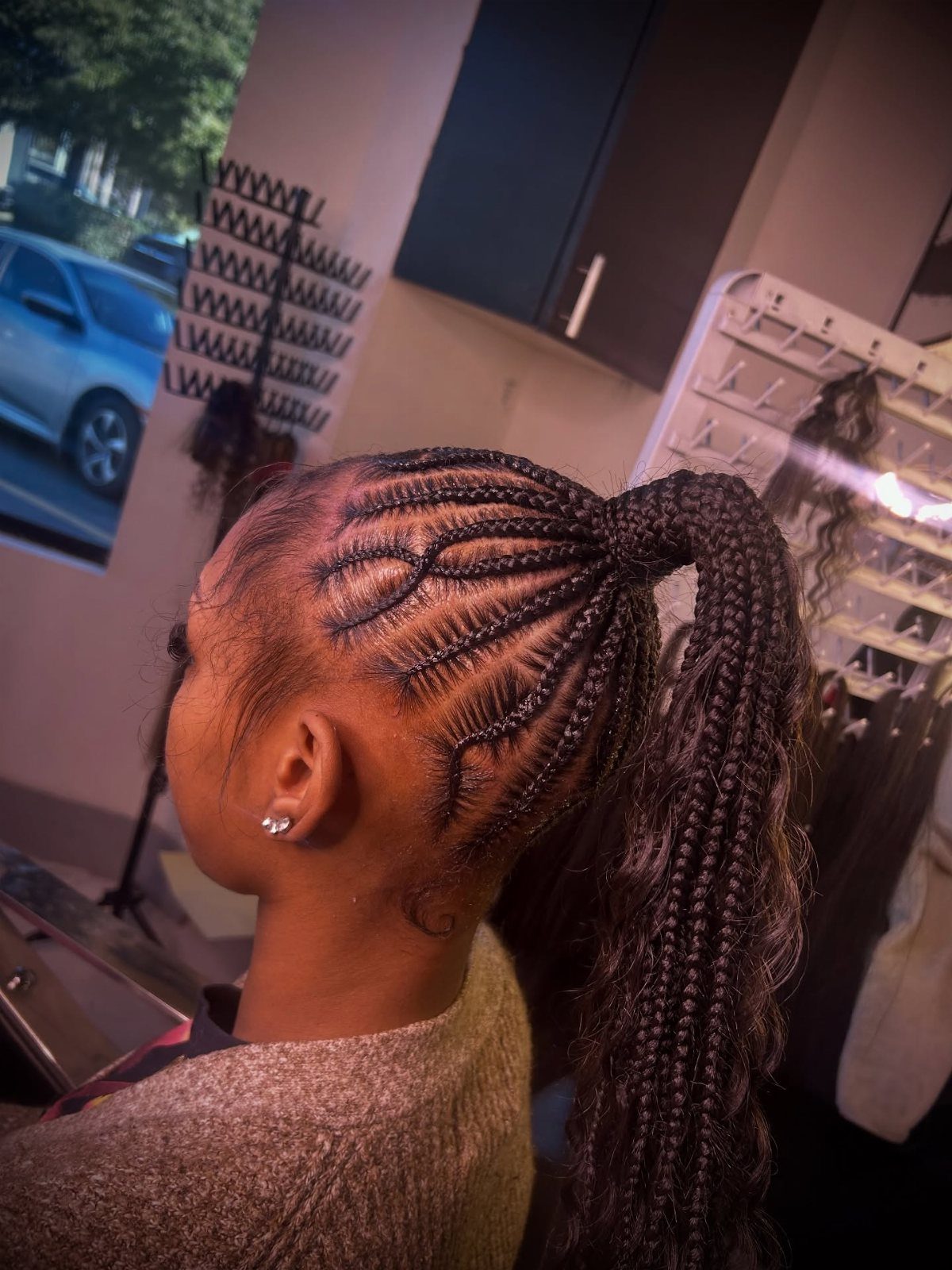
Plain or intricate, a braided ponytail adapts to almost any plan. Wear it high for a sharper look, or low and swinging for a softer one.
Gathering cornrows into one long, thick tail turns a practical style into something that looks finished, and a sleek wrap of braiding hair around the base helps it hold up all day.
I like it for workdays and evenings alike, since it needs no restyling between them. Wrap the base with a strand of hair to hide the elastic.
5. Cornrows
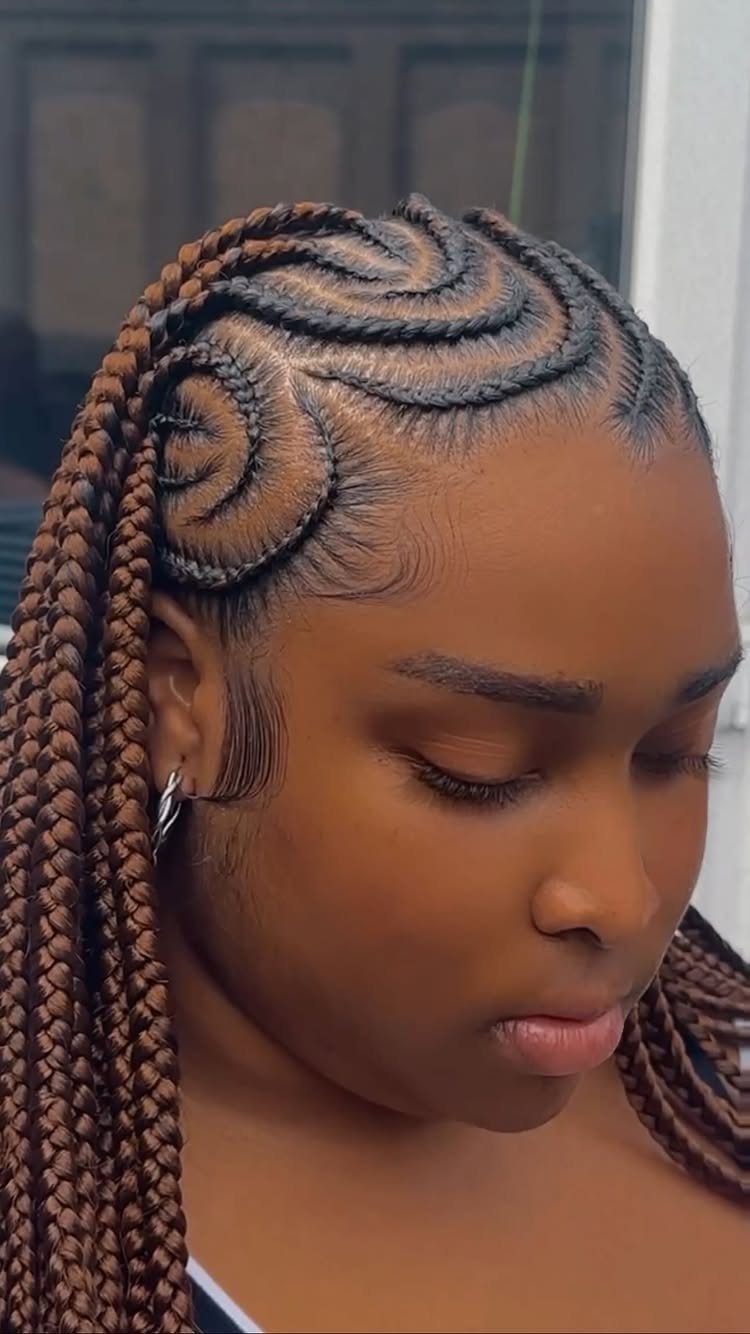
Cornrows lie flat against the scalp, so the pattern itself is the style. Curved lines, like these, follow the shape of the head and look best when the parts are crisp.
Ask your stylist to sketch the pattern with you before starting, since curves take more planning than straight rows. I’d pair them with small hoops or studs and let the braiding do the talking.
6. Dutch Braids
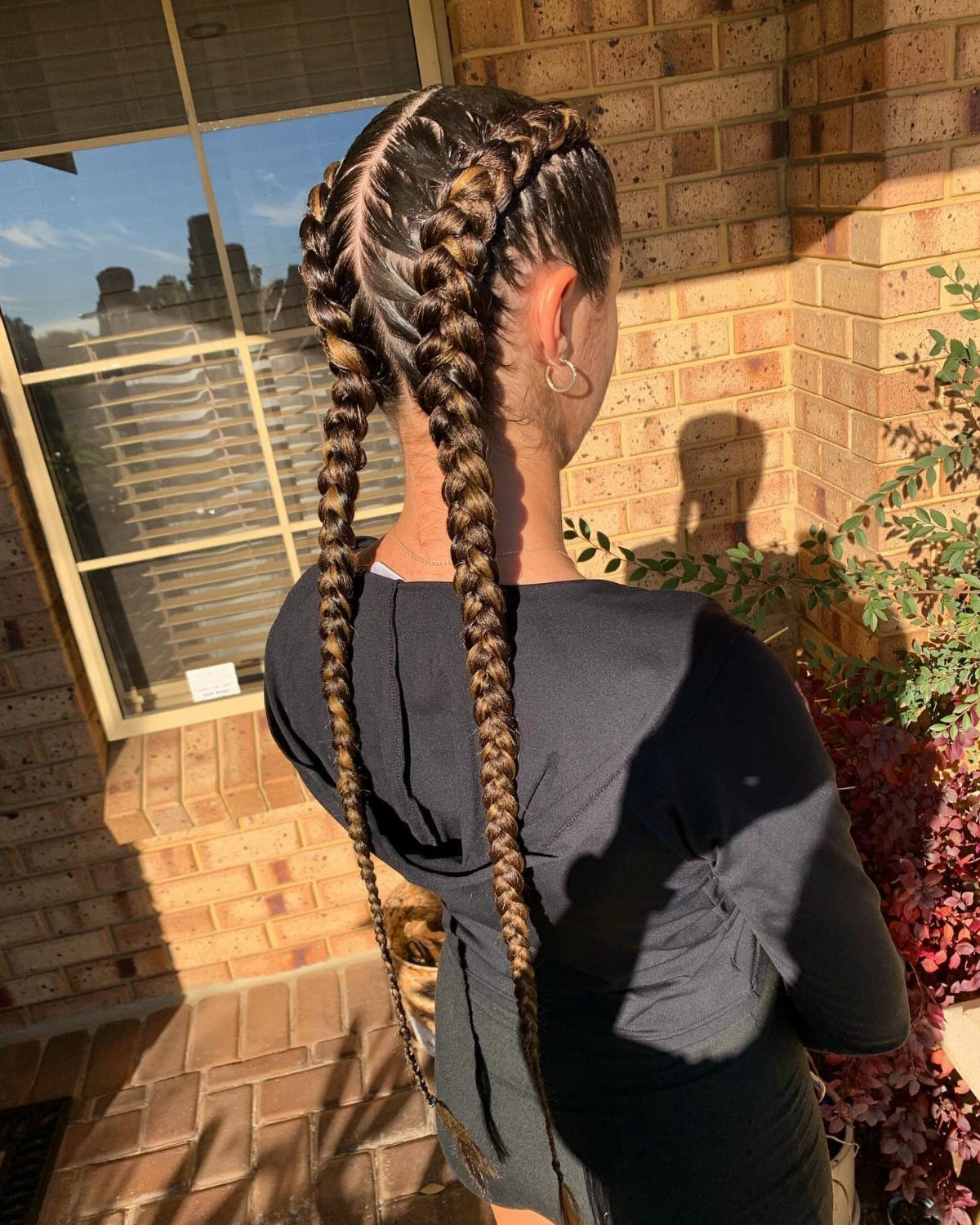
Dutch braids sit on top of the hair instead of blending into it, because each strand crosses under the others. That raised ridge is what makes them stand out.
2 long braids from the crown, as here, give a clean, balanced look that works with a plain top.
To make them yourself, split the hair down the middle, then keep crossing strands under. Pull gently at the sides of each braid afterward for extra fullness.
7. Fishtail Braids
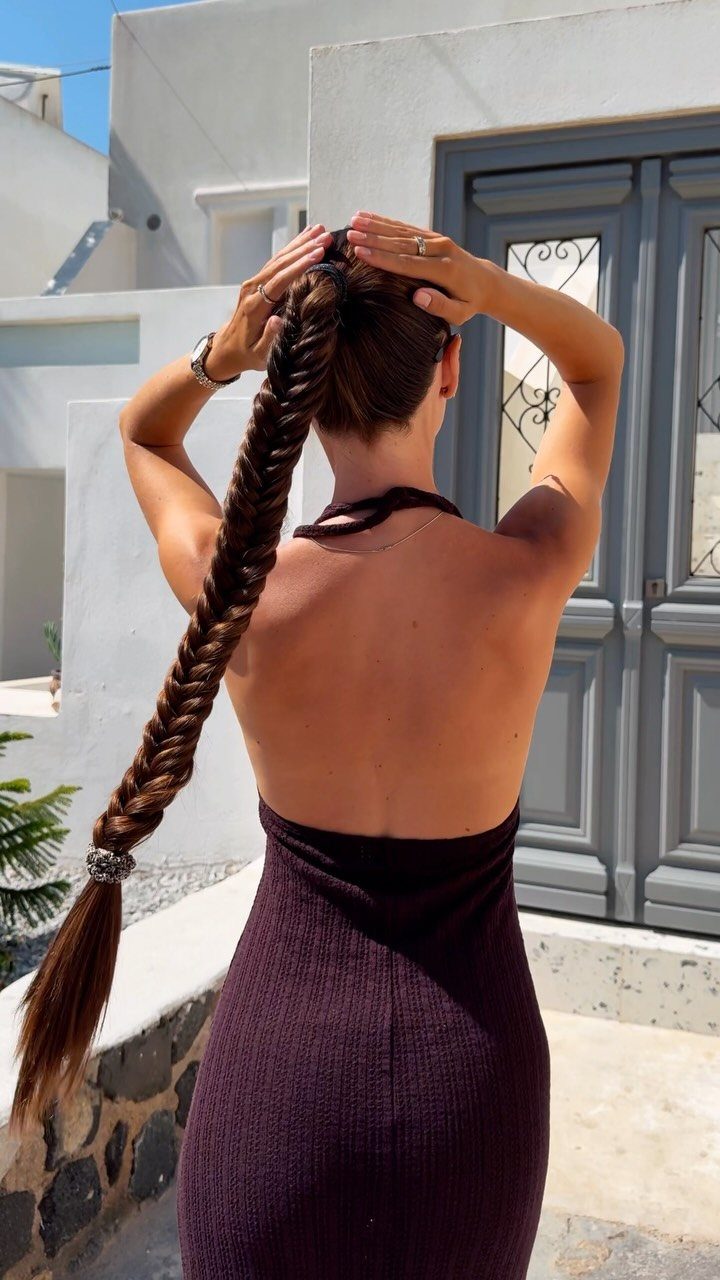
Fishtail braiding sounds fussy, but the method is simple: split the hair into 2 halves, pull a narrow piece from the outer edge of the left half, and cross it over to the right half.
Then take a piece from the outer right and cross it left, over and over until you run out of hair.
Thin strands give the finer, more detailed weave.
Worn long and down the back, as here, it shows off an open-back neckline well. I’d pull it gently loose at the end for a softer finish.
8. Fulani Braids
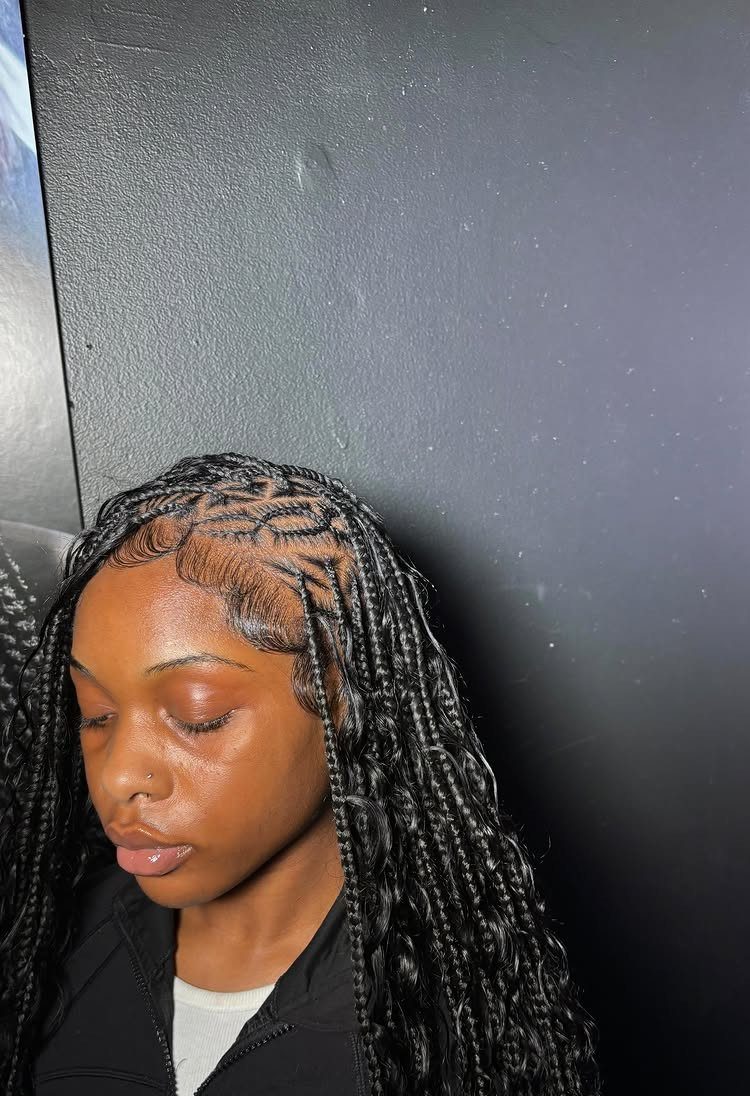
Cornrows at the front, long box plaits through the length: Fulani braids pair a flat, sleek top with hanging volume below.
Keep the plaits long and even, as here, and the look reads polished with minimal jewelry. I’d choose this over all-over box braids if you like a bit of pattern near the face.
9. French Curl Braids Updo
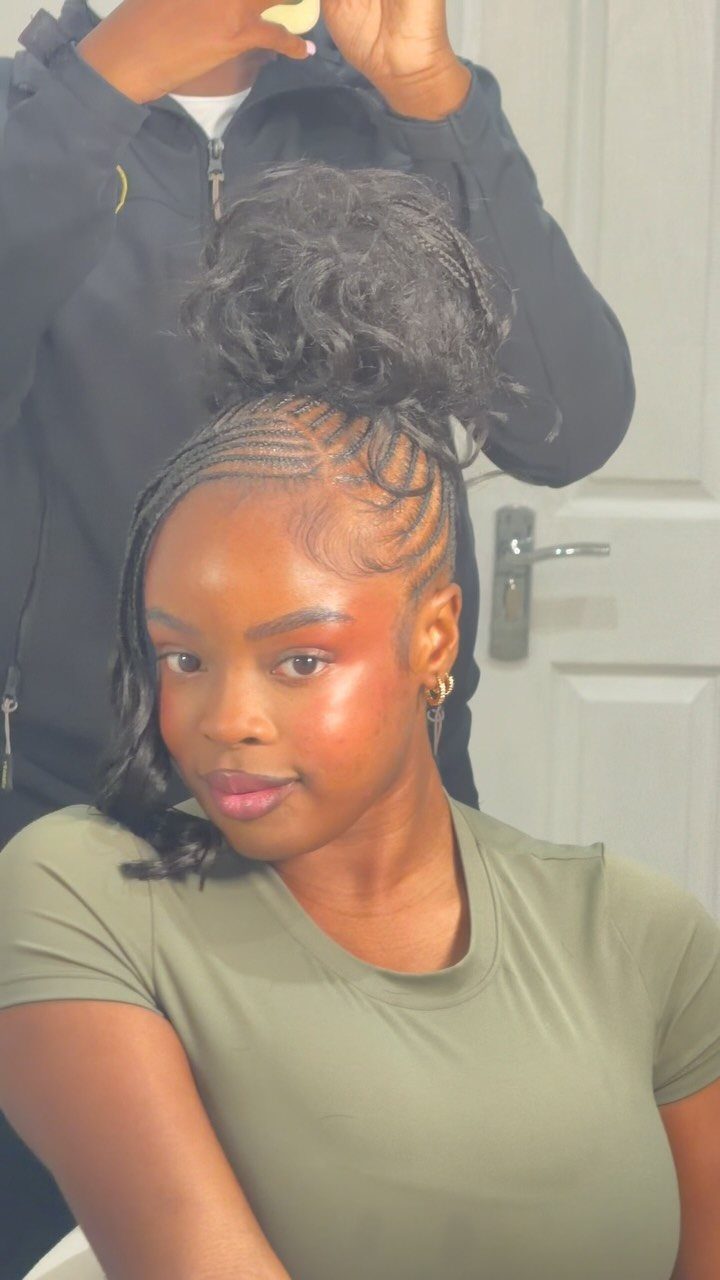
Flat twists packed close on top give this updo its texture, and the curly ends pile into a high bun that feels soft rather than severe.
Keep the twists neat and tight against the scalp so the base holds its shape.
Then gather them at the crown and let the curls spill out of the bun. I like this for evenings and events, since it needs no extra styling once it’s done.
10. Goddess Braided Bun
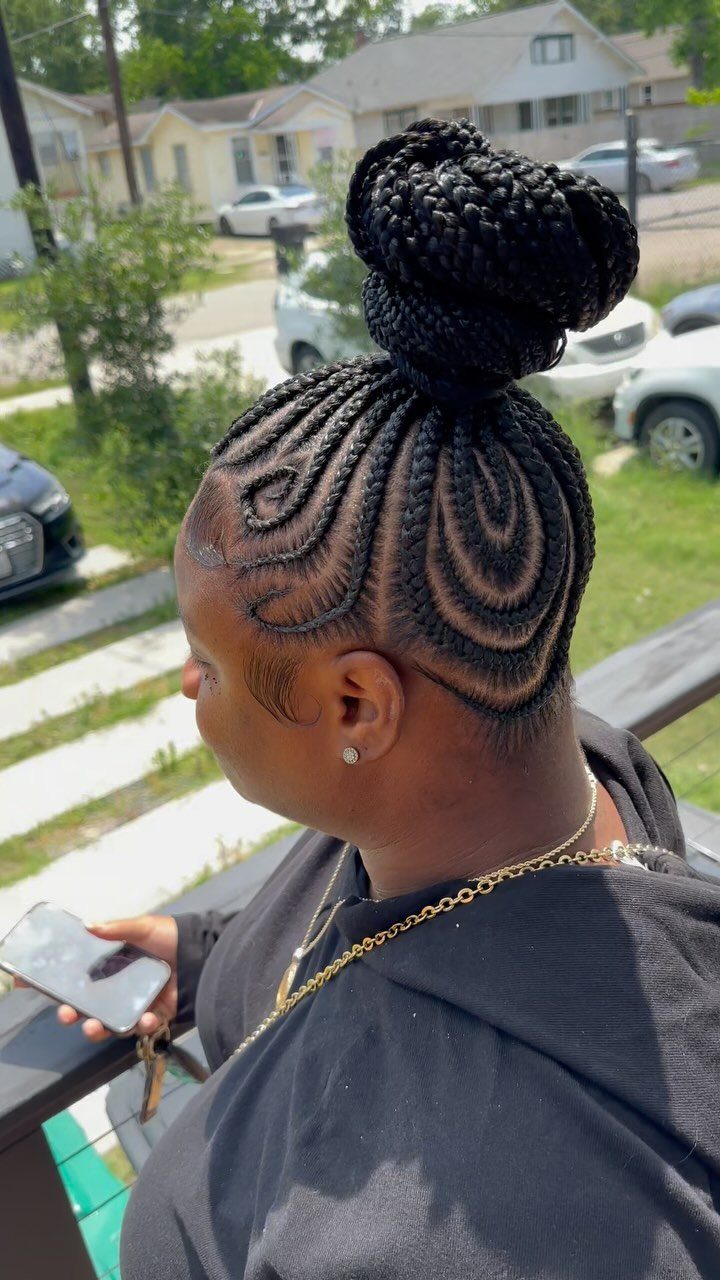
Mixing thick and thin braids is what gives a goddess bun its character. Curved cornrows sweep upward and finish in one large bun on top.
Plan the curves with your stylist before the first row, because the direction of each line decides how balanced the bun looks.
A bun this big stays comfortable if the braids are not pulled too tight. Pair it with a hoodie or a simple top and gold jewelry, as here.
Goddess braids are a beloved protective style for a reason—the versatile look was a symbol of creativity and artwork in ancient Africa and is still a go-to hairstyle to this day.
— Glamour
11. French Braids
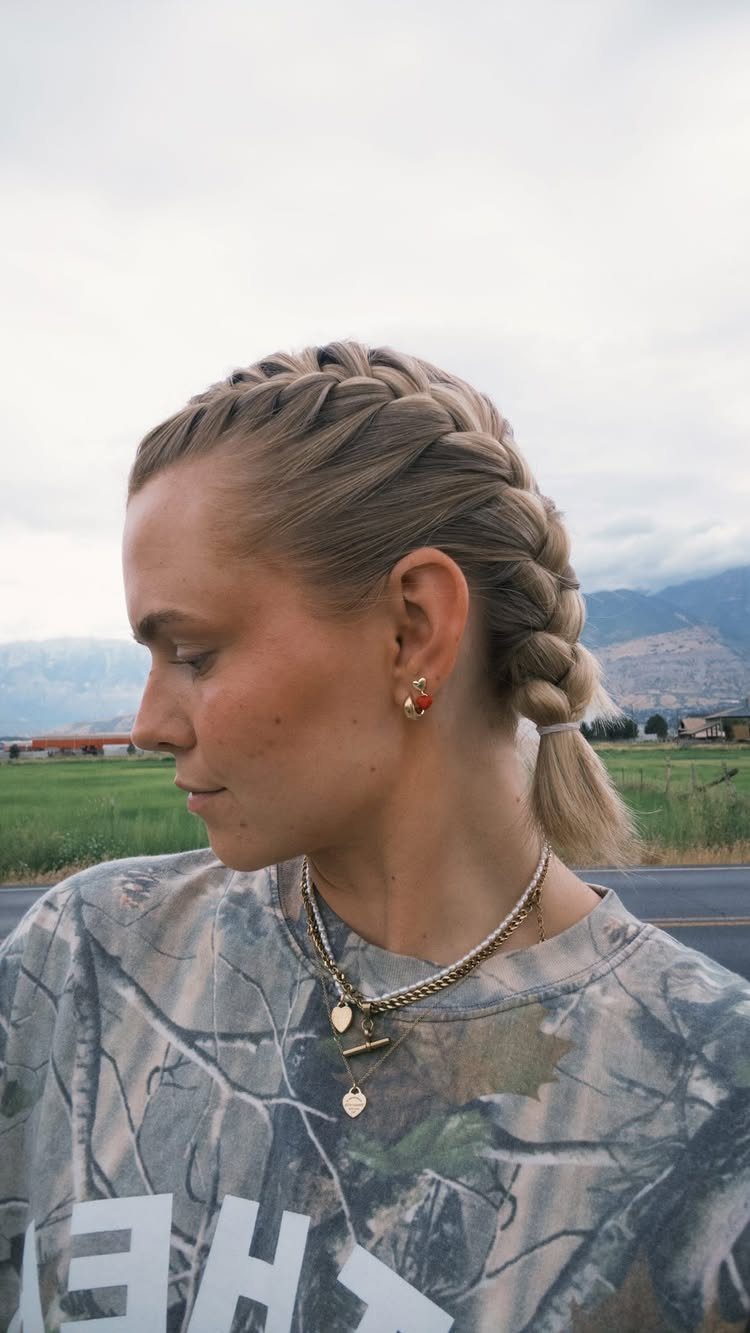
French braids add hair as you go: start with 3 strands at the crown, then pick up a bit from each side with every cross.
2 thick braids, as here, suit casual outfits and look good with a ponytail finish.
Keep your sections even and your tension consistent, and the braid will stay neat. Pulling lightly at the edges makes thin hair look fuller.
12. Waterfall Braid
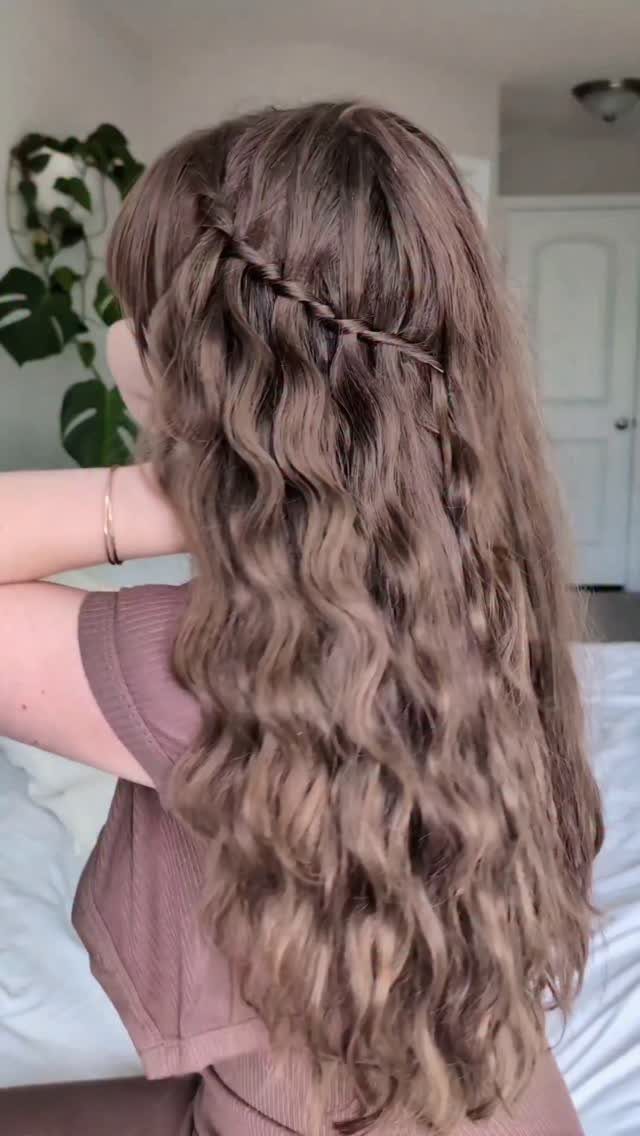
A waterfall braid keeps half your hair up and half falling free, so the length stays on show while the braid does the framing.
On long, wavy hair, it crosses the head in a horizontal line.
To make it, braid as usual, but drop the bottom strand at each cross and pick up a fresh section from above. Wavy texture hides small gaps, which makes this one forgiving for beginners.
13. Crochet Braids
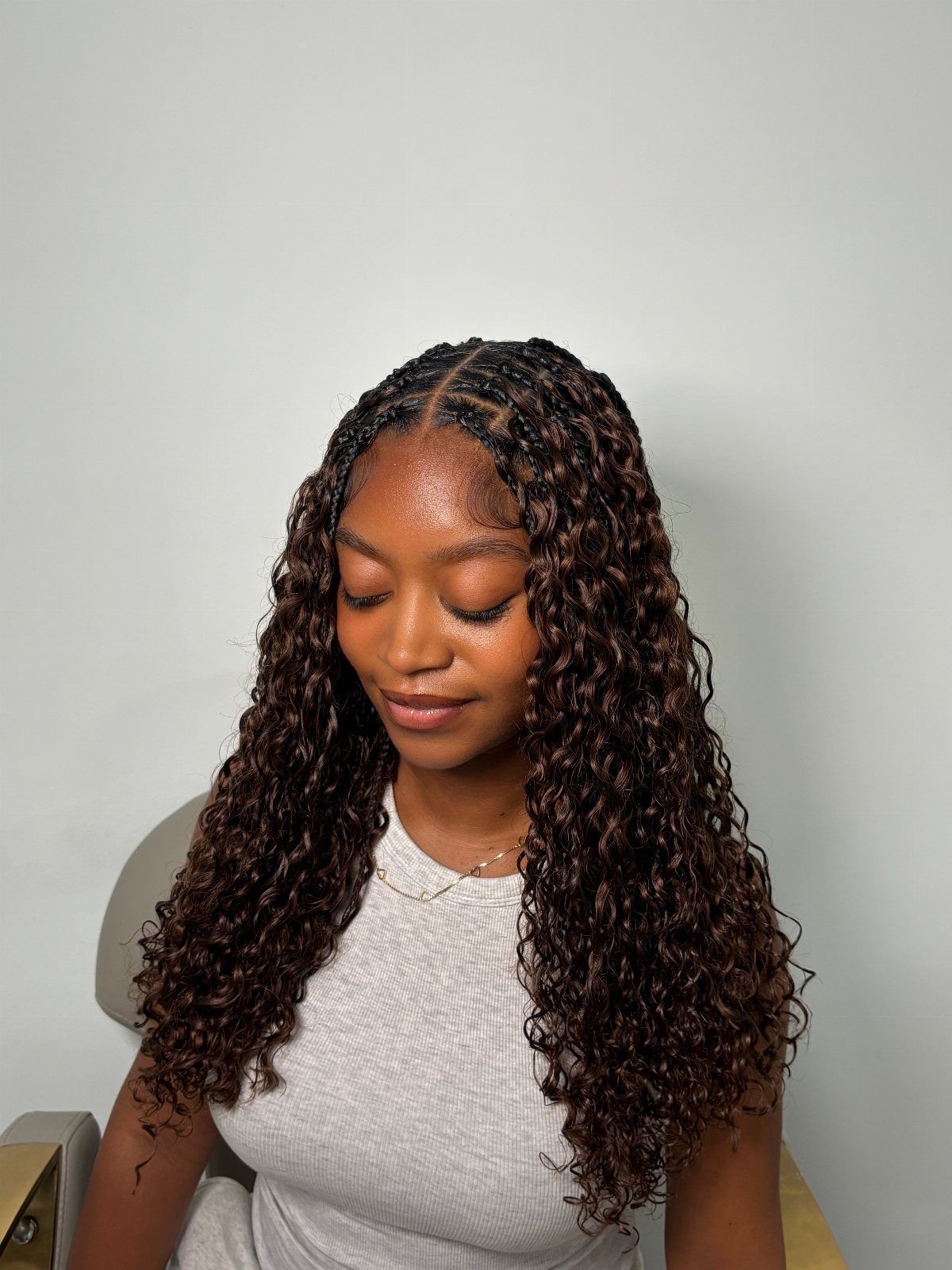
Latch hook work is what defines crochet braids: cornrows go down flat first, then the extensions are looped onto them, so the install is quicker than braiding every strand by hand.
Curly extensions like these hang soft and full against a plain ribbed top.
Ask your stylist to keep the cornrows flat and neat, since they show at the roots. I’d pick this for anyone who wants volume without a heavy, knotted feel at the scalp.
14. Boho Braids
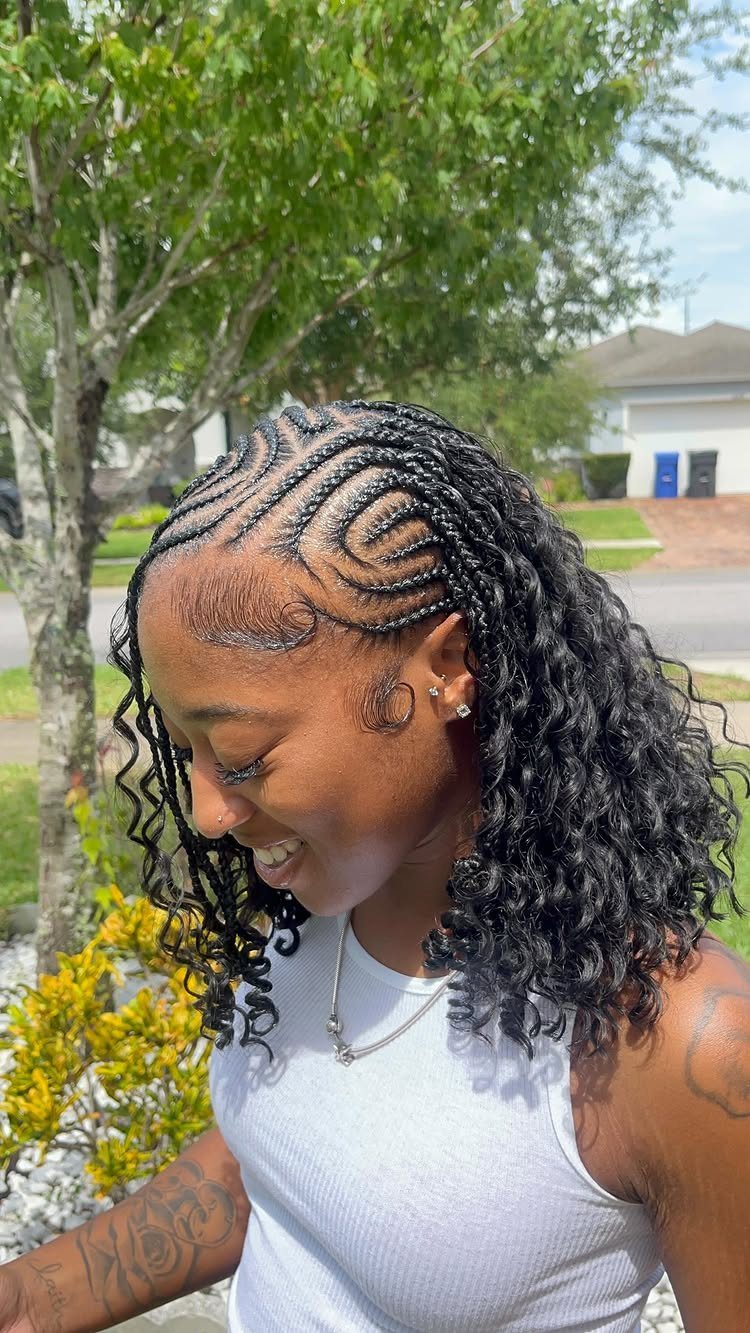
Loose, wavy strands left free throughout the braid are what make boho braids look relaxed instead of tidy.
Cornrows at the top that turn into curly lengths, as here, suit a tank top and sunlight well.
Ask your stylist to leave extra strands hanging along each braid rather than tucking them in. I like this for casual weekends, though the loose pieces mean a less polished finish than classic box braids.
15. Side Braids
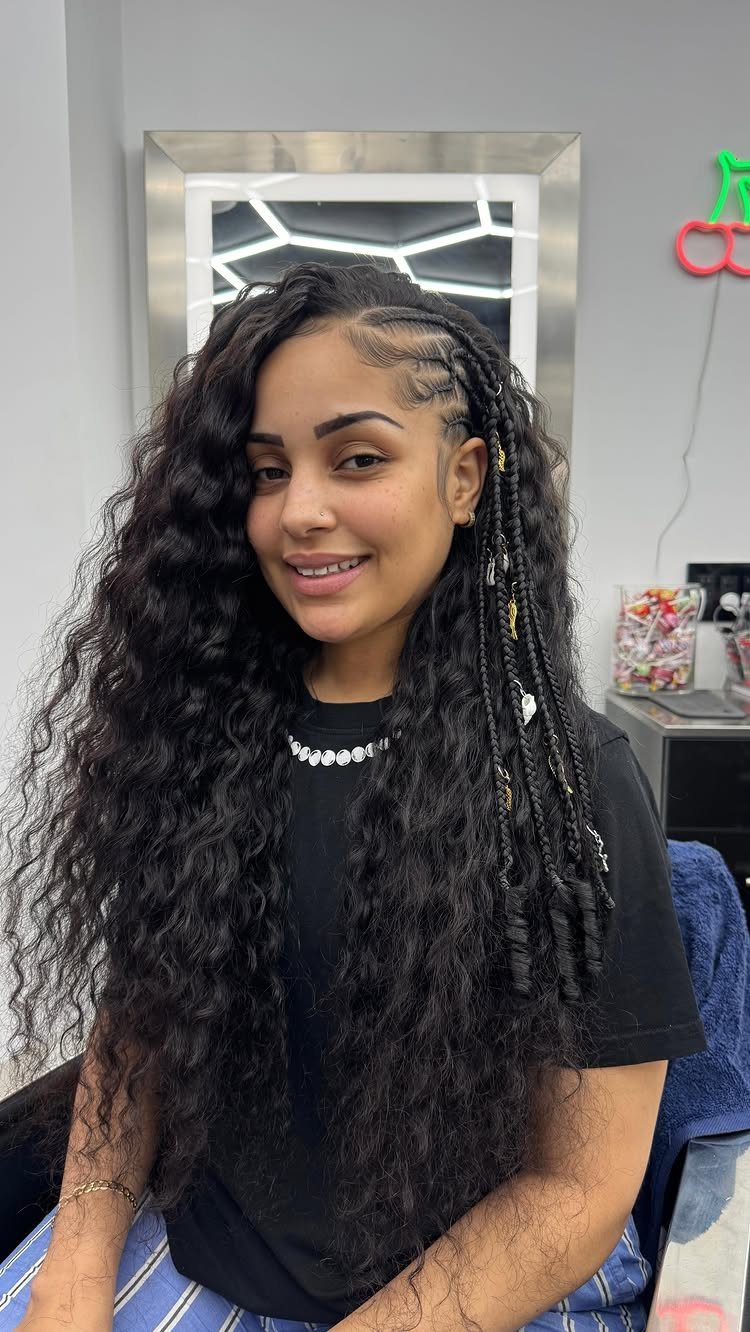
A thin side braid is the most adaptable style here, because the curly length stays the main event while the braid keeps hair off the face.
Place them where you want to frame your face, and add beads only on a few strands so the look stays light. I’d choose this when you want a small change, not a full install.
16. Ghana Braids
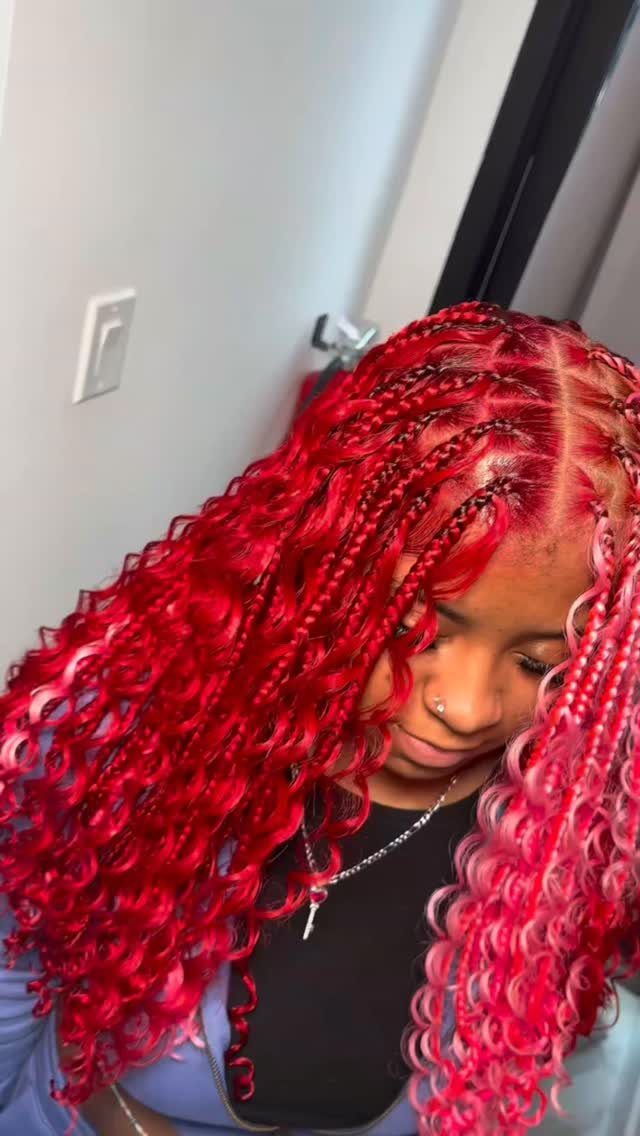
Curly hair holds Ghana braids especially well, and the curly ends here give the braids a soft, finished close.
Bright red fading into pink is a bold color, so I pair it with quiet clothing like a black shirt and let the braids do the talking.
If you want the color without the commitment, ask your stylist to use it on only some of the braids. I’d pick curly ends over straight ones for this style.
17. Small Goddess Braids
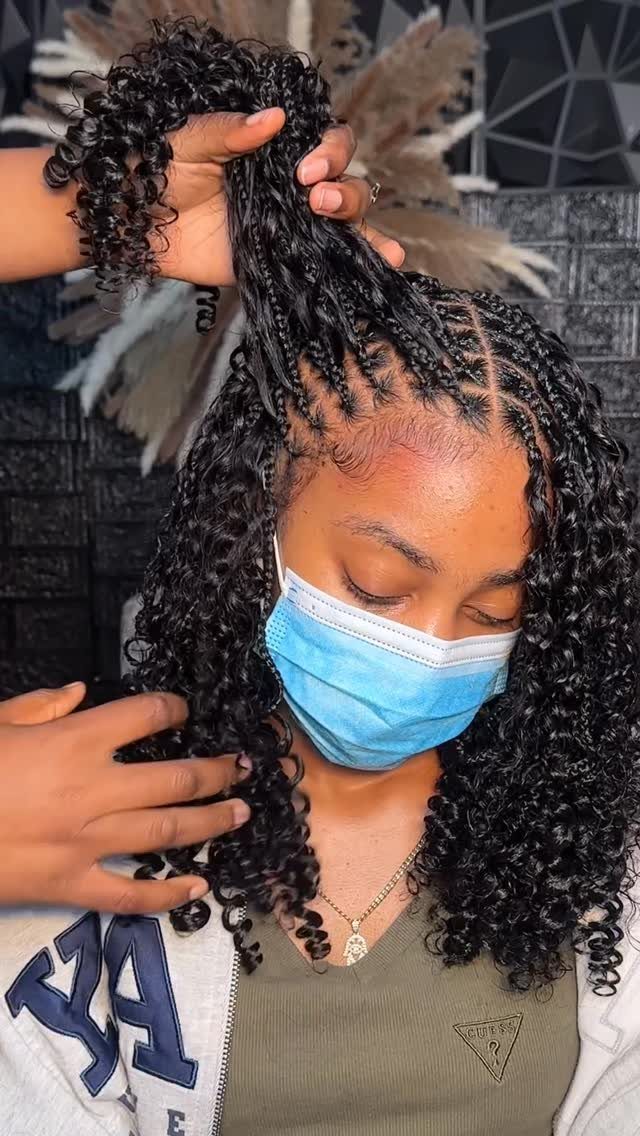
Small goddess braids mix fine, curly plaits with a few small cornrows, which gives the style detail at the scalp and softness in the length.
Because the braids are small, the style takes patience in the chair, so plan for a long appointment. I’d choose it if you like texture over a sleek, straight finish.
18. Rope Braids
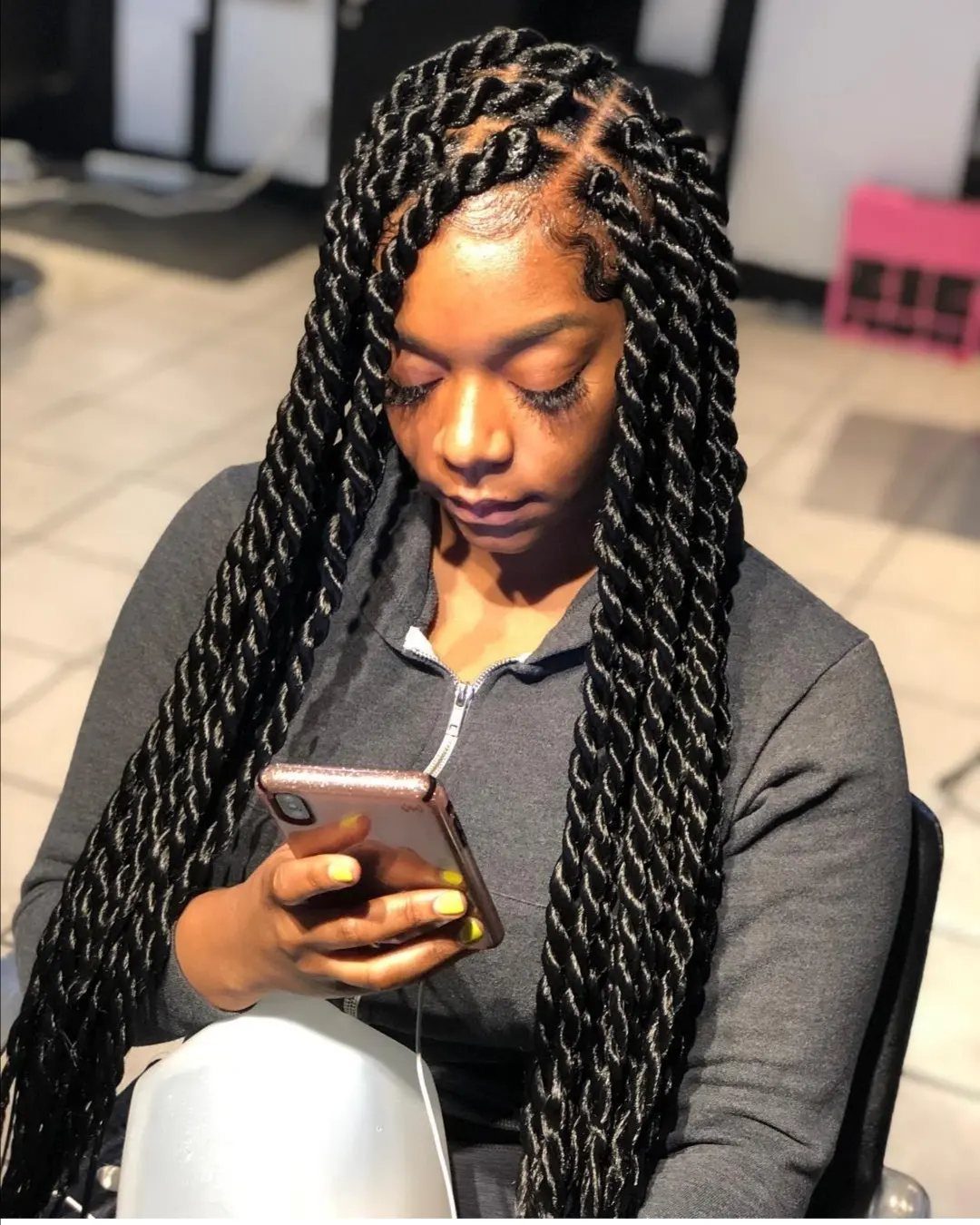
Rope braids look harder than they are, because each one is just two twisted strands wrapped around each other.
To make them, split a section in two, twist each piece in the same direction, then wrap the two pieces together the opposite way so they hold.
Rope braids on long black hair hang smooth and need very little styling once they are in. I’d pick them as an easier first twist style.
19. Lemonade Braids
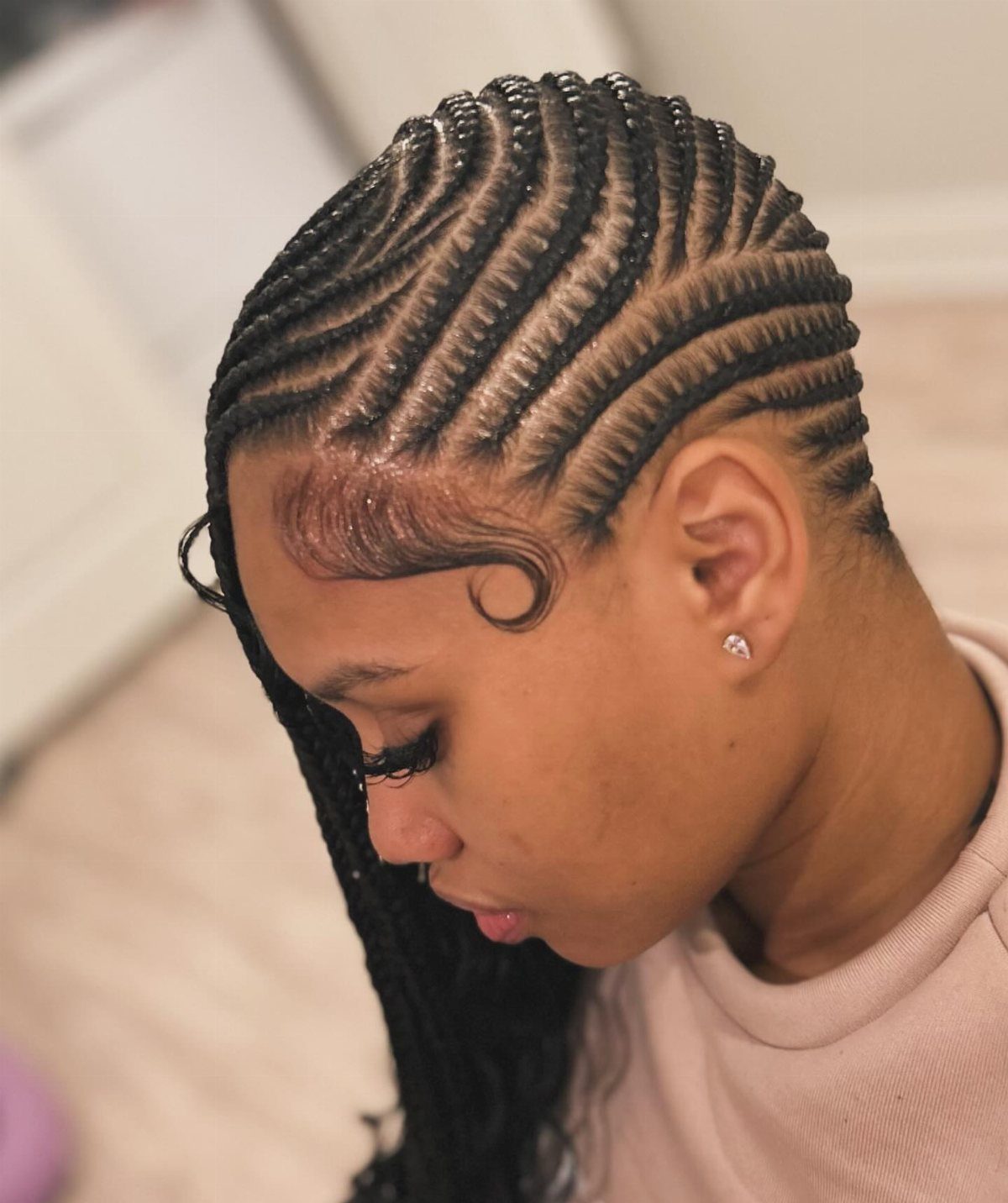
Lemonade braids are cornrows swept to one side, so the deep side part is what you notice first. Beyoncé popularized the style, and the long braids behind the rows keep it looking sleek.
Flat rows and a crisp part matter most here, because the scalp shows through, so tell your stylist before the first braid goes in.
A light shirt and small studs, as here, leave the braids as the focus. I’d choose this when you want a sharper look than all-over box braids.
20. Feed in Braids
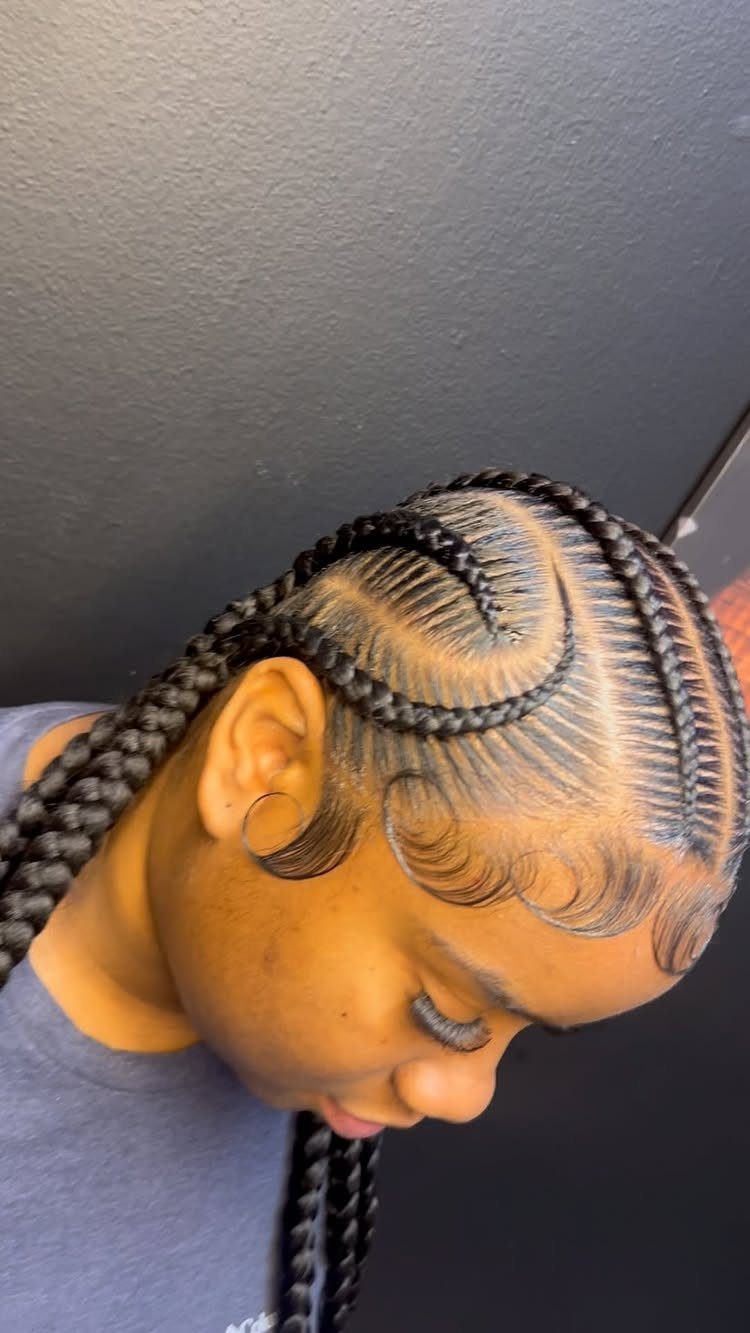
Feed-in braids play thick against thin and even out of balance on purpose, so the curved rows read as asymmetrical rather than uniform.
Styled edges frame the face, and a plain wall or a simple top lets the pattern stand alone. I’d keep jewelry minimal and let the braiding carry the look.
Maintaining Braids
Moisture does the most work for braids, and it starts before the appointment. Wash and condition the week of your install with a moisturizing shampoo and conditioner, so the hair going under the braids is soft and strong.
Once the braids are in, moisturize your scalp regularly, and tie a silk or satin scarf over them at night. The scarf cuts friction against the pillow, which keeps the surface neat longer.
If you want a style to last, book a touch-up with your stylist rather than fixing it yourself. Most important, take braids out on time.
Choosing the Right Style
Start with your hair type, your length, and where you will wear the style most. Those three narrow the choices faster than any photo does.
Look for a braid that seals in moisture and doesn’t tug at the scalp; if the edges feel tight on day one, the style is too tense.
If a braid pulls at your edges on the first day, it is the wrong braid for you, however good it looks.
Before you commit, preview it. Before booking, try a face-shape quiz or an app that turns a selfie into a short preview video, so you see the braid on your own face first.
Treat that as a way to rule options out, then confirm the final choice with your stylist.
Styling Tips
Beads are the easiest way to make a braid yours. Add colorful ones to a few strands, or let them run through the length for a playful look.
Hair cuffs work the same way with less fuss. Slide one onto a single braid or a few and you get a bright accent that is easy to take off.
Cornrows take well to personal touches too.
Zigzag, wave, or criss-cross patterns change the whole look, and so does varying the size of the sections. Decide on one detail, such as beads, a pattern, or section size, and keep the rest simple so it reads as intentional.
Frequently Asked Questions
What braid style is popular now?
Box braids and knotless braids are the styles trending most right now.
Because knotless braids begin with only your own hair and feed in extra length a little at a time, the base sits flatter and weighs less than a knotted box braid does.
Cornrow-based looks like lemonade braids, halo braids and goddess braids are also in style.
What are different types of braids?
Braids range from scalp styles to hanging plaits and twisted styles. Cornrows, Fulani braids and lemonade braids lie flat on the scalp, while box braids, knotless braids and Ghana braids hang long.
French, Dutch, fishtail and waterfall styles all come from your natural hair, while a rope braid is simply a pair of twisted strands wound around one another.
How long do goddess braids last?
Goddess braids can last up to 6 weeks with proper care, though bigger braids often hold up for less time.
Chunkier braids hold less tension per strand, but they also frizz sooner, so expect them to look rough before smaller ones do.
Hair texture, humidity and the products used also change how long they stay neat, and sleeping in a scarf helps.