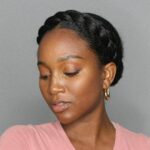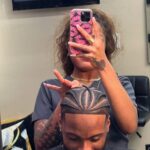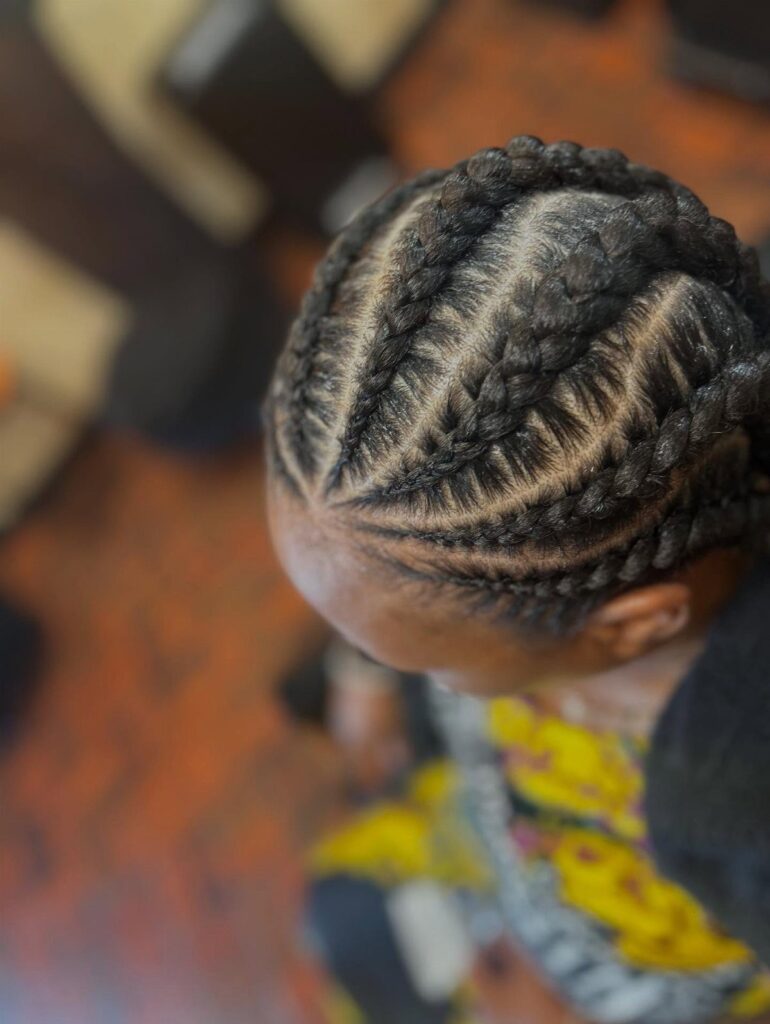
Chair time separates these styles, along with how much detail you want on your scalp: Chunky Plain Lines use fewer, thicker rows and the shortest appointment, while Mini Cornrows pack thin rows into the most intricate pattern and ask for a patient braider.
Choose by how long you can sit and how much precision you want on show.
Feed-in cornrows, where the braider adds hair gradually so each row starts with a tapered, natural hairline, is the technique worth naming at booking for any curved design.
1. Straight-Back Cornrows
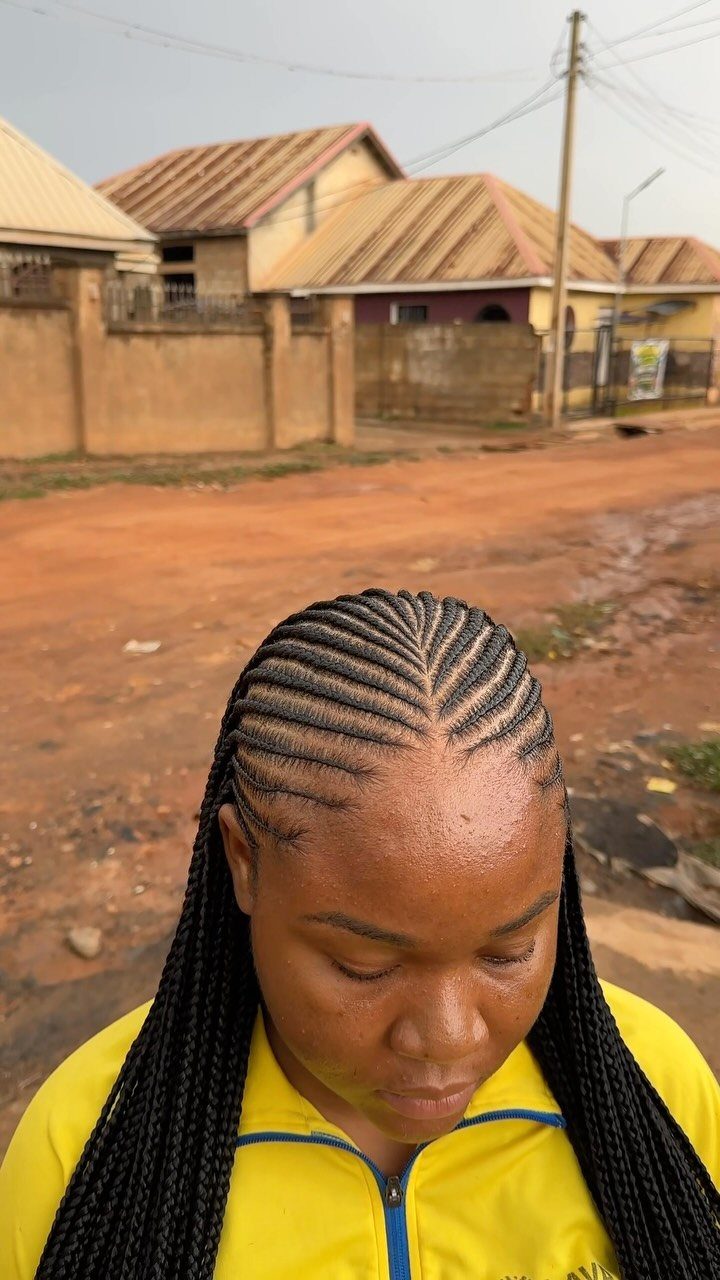
Straight-back cornrows are the version I’d hand to anyone who wants one braid style and no second-guessing. Parallel lines run front to back, so the whole look depends on the parting being clean and the rows being even.
The loose braids at the ends keep it from feeling stiff.
It’s low-maintenance for a protective style, and it works with a casual jacket as easily as with anything dressier. Ask your braider for even rows from the hairline, since that’s where crooked partings show most.
2. Side-Swept Lines
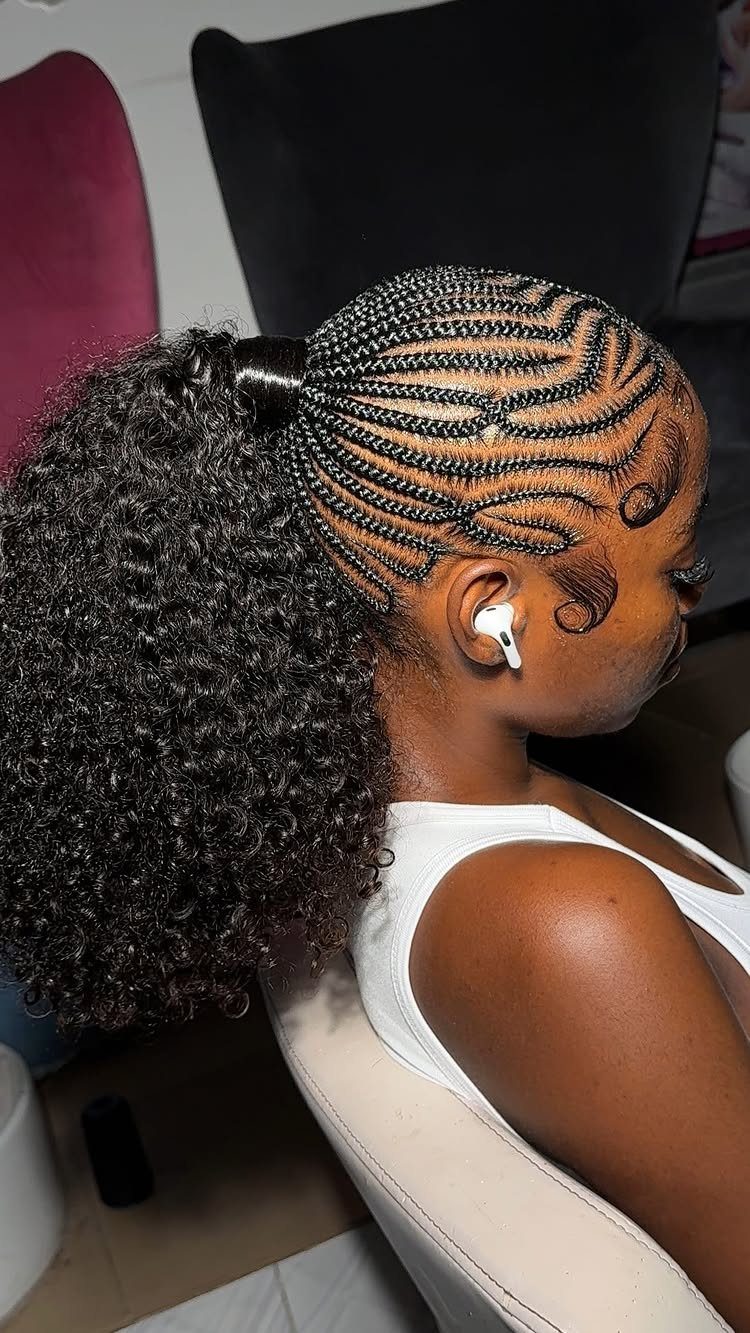
Asymmetry does the work here. Every line sweeps to one side and ends in a curly ponytail, so the profile looks more styled than a center-parted design would.
I like it for evenings out because it needs no accessories. Ask for curved partings that all travel in the same direction, and let the ponytail stay full and curly instead of slicked down.
One limit: the look reads best from the side, so choose a braider who is careful with the lines near the temple.
3. Curved or Circular Lines
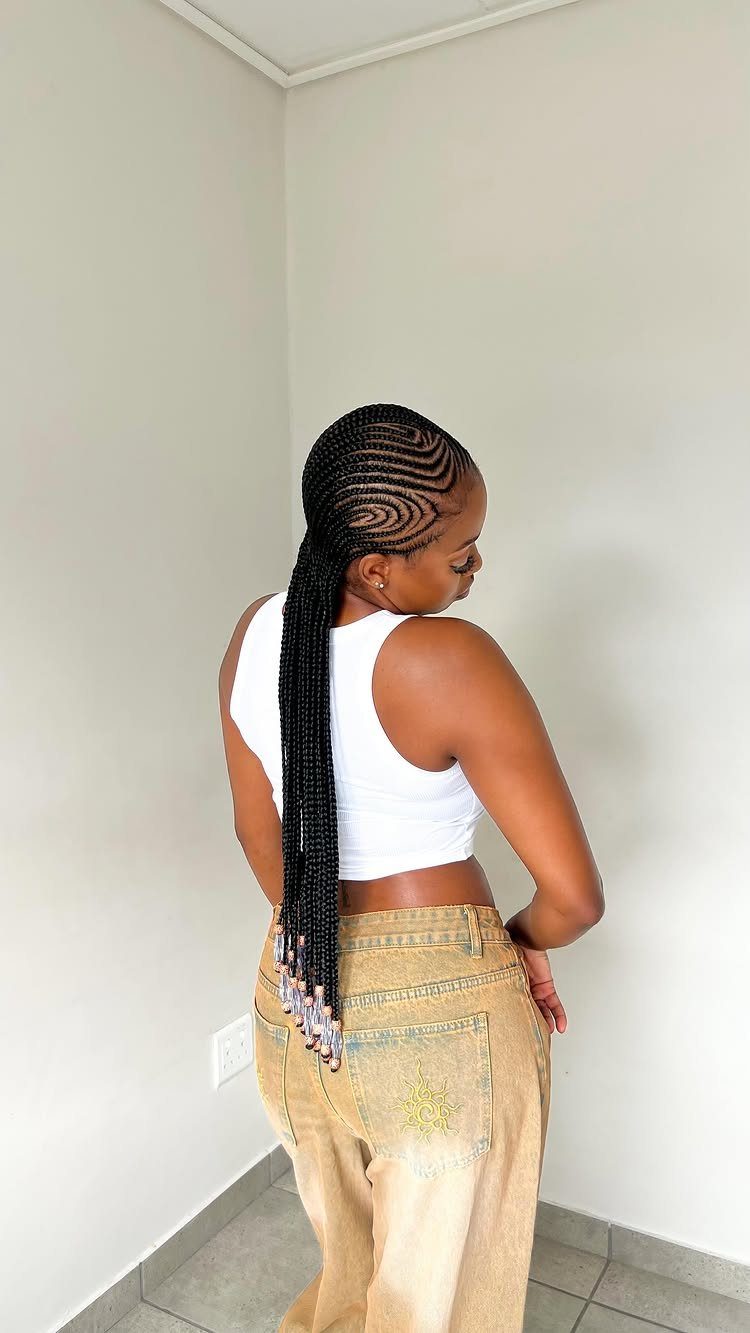
Curves soften cornrows. Instead of ruler-straight rows, the lines bend across the scalp and gather into one long ponytail, which makes the style feel closer to a drawing than a pattern.
If you wear plain tops and neutral pants most days, this is where I’d put the detail.
Beads on the ponytail are an optional extra, and they suit this shape well. Show your braider the curve you want, because partings that wander look uneven rather than artistic.
4. Feed-In Cornrows
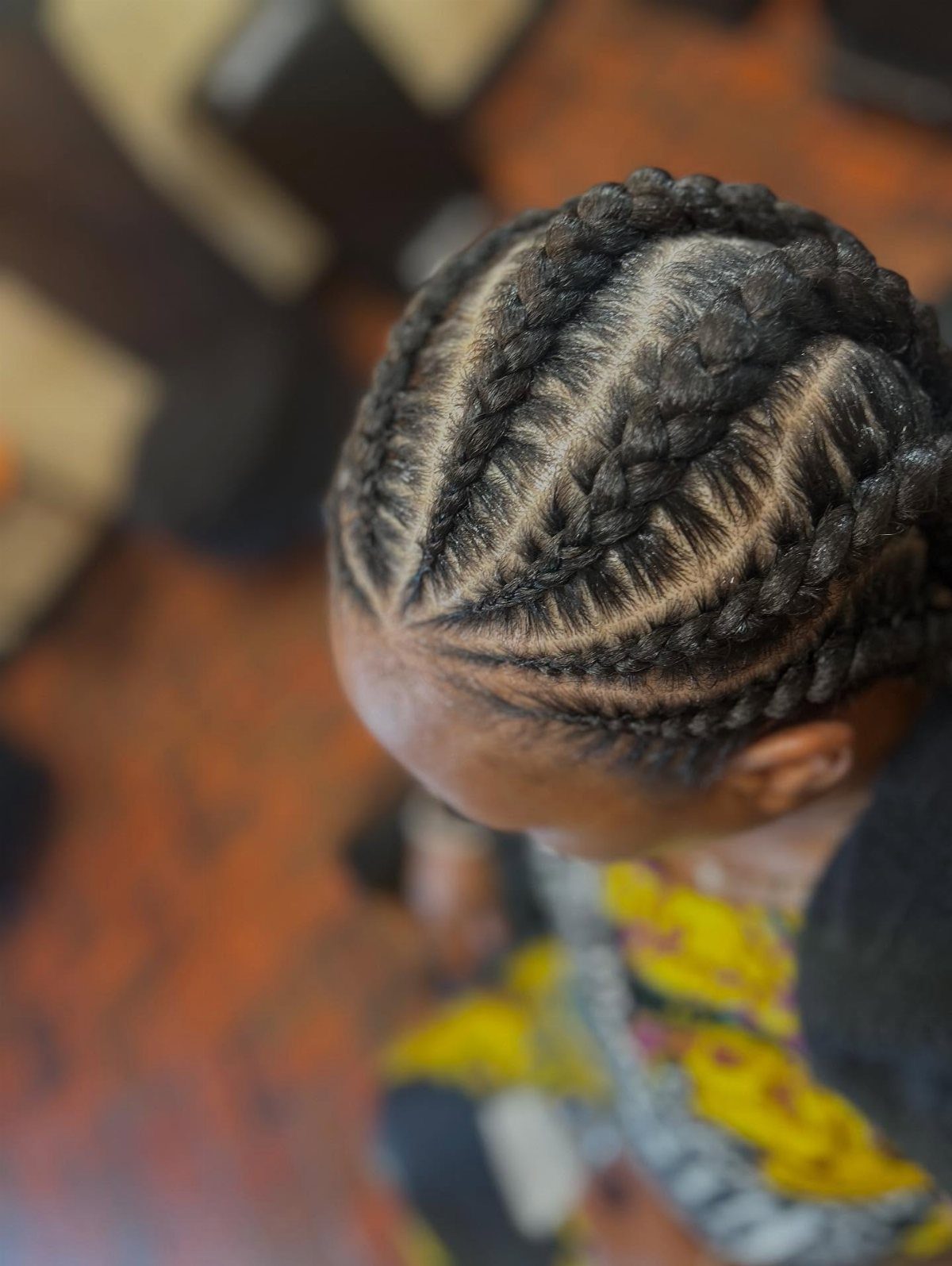
Feed-in cornrows start with your own hair and add braiding hair gradually, so each row thickens without a blunt, bulky start at the scalp. That’s the whole appeal: the line looks like it grew that way.
For curved designs like this one, the tapered start keeps the hairline looking natural.
Feed-in cornrows are the technique to request by name when booking, because the braider adds hair in small pieces along the way, so the part starts with a natural, tapered hairline and no blunt knot of extension at the front.
Mention it in your appointment notes so there’s no confusion.
5. Ghana Braids
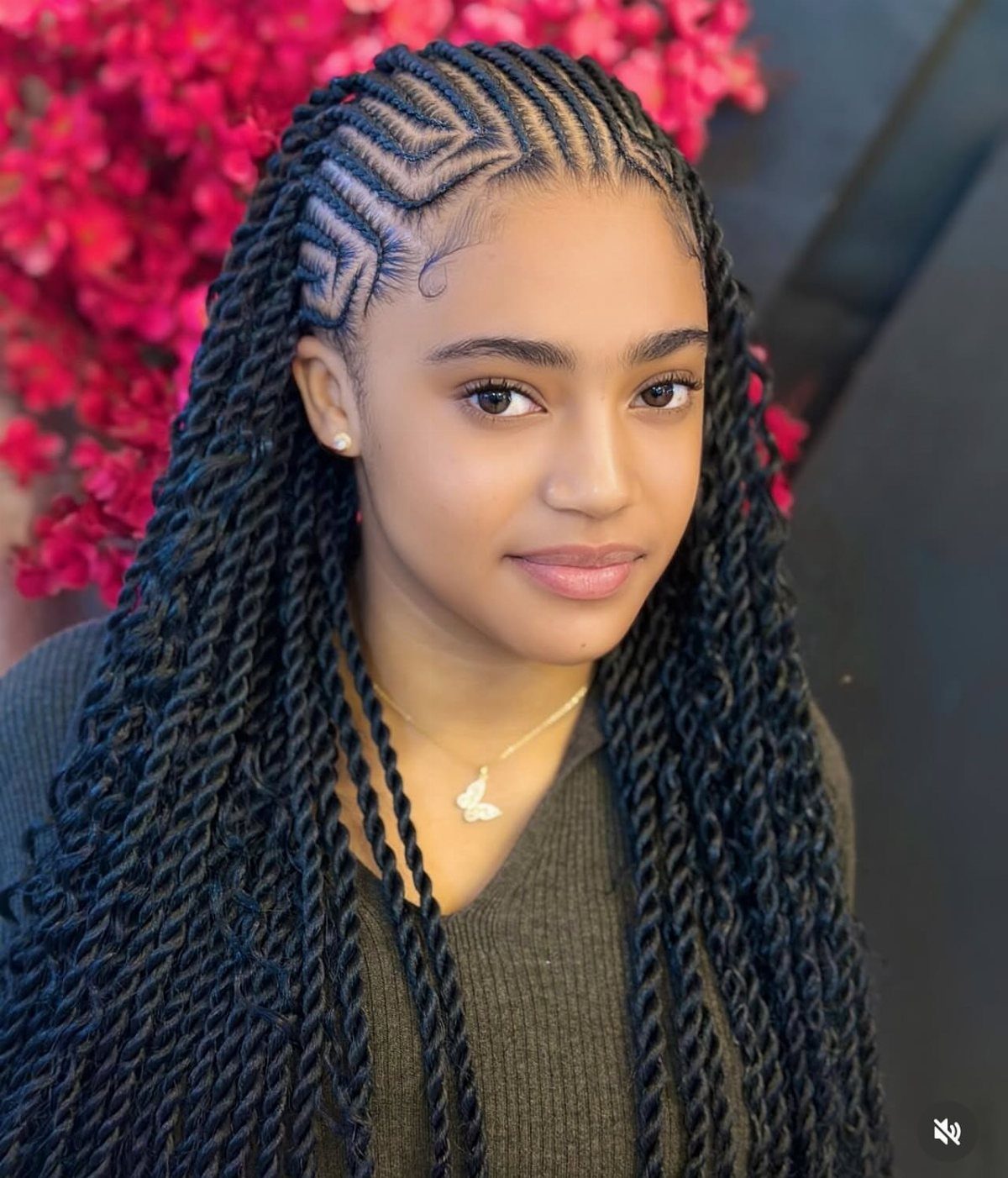
Ghana braids are for days when you want your hair to be the statement. Raised, sculpted cornrows in geometric patterns lead into long twisted lengths, and the contrast between the 2 is what makes it bold.
Plain tops and one piece of jewelry are enough.
I’d pick this over simpler rows if you want a style that looks finished with no styling at all. Bring a reference photo of the pattern, because geometric lines leave little room for improvising.
6. Stitch Braids
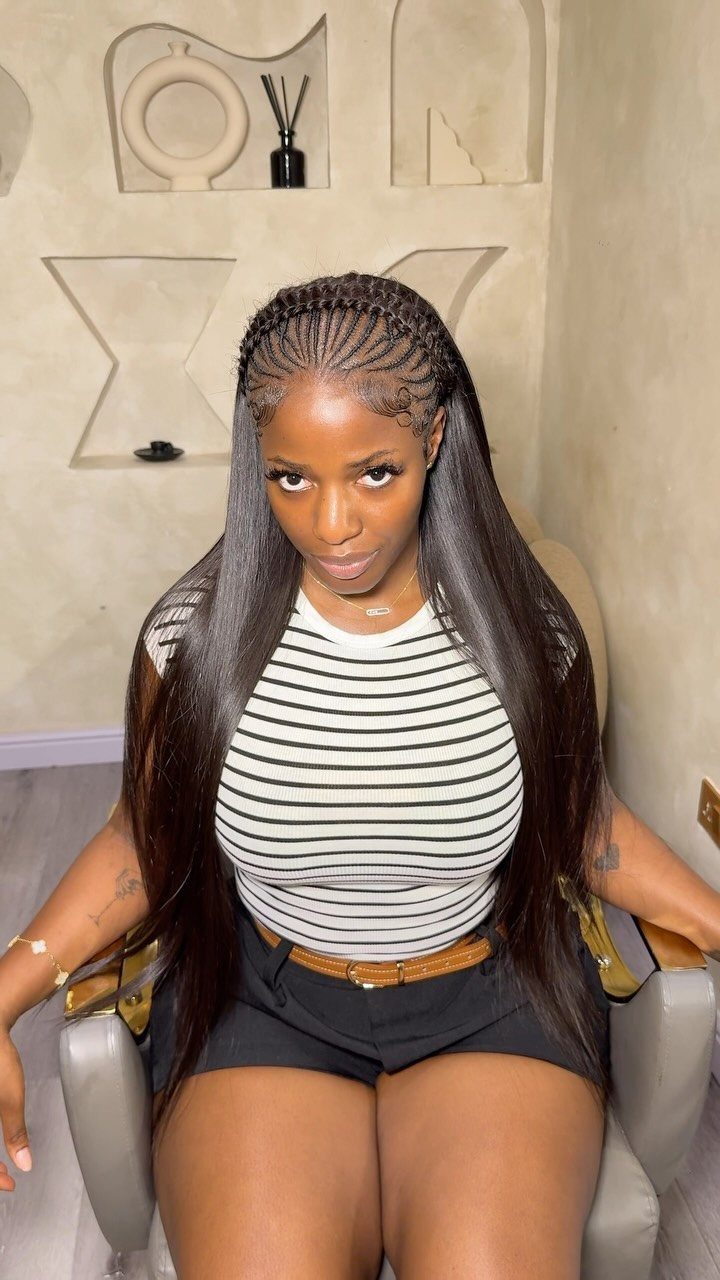
Stitch braids are defined by their crisp, sharply separated sections, which make each row look drawn on. Here they sit across the crown and give way to long, straight hair.
That pairing is what I like most: the precision stays up top while the length stays soft.
It suits anyone who wants a neat, polished look without committing to braids all over. Ask for even partings, because clean sections are the entire point and uneven ones show immediately.
7. Fulani-Inspired Lines
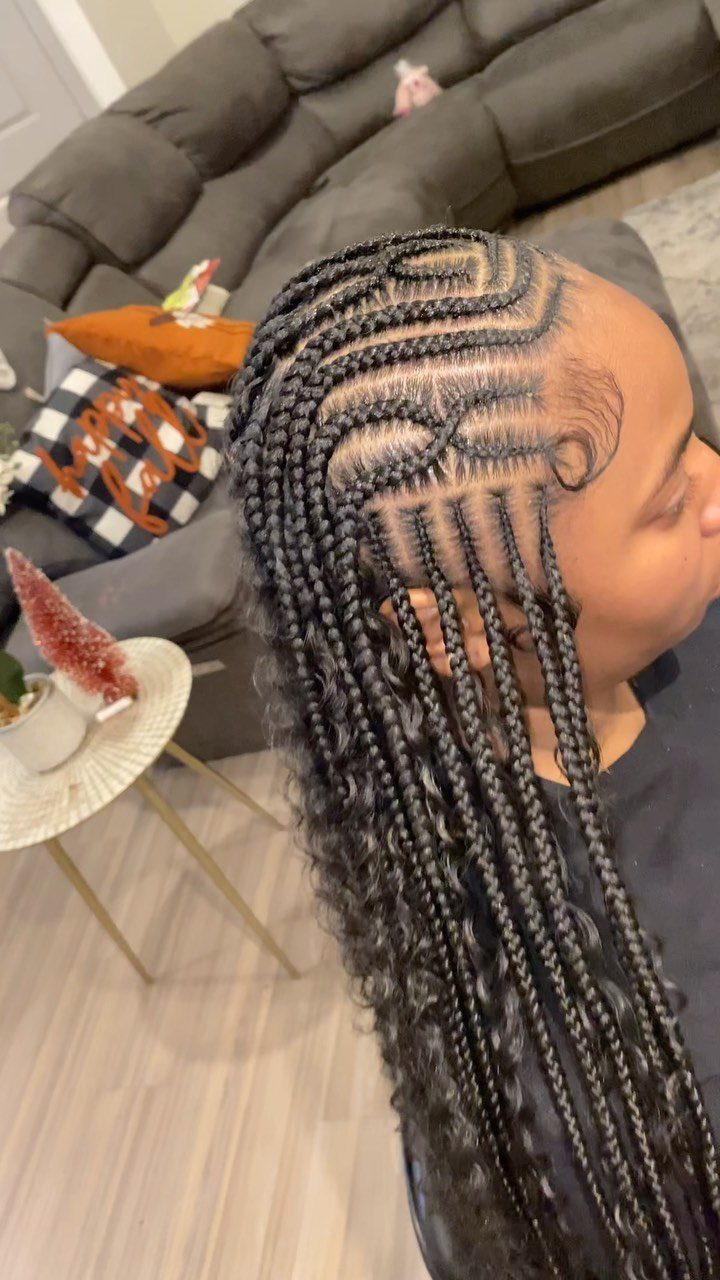
Curved parting lines paired with long hanging braids give Fulani-inspired styles their balance: the scalp work is detailed, and the length moves freely below it.
I’d choose this when you want tradition and a modern finish in one look.
Show your braider a reference photo, since curved designs depend on the exact path of each line. Ask for the curves to flow smoothly into the hanging braids so the transition doesn’t look abrupt.
8. Mini Cornrows
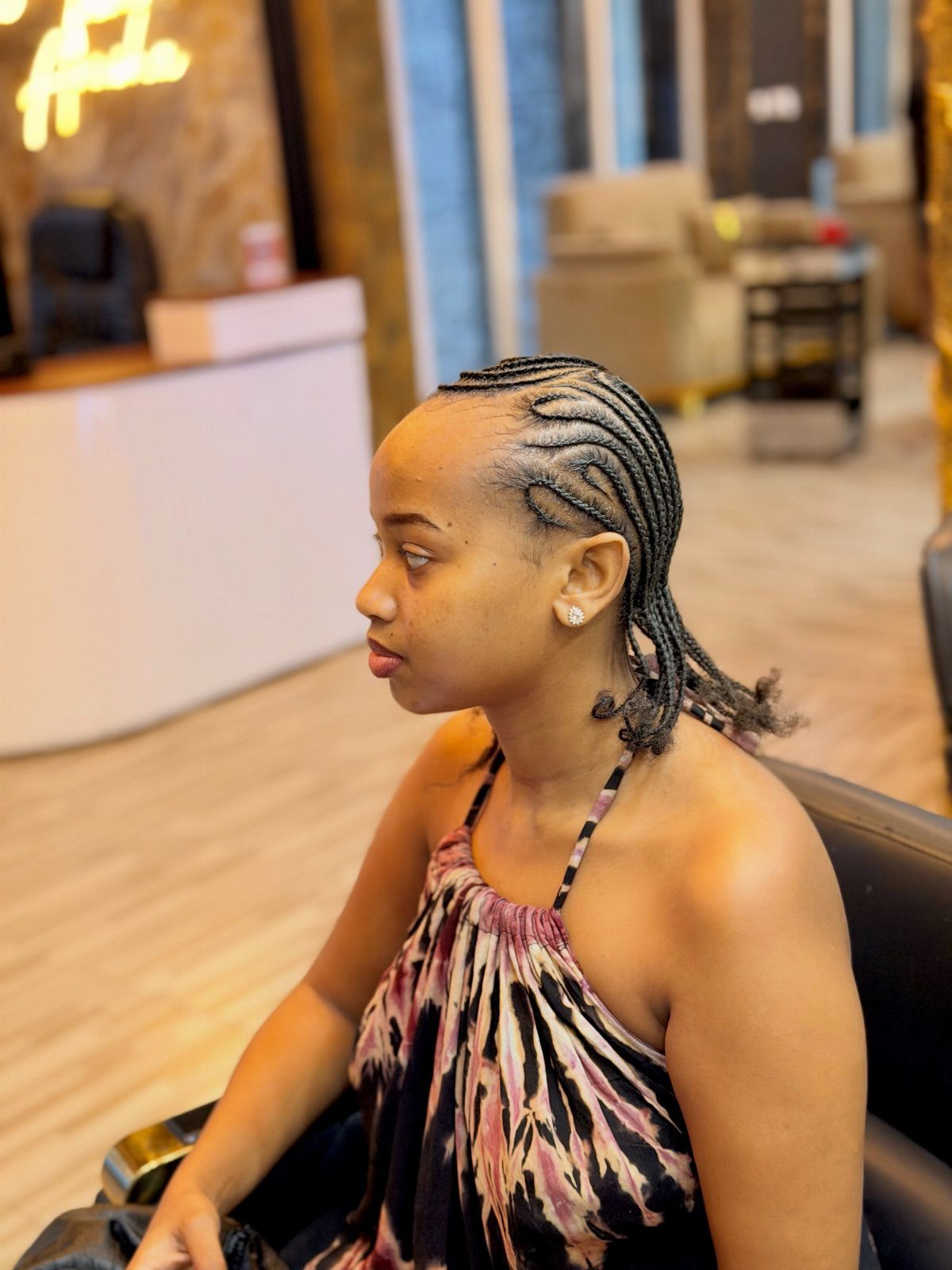
Thin, curved rows packed into a detailed pattern make mini cornrows the most intricate style of the bunch. Because the lines are so fine, the pattern across the head becomes the whole design.
That detail is what makes them versatile: they look good with a halter top, a blazer or a plain tee.
Small rows demand a patient braider, and that costs you more time in the chair, so ask how they work before you book.
9. Chunky Plain Lines
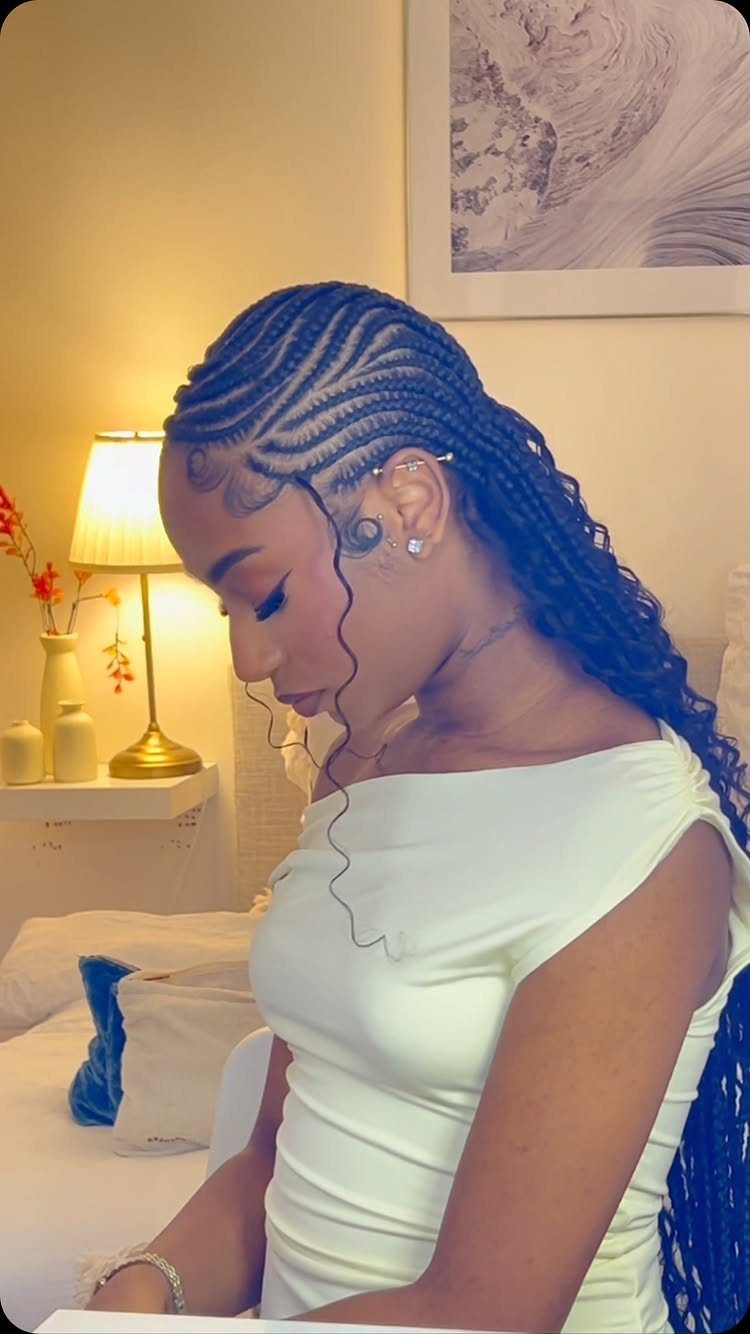
Thick rows mean fewer of them, and fewer rows mean less time in the chair. That’s why chunky plain lines are my pick when you want cornrows without a long appointment.
The long extensions keep the look soft against the bolder lines.
Ask for partings of an even width, since with so few rows any uneven one stands out. Chunky lines also pair well with off-the-shoulder necklines and simple dresses, so the hair does the work.
10. Curved Plain Lines with Low Bun
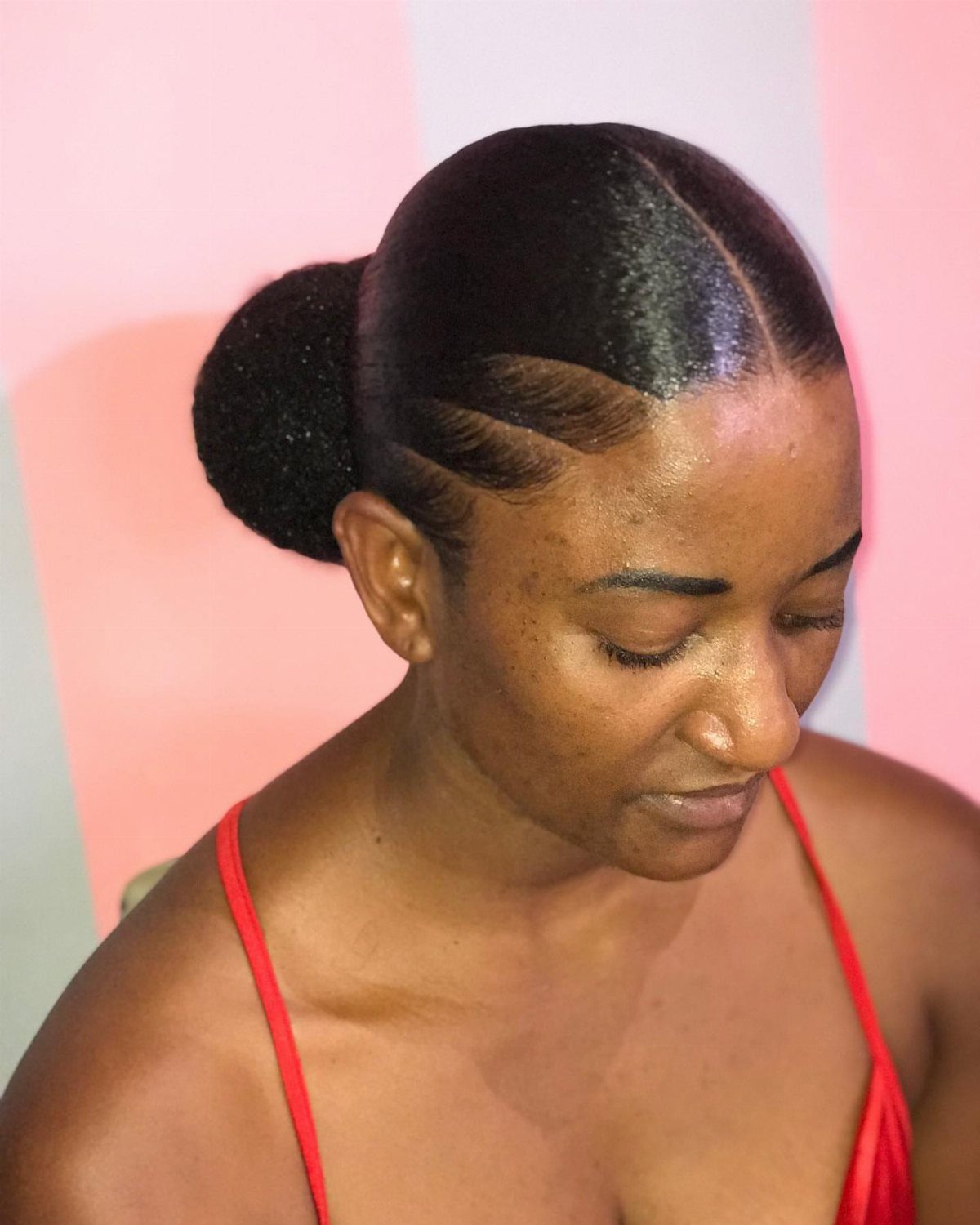
Curved lines that gather into a low bun are the gentlest style here. The curves soften the scalp pattern, and the bun finishes it off neatly at the nape.
I’d wear it with a strap top or any open neckline, because the bun leaves the neck and shoulders clear.
Ask your braider to keep the lines smooth and the bun sitting low and secure. It’s a good choice if you want something feminine that still looks put together.
Frequently Asked Questions
What are knotless braids?
A knotless braid starts with your own hair alone and adds extra braiding hair in gradual pieces, so no hard knot sits against the scalp and the pull on your roots stays lighter.
Feed-in cornrows use a similar method, with the braider weaving in small bits of hair one at a time so the root looks soft and tapered rather than blunt.
What are the different types of braids?
For cornrow-style lines, the main types are straight-back cornrows, side-swept lines, curved or circular lines, feed-in cornrows, Ghana braids, stitch braids, Fulani-inspired styles, mini cornrows, chunky plain lines and curved lines with a low bun.
Straight-back rows run parallel from front to back, while side-swept lines all travel one direction and end in a curly ponytail.
Ghana braids are raised, sculpted rows in geometric patterns, and stitch braids have crisp, sharply separated sections. Mini cornrows are the finest and most intricate of the group.
How do I style natural hair for a black woman?
Braided lines close to the scalp are a dependable way to style natural hair, and many versions need no extensions at all.
Curved, geometric or swirling rows follow the shape of the head and keep the look neat with low tension.
Feed-in cornrows, chunky plain lines and curved lines with a low bun all work with simple outfits, so the hair carries the look. Texture isn’t a limit: lines work across Type 3 curls and Type 4 coils.