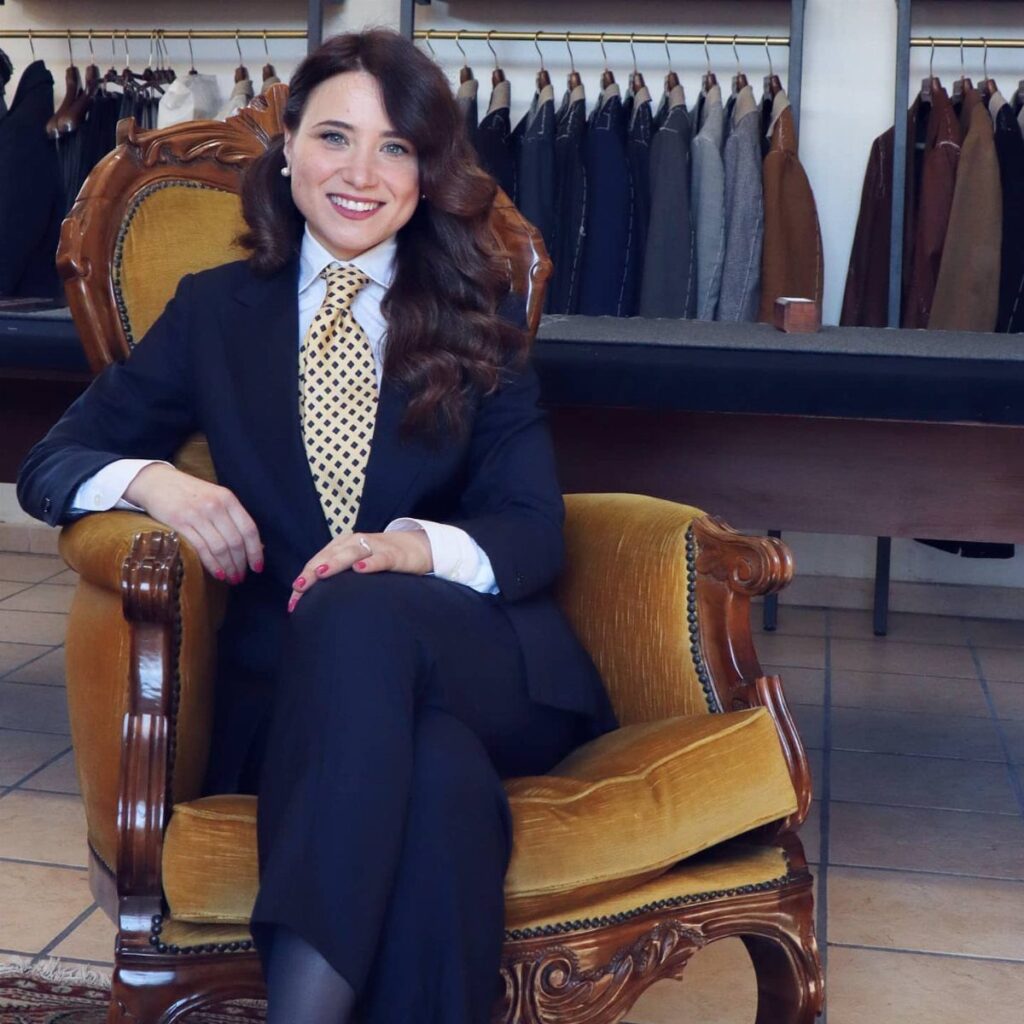
Your office decides the pick: a conservative firm calls for a different cut than a casual one, and the written dress code, which I cover under Understanding Dress Codes, settles hems and shoes before taste does.
The range here runs from Formal Business Attire down to Casual Work Outfits, with a Plum Tailored Skirt Suit, Statement Dresses and a Midi Skirt and Cashmere Sweater between them.
Fit matters at every level, and the shoulders are the one part of a jacket that tailoring can’t easily fix.
1. Formal Business Attire
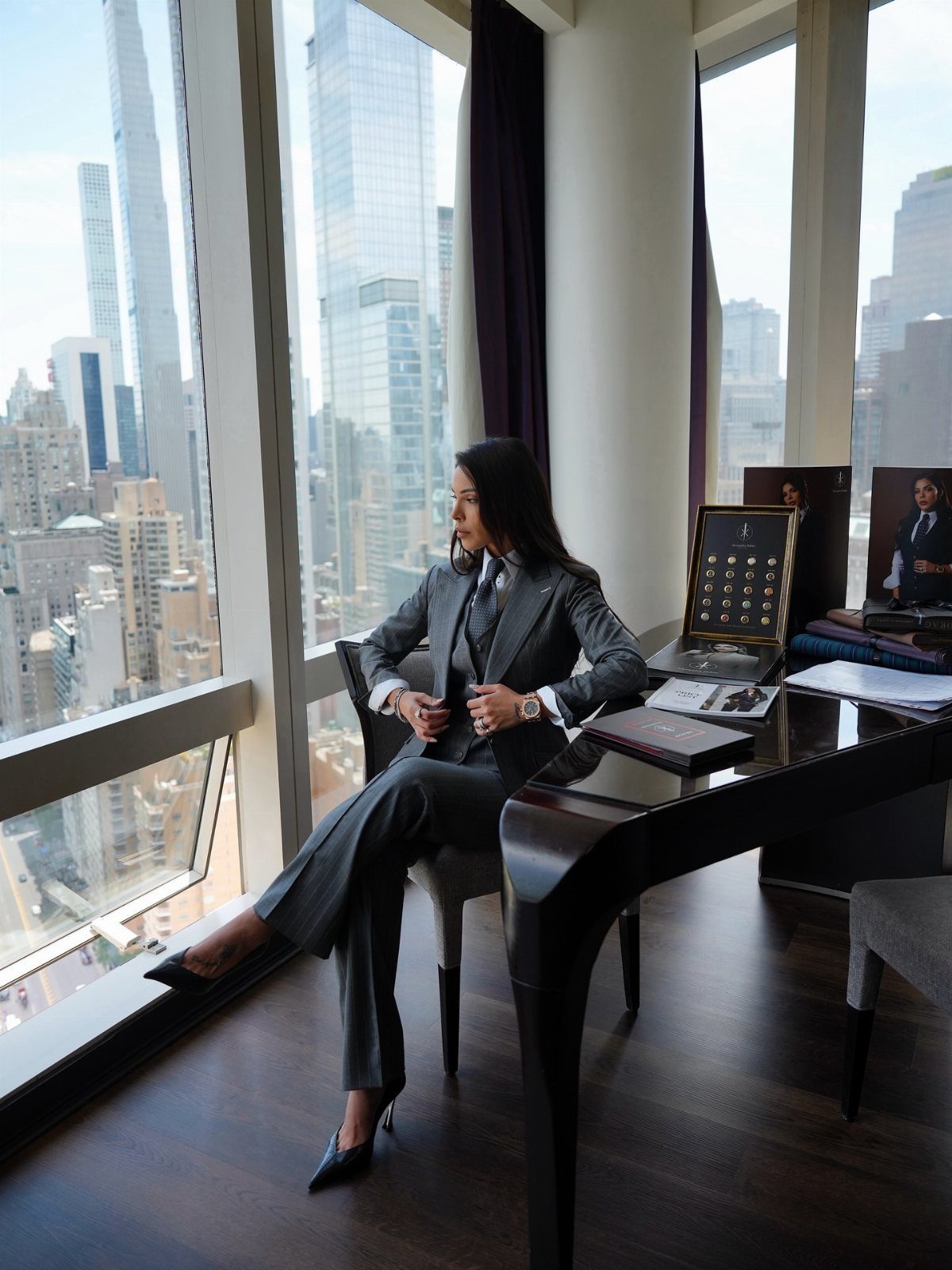
A three-piece suit gives you the most formal version of women’s workwear: jacket, trousers or skirt, and a vest in one cloth.
Grey is the color I would pick first, because it reads serious without the starkness of black and works with most shirt colors.
Tailoring decides everything here. Have the jacket shoulders and sleeve length fitted, since hems and waistbands are easy to alter and shoulders are not.
Pointed or closed-toe heels keep the line clean. Save a suit like this for the days that call for it, and buy the best fabric you can afford.
2. Blazers Over Tops
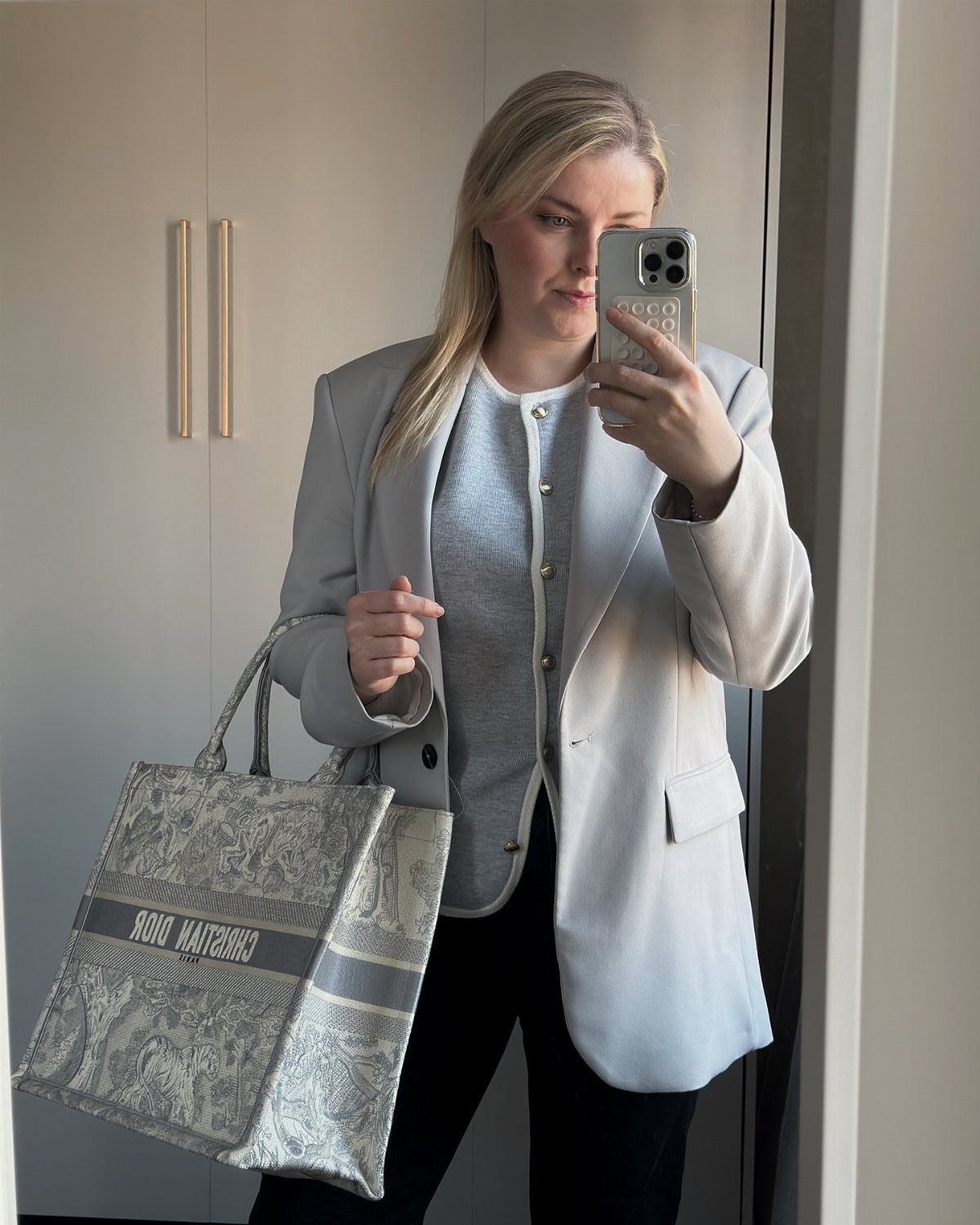
Layering a blazer over a knit is the quickest way to make a plain top look finished.
Soft colors from the same cool family work well together, such as light blue and grey, and a single dark piece like black pants below keeps the look grounded.
Pick a blazer cut slightly shorter or longer than the cardigan hem, so the layers do not stack at the same spot. Thin knits work best underneath, because a chunky one bunches at the armholes.
A structured tote finishes the look and keeps it office-ready.
3. White Button Down
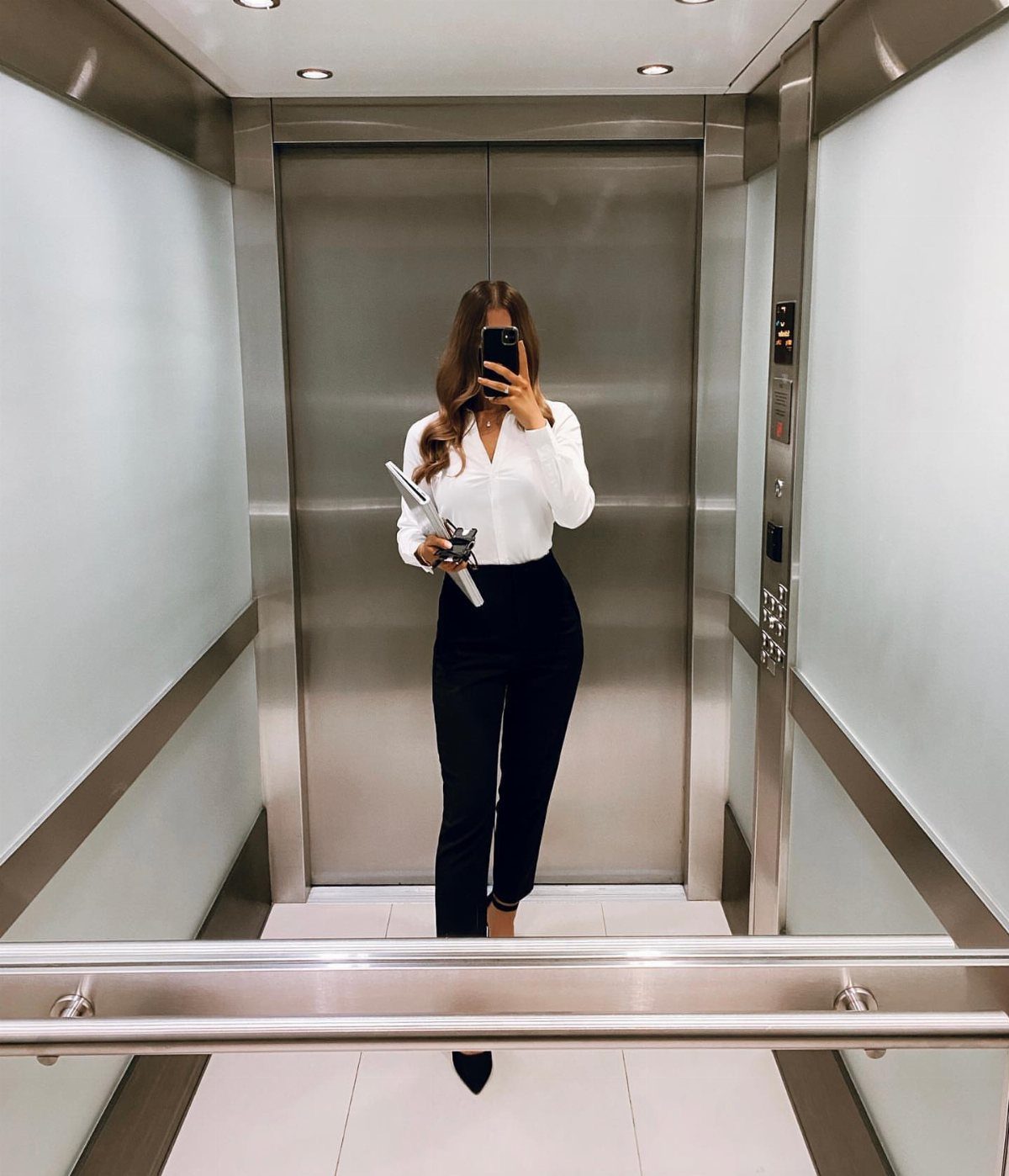
Nobody expects a white button-down to be interesting, which is why small changes show. Black trousers and black heels give it a sharp, high-contrast base, and that pairing works on almost any body shape.
Try leaving the top button and one more open, then cuff the sleeves twice. A partial tuck at the front adds shape without making the shirt look stiff.
Choose an opaque cotton or a blend with some weight so it does not show through. Buy the fit first and fix the collar later.
4. Casual Work Outfits
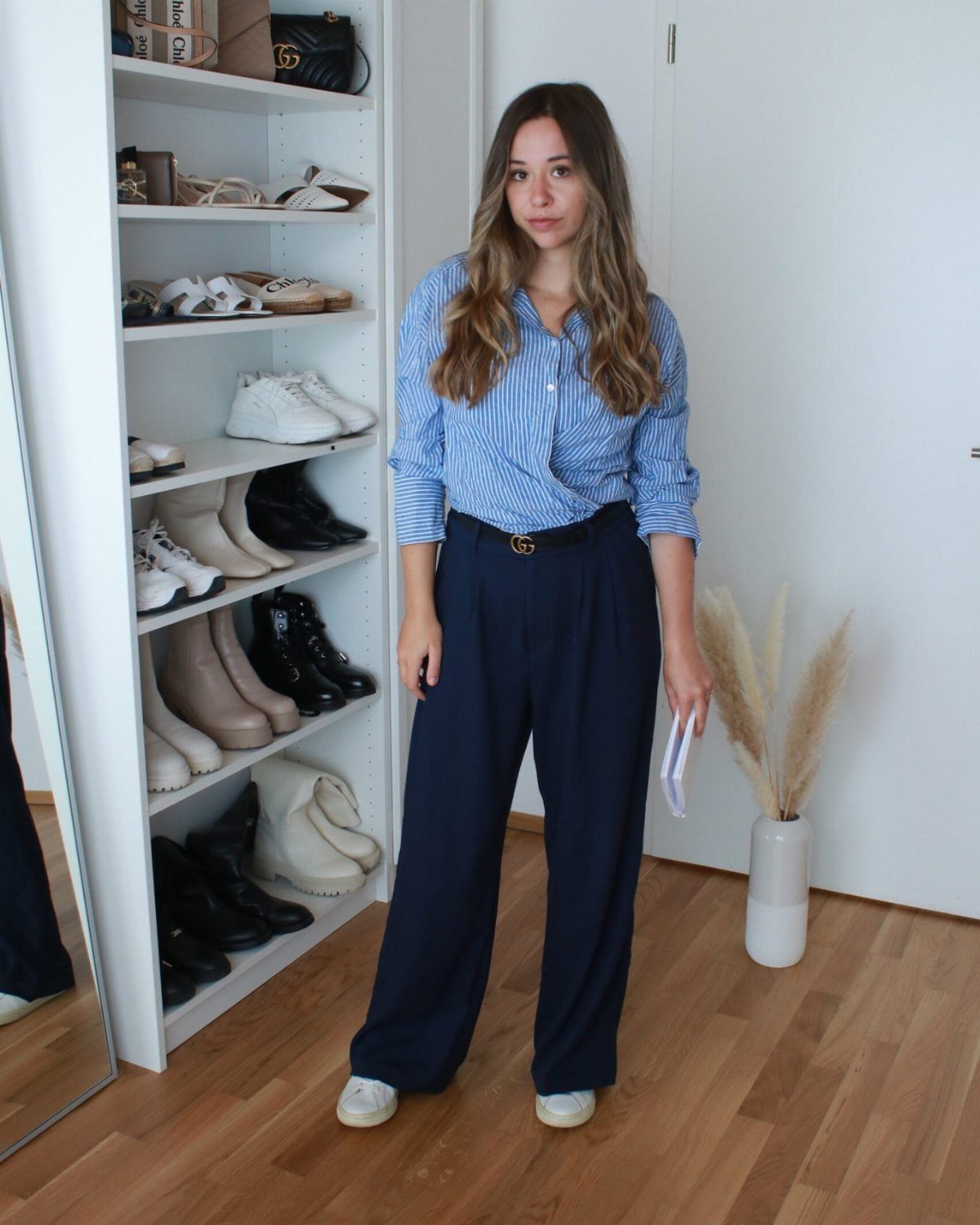
Relaxed work dressing still needs one sharp element, and wide-leg navy trousers are mine. A striped blue shirt on top keeps the palette tight, so the sneakers read as intentional rather than lazy.
White leather sneakers with clean soles are the right call here; worn canvas ones undo the effect. Trousers that hit near the ankle bone show the shoe without looking cropped.
This suits office days with a loose dress code. For client meetings, swap the sneakers for loafers and leave everything else.
5. Midi Skirt and Cashmere Sweater
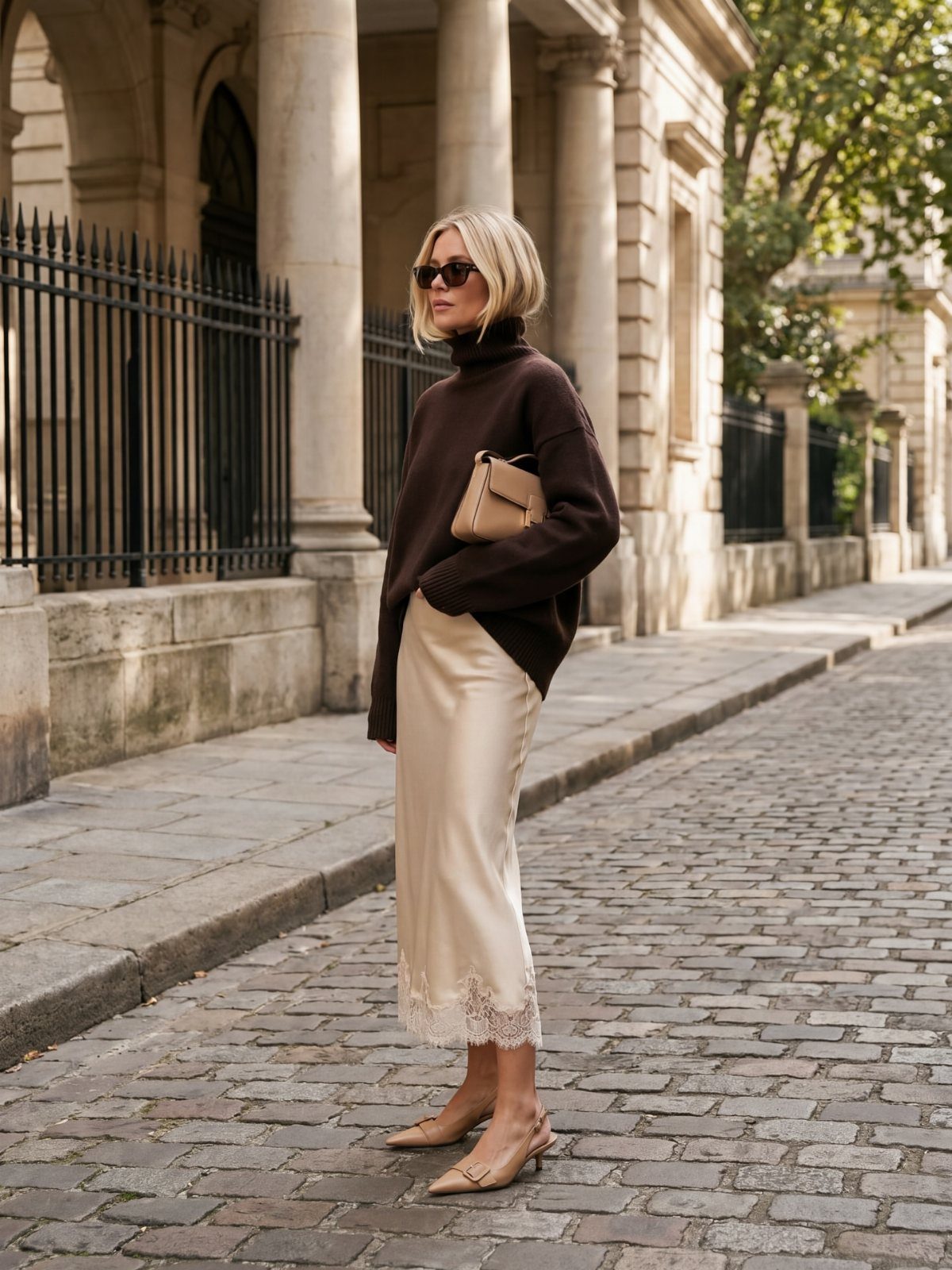
Satin skirts catch the light, so I like to pair one with something matte and soft, like a brown turtleneck. A champagne midi skirt with heels gives the outfit movement while the knit keeps it quiet enough for an office.
Choose cashmere if the budget allows; it drapes better than blends and sits smoothly at the waist. Tuck only the front hem to keep the skirt’s line clean.
Satin wrinkles at the seat, so hang the skirt after wearing and check the lining before buying.
6. Statement Dresses
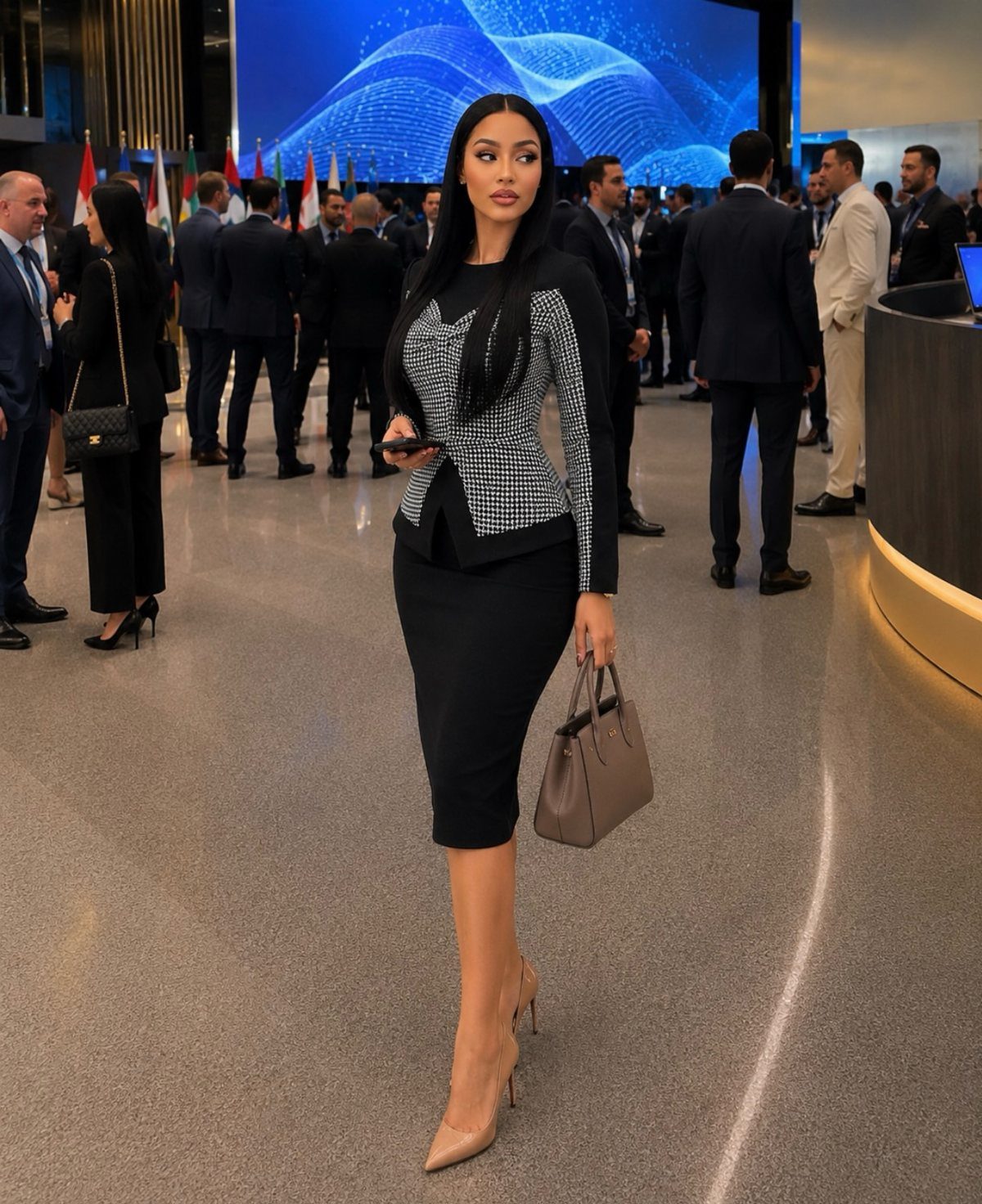
A patterned sheath dress does the work of a full outfit, which is why I like it for busy mornings. Black and white is a bold graphic choice that still stays inside professional bounds, and a grey handbag softens it.
Look for a structured fabric with a defined waist or seaming, so the print follows your shape instead of swamping it. Keep the accessories simple so the pattern stays the focus.
Heels in black or a neutral keep it polished. A plain blazer on top suits colder rooms.
7. Plum Tailored Skirt Suit
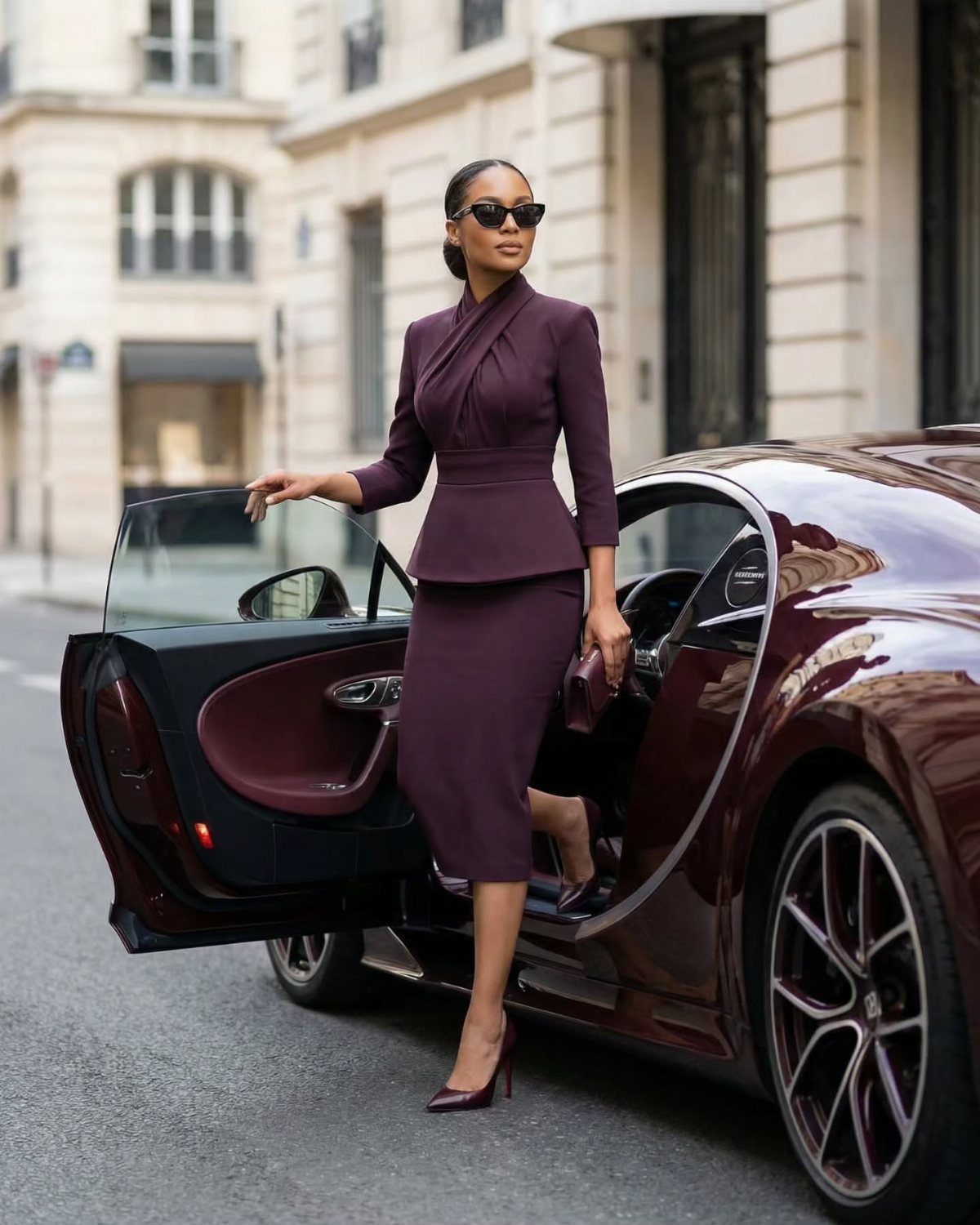
A matching plum jacket and pencil skirt is one of the few suits that feels bold without breaking any office rule. Plum is a deep, saturated color, so it reads rich and serious rather than playful.
Keep everything else quiet. Pointed heels extend the line of the skirt, and a plain top in cream or black lets the suit carry the look.
A structured blazer defines the shoulders and waist, and a pencil skirt follows the body closely, so fit matters more than usual. Have the skirt hem checked while seated; it should sit at or just below the knee.
Wear the pieces apart too: the skirt with a white button-down, the blazer over black trousers.
Choosing the Right Fit
Fit starts with the office itself. A conservative firm and a casual startup call for different cuts, so look at what the people you respect there actually wear before you buy anything.
Then check the clothes against your body. Shoulders should lie flat without pulling, and you should be able to sit, reach and walk without tugging at a waistband or hem.
Comfort counts as part of professionalism. If you fidget with a garment all day, it shows.
Business professional dressing has a reputation for being dull, but a dress code limits the pieces, not your taste. Use color, texture and the shape of your accessories to keep your own style in the outfit.
Accessorizing Work Outfits
Keep jewelry small and few: a pair of studs or a thin chain is enough. Once a necklace, earrings and bracelets all compete, the outfit looks busy, especially against a pattern.
For the bag, I choose a black leather tote with structure. It holds a laptop and papers, and it matches almost everything.
Simple slingback pumps in black finish a look without adding another detail to manage.
Accessories are also the easiest place to add interest to a quiet palette. Swap one piece, like a bag or a shoe, rather than changing everything.
Understanding Dress Codes
Read the written dress code policy before you shop, not after. If your office has one, it settles most questions about hems, shoes and denim.
If nothing is written down, ask HR or your manager, and watch what people dress like in client meetings. Dress to the more formal of what you see.
A job interview is the one day to lean conservative. Showing up in something runway-bold can work against you, so save that for after you’re hired.
When a piece leaves you unsure, leave it at home. It’s easier to dress up a notch than to recover from a misjudged outfit.
Frequently Asked Questions
What is proper business attire for women?
Business professional dress is the most conservative office standard: a suit, a skirt that sits at or just below the knee, or a sheath dress, with a plain top and closed-toe heels.
Studs, a small hoop, or a fine chain are plenty; anything that jingles when you reach for a pen is too much. A quick test is to ask whether you could wear the outfit to a job interview.
What is business casual?
Business casual sits between formal business dress and weekend clothes, leaning more toward business than casual.
One sharp piece does a lot of work, such as wide-leg navy trousers with a striped blue shirt. Clean white leather sneakers can work in a loose office, and loafers are the safer swap for client meetings.
What not to wear for business casual?
Skip leggings, yoga pants, joggers, shorts, pajamas, graphic tees, mini skirts, low-cut tops and heavily distressed or faded fabrics.
Skip anything that exposes your toes or slaps against your heel, which rules out most summer sandals and every pair of flip-flops. Worn canvas sneakers also undo an otherwise polished look, so choose clean leather if sneakers are allowed.
How do I know what dress code my office expects?
Before you buy anything, find the written dress code, because it usually answers the questions about hem length, shoe style and whether denim is allowed.
Without a written policy, a quick question to HR or your manager works, and so does a look at what the senior people wear on client days.
Then dress to the more formal of what you see, because dressing up a notch is easier than recovering from a misjudged outfit.