What decides your outfit is the court itself: a strict courtroom wants the suit or trousers route, while one that allows "casual formal" may accept a polished blouse with dark jeans that have no rips, holes or cutoff hems.
The 6 looks run from the Tailored Blazer and Matching Trousers, which reads as a suit, to the Belted Blouse and Wide-Leg Pants at the relaxed end.
1. Feminine Blouse and Skirt
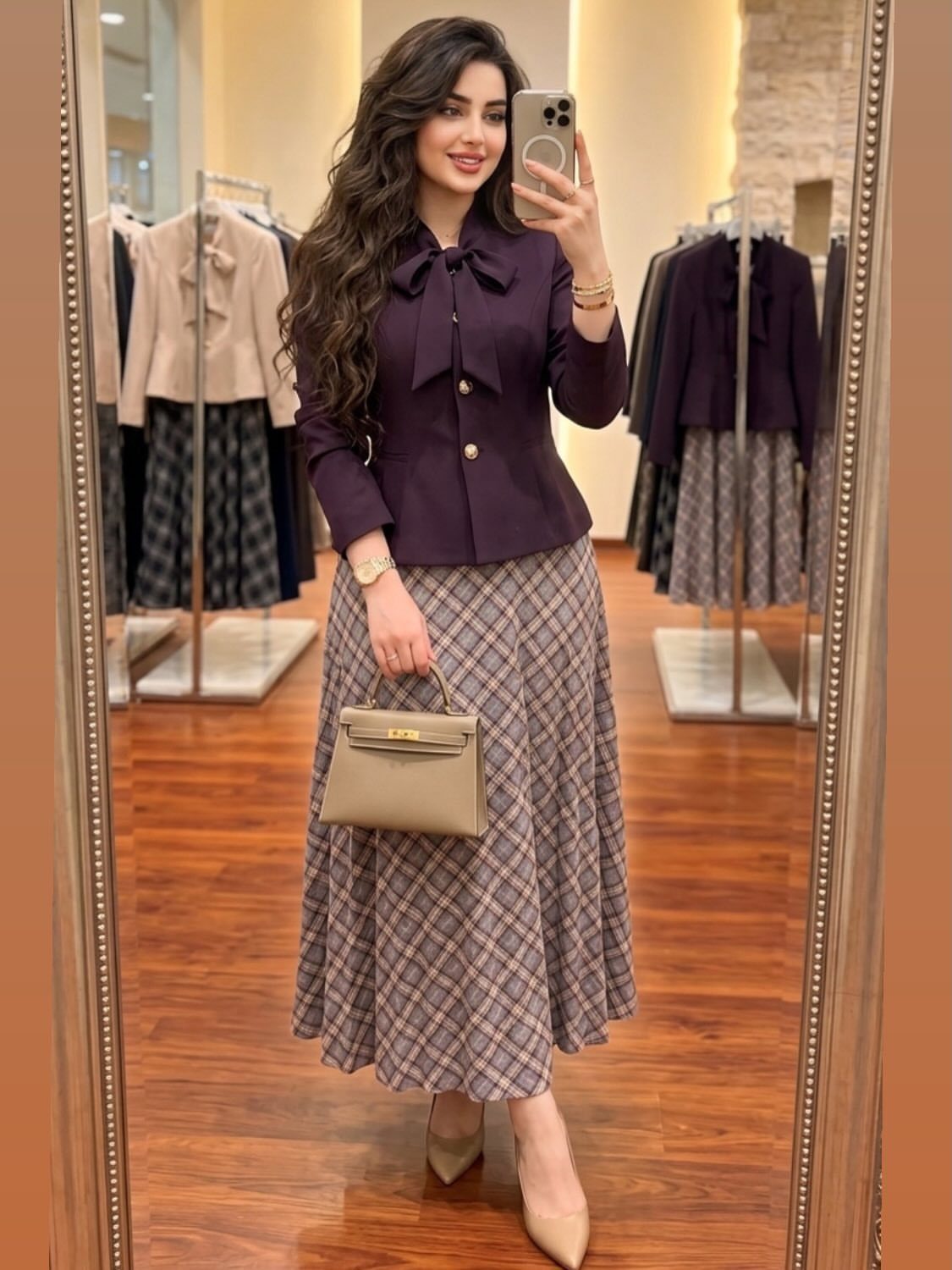
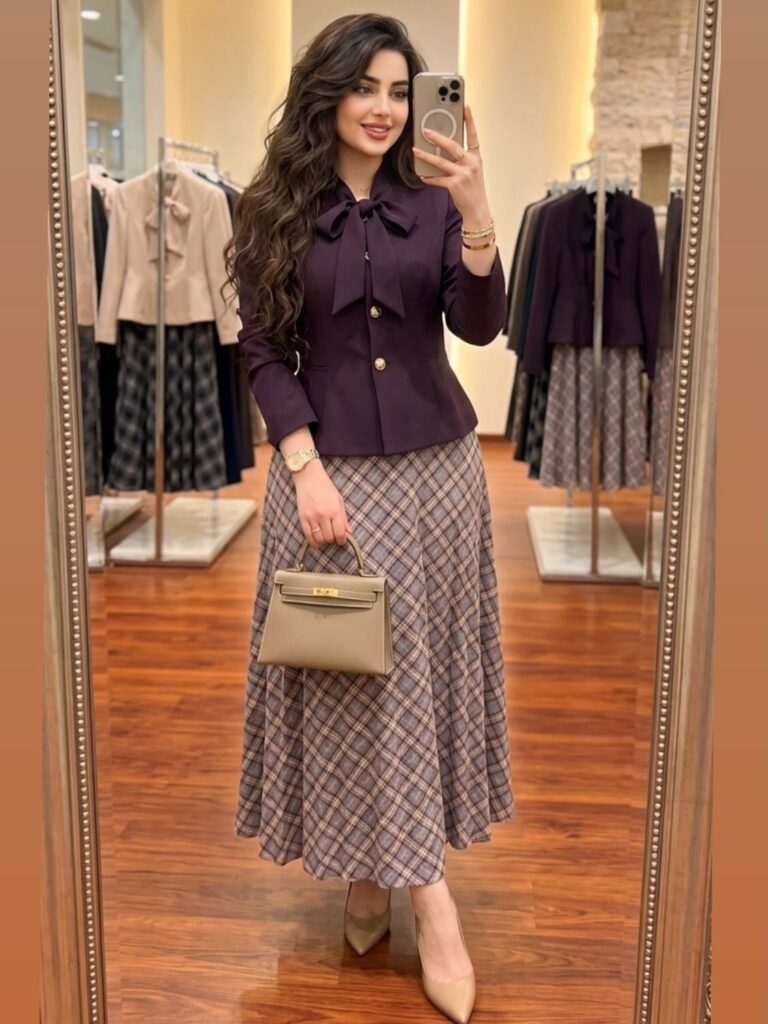
A bow-tie blouse with a plaid midi skirt is the softest way I know to dress for court without looking like you borrowed a costume. The bow gives you personality at the neckline, so the rest can stay quiet.
Keep the skirt at midi length and pick a blouse with a modest neckline.
Match one color in the plaid to the blouse, as purple does here, so the two read as a set. A small structured handbag finishes it.
2. Conservative Casual Attire
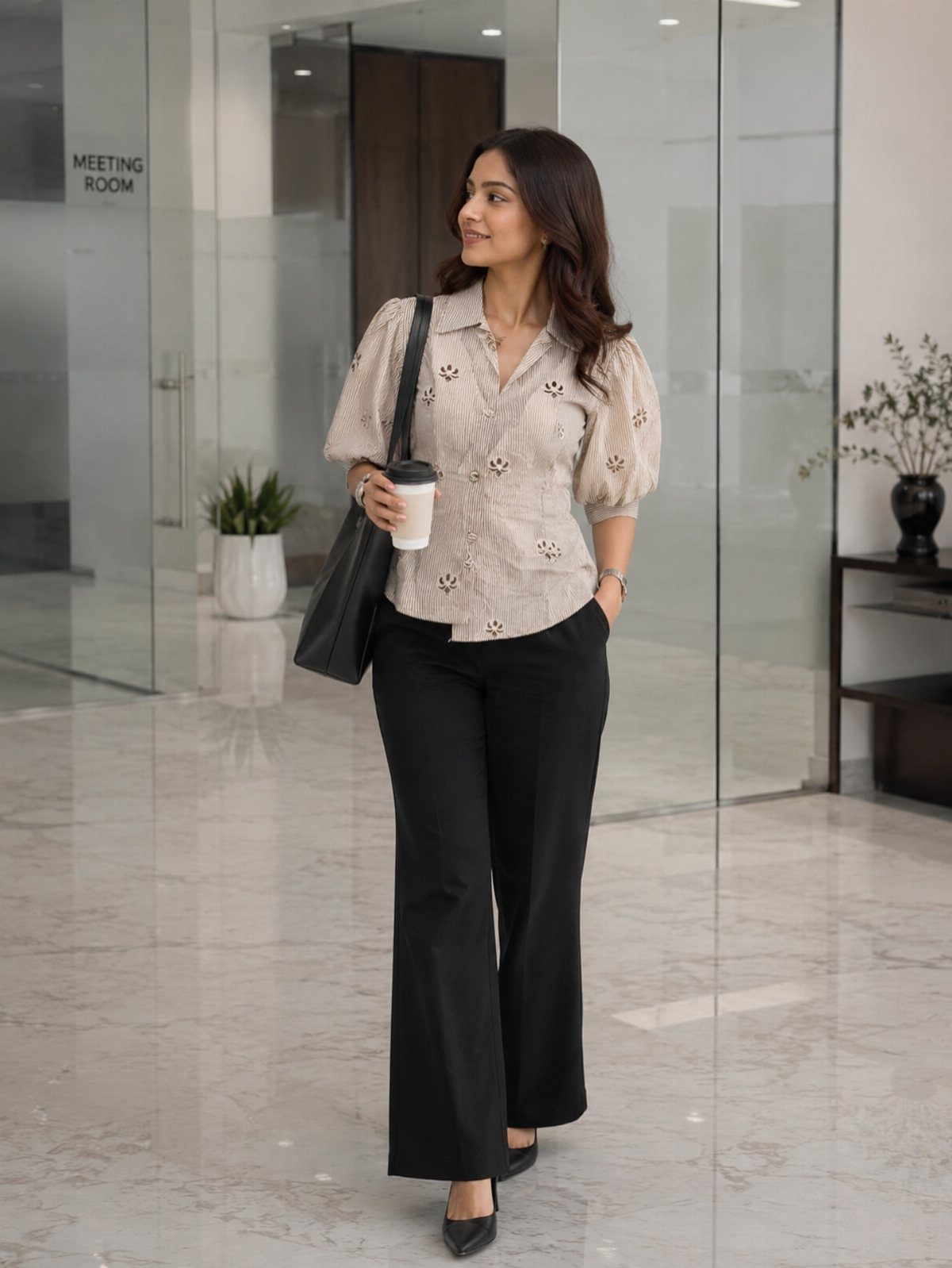
Black wide-leg trousers do most of the work in a conservative casual outfit, and a patterned blouse stops them from feeling stiff. Embroidery or a subtle print adds interest without raising the volume.
I would choose a blouse in a light, neutral tone with sleeves that cover the shoulders, then keep everything else plain.
Trousers that skim the shoe are easier to sit in for hours than anything snug. Comfort and formality really do share space in this outfit.
3. Tailored Blazer and Matching Trousers
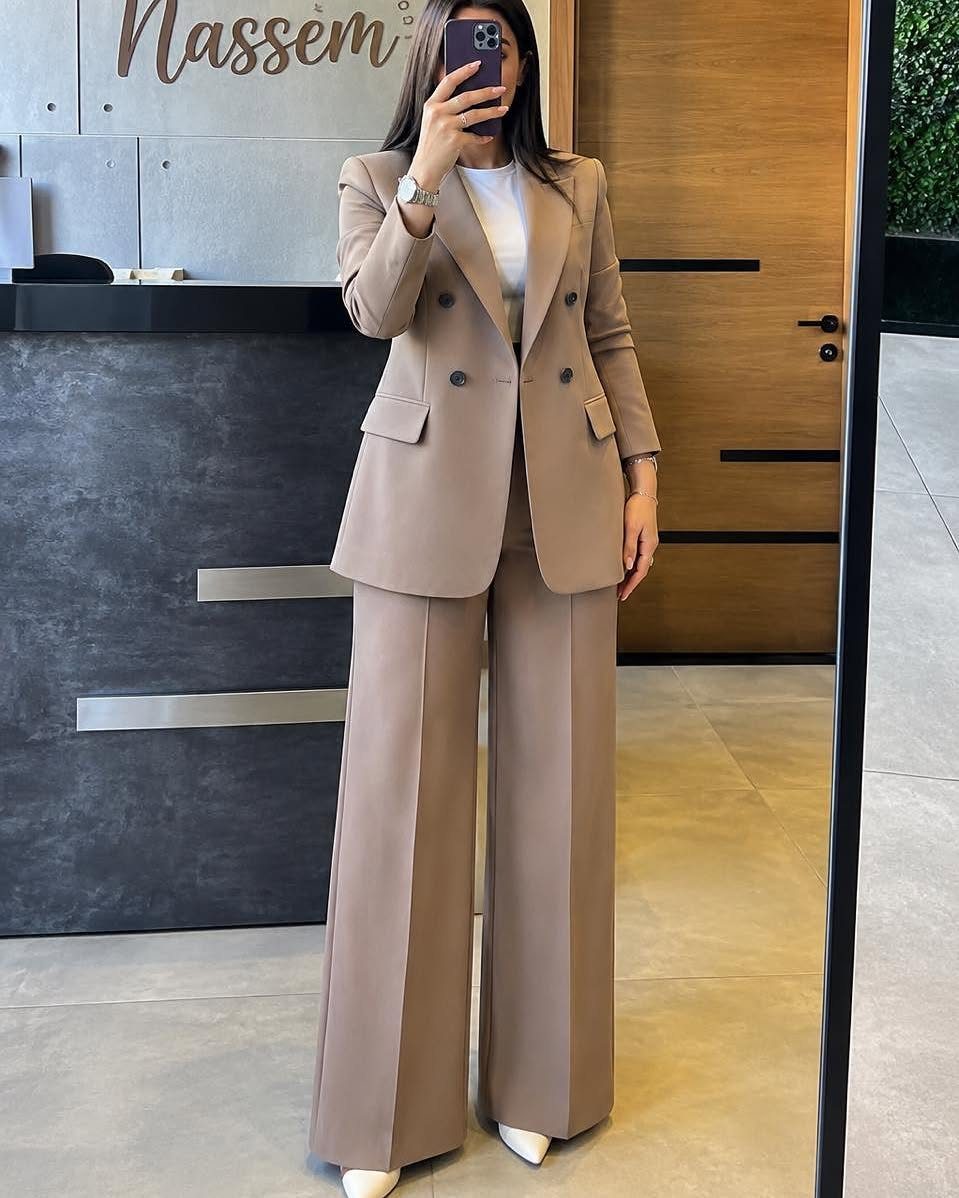
Matching tan blazer and wide-leg trousers read as a suit, which is exactly why this is the safest option on the list. A plain white top underneath lets the blazer and trousers stay clean and uncluttered.
Buy the set in one piece if you can, since two tans from different shops rarely match.
A suit also splits well: the blazer works over dresses and the trousers work with a simple sweater, so it earns its price across several outfits.
4. Blazer and Maxi Dress
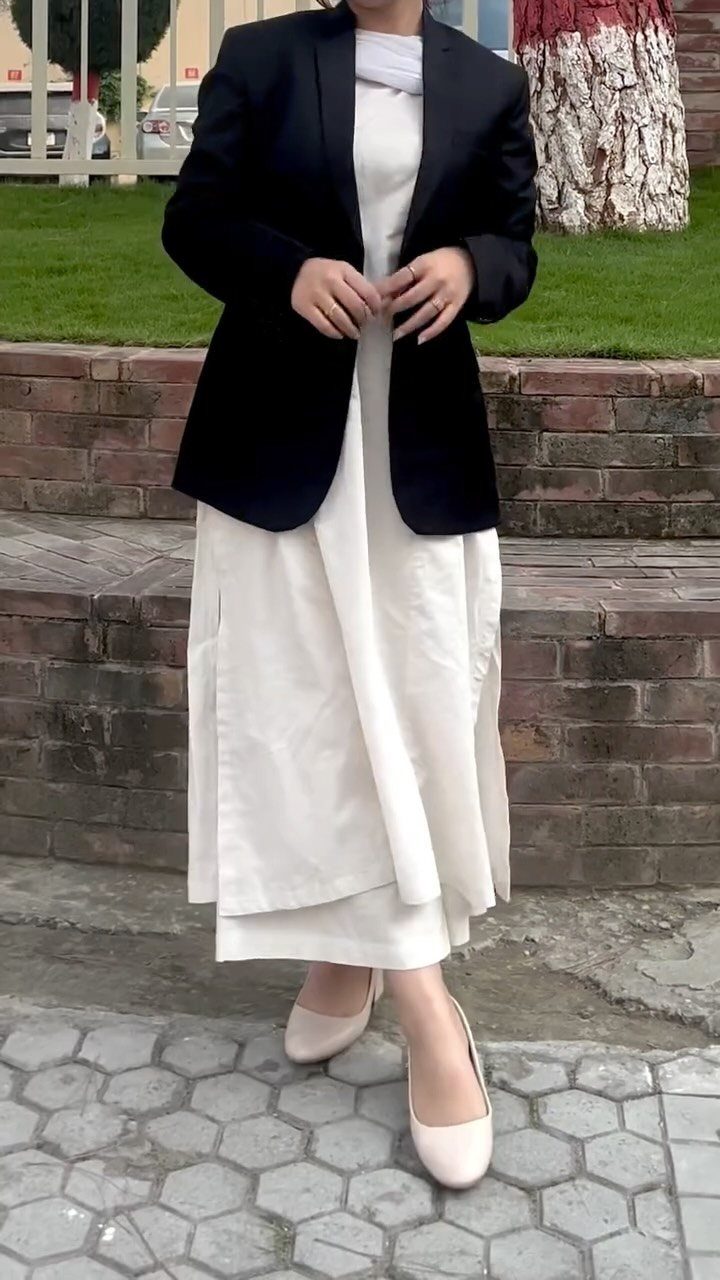
Long white maxi dresses can feel too relaxed for a formal room, and a black tailored blazer fixes that in one move. The dark structure over the pale column gives the outfit a clear line.
Choose a maxi with sleeves or a higher neckline, and keep the blazer buttoned or closed at the waist.
Pointed-toe flats, like the beige pair here, lengthen the leg and stay easy through long waits. Check that the hem clears the floor.
5. Blazer with Non-Matching Trousers
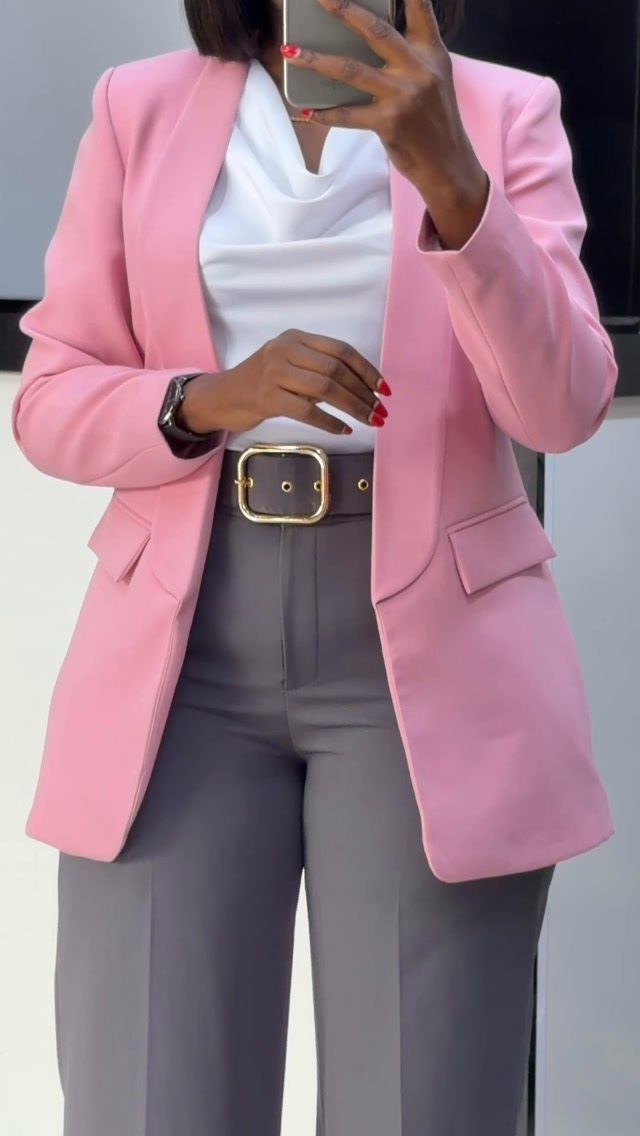
Mixing a soft pink blazer with grey trousers gives you color without the matched-suit look. A white draped top between them keeps the two from clashing.
Belted, high-waisted trousers define the waist, so the blazer can sit open.
I prefer a muted pink like this one over bright shades; it still looks serious. If you own grey trousers already, this is the cheapest way to try the idea.
6. Belted Blouse and Wide-Leg Pants
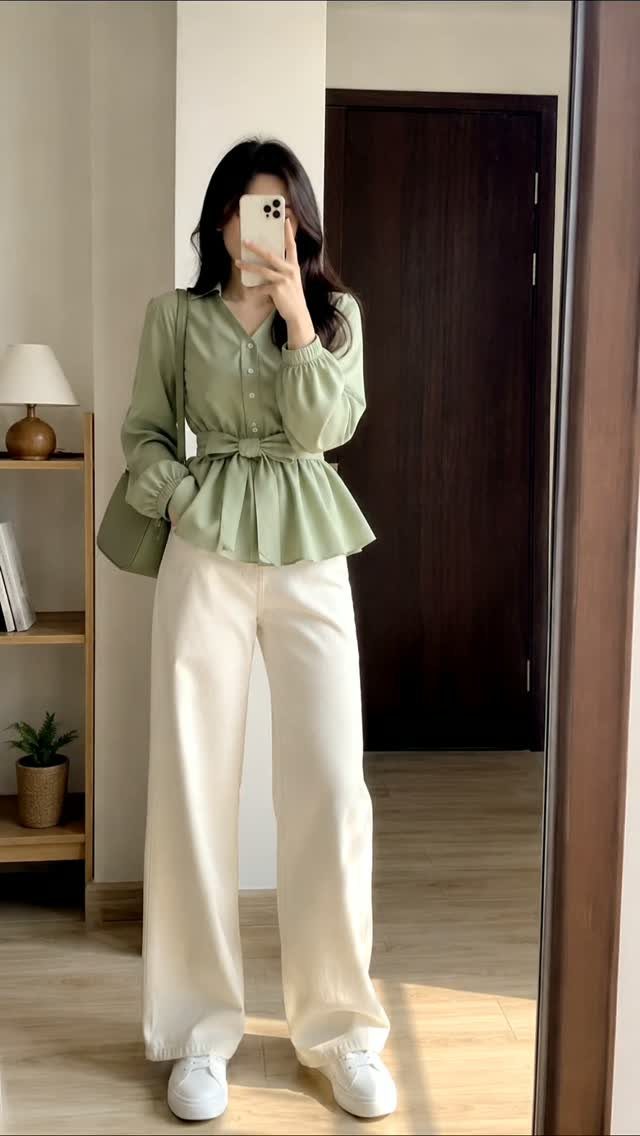
Sage green and white make a calm pairing, and a belt at the waist stops a long-sleeve blouse from looking shapeless over wide-leg pants. The sleeves also keep the shoulders and arms covered.
White trousers show every mark, so choose a thick, opaque fabric and try them in daylight.
The sneakers here are the casual end of the idea. For a formal courtroom, I would swap in flats or loafers.
Courtroom Dress Code
Court is a formal setting, so the safest wardrobe is conservative and in neutral colors: gray, navy or beige. Pantsuits, skirt suits and dresses all work.
A hem that lands at the knee or a bit below it keeps you covered when you sit, and sitting is most of the day in a courtroom.
Choose trousers with a tailored cut that skims the body, since anything snug looks wrong under courtroom lighting.
Solid blouses with a higher neckline are the safest base, and a pattern works only if it stays quiet, like a thin pinstripe.
Comfort counts too.
Courtrooms vary in temperature, so skip anything heavy that can make you overheat, and avoid clothes that constrict you during a long wait. A sweater or blazer layers on easily if the room runs cold.
Some courts allow "casual formal," which usually means a polished blouse with dark jeans that have no rips, holes or cutoff hems; check the court’s own rules first.
Because rules differ, the suit or trousers route is the lower-risk pick if you are unsure.
Grooming and Presentation
Hair needs no particular style, only a presentable one: clean, brushed and tidy.
Skip elaborate styles and bright accessories. You want the judge looking at you, not at a hair clip.
If you wear makeup daily, keep it to a natural, even finish.
Colored shadow, heavy liner and dramatic false lashes all draw the wrong kind of attention. Go light on perfume too.
Keep nails clean, trimmed and in a conservative shape and shade. A neutral polish or a plain, clean bare nail is enough.
What Not to Wear
Anything revealing or tight is out: low-cut tops, short skirts or dresses, tops that show your midriff, and clothes that cling.
Loud prints, bright colors, and anything with a graphic or logo should stay in the closet too. Skip sweatpants, athletic wear and any piece that’s ripped or frayed.
Shoes matter. Skip flip-flops, sandals and sneakers, and avoid stilettos or any heel too tall to walk in comfortably.
Accessories can work against you as well.
Large, clunky or noisy jewelry distracts in a quiet room. Hats, anything covering your face and sunglasses should be left off.
Denim is the one gray area. Some courts accept dark jeans with no holes, but others treat denim as too casual, so check first or choose trousers.
Frequently Asked Questions
What are some casual outfits I can wear to court?
A tailored blazer with matching tan wide-leg trousers and a plain white top is the safest pick, since it reads as a suit.
Dark, clean-hemmed jeans under a polished blouse can pass in some courthouses, though plenty of them still treat any denim as off limits.
A bow-tie blouse over a plaid midi skirt works too, as long as the neckline sits modestly and the skirt covers the knee.
What colors make you look innocent in court?
Gray, navy and beige read as calm and serious, which is the impression a courtroom rewards.
Soft shades like a muted pink can still look credible, but bright colors and loud prints pull attention away from you. The aim is to keep the focus on your case rather than your clothes.
What items should not be worn to court?
Low-cut tops, short skirts, bare midriffs and anything clingy should stay home, since each one draws the wrong kind of attention.
Also leave out loud prints, bright colors, graphics or logos, sweatpants, athletic wear and anything ripped or frayed. Flip-flops, sandals, sneakers, very tall heels, noisy jewelry, hats and sunglasses should stay home too.
Can I wear jeans to court?
Sometimes. Some courts accept dark jeans with no rips, holes or cutoff hems when paired with a polished blouse, while others treat denim as too casual.
Read the court’s posted dress code before you go, and if it says nothing clear, trousers are the safer pick.