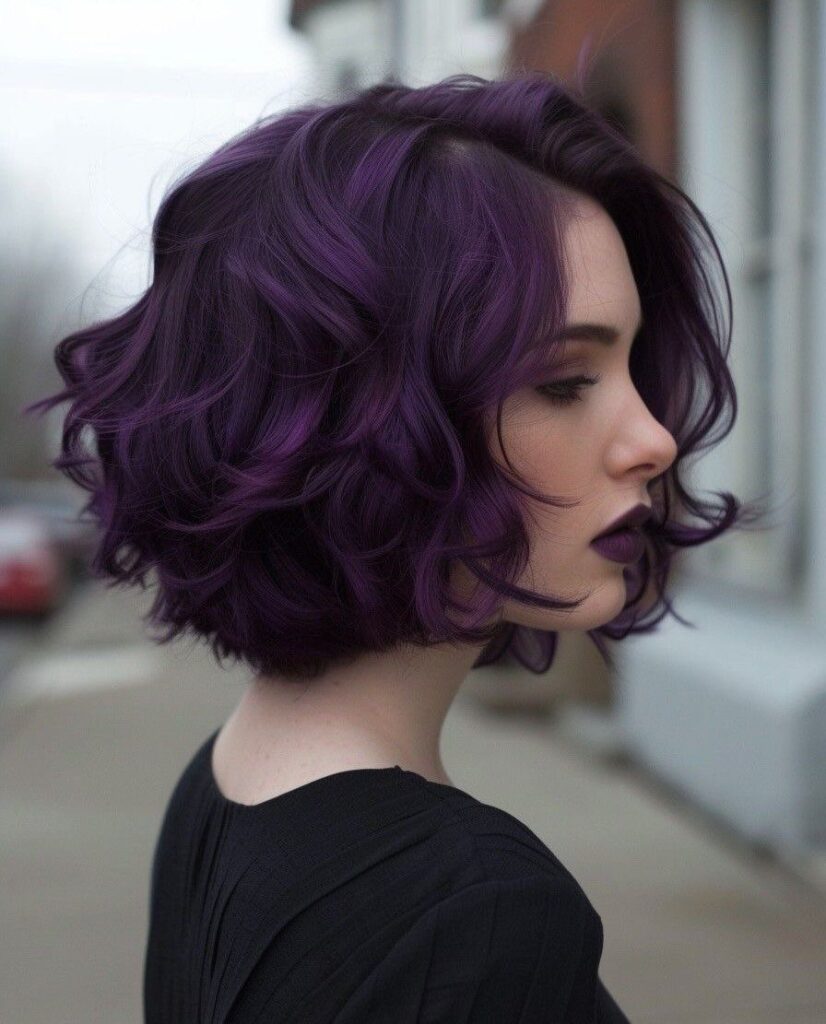
Texture decides which of these looks is yours: straight hair turns dark violet into one band of polished shine, waves and curls break it into plum and near-black, and the two lowest-upkeep options are the roots with black ends and the bangs.
The range runs from a low-effort fade with black ends to a straight, glossy finish where split ends and uneven color show instantly.
Choose a dark violet look based on the hair you have right now, including its texture, length and any existing color, since that decides how much work the shade will take.
1. Dark Violet Hair with Bangs
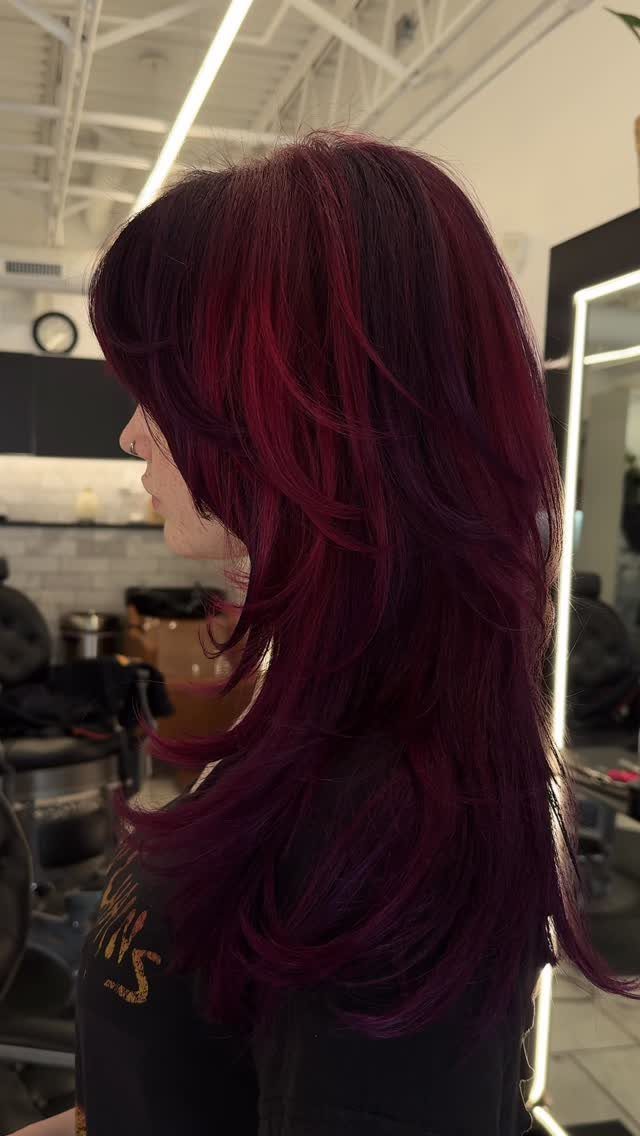
Long layers with sweeping bangs give dark violet something to do. The color reads deepest at the length and lightens slightly where the bangs catch the light, so the fringe frames the face without any extra dye.
I would ask the stylist to cut the bangs before the color is finalized, since a fresh cut shows where the shade needs a gloss. Side-swept bangs grow out gracefully, which suits anyone who dislikes frequent trims.
Expect to maintain the color more often than the cut.
2. Long Wavy Dark Violet Hair
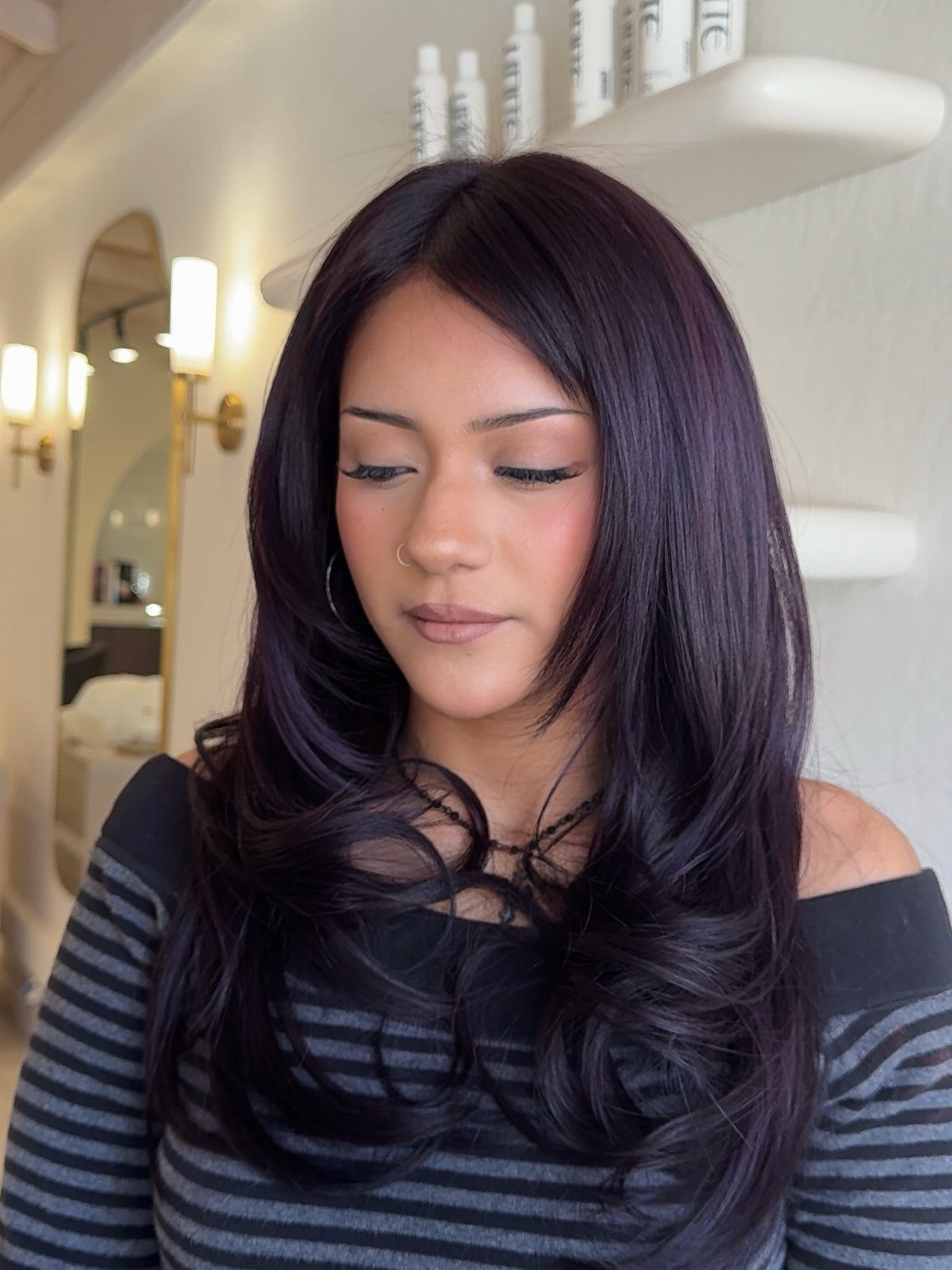
Waves bring out the best in a deep violet, because every bend shows a slightly different tone, from near-black in the shadows to plum on the curve.
That built-in variation means the color looks dimensional even when it is one solid shade.
A loose wave set with a larger barrel is the version I would choose for daily wear.
Use a heat protectant, since dyed hair dries out faster. A striped or neutral top keeps attention on the hair.
3. Straight Glossy Dark Violet Hair
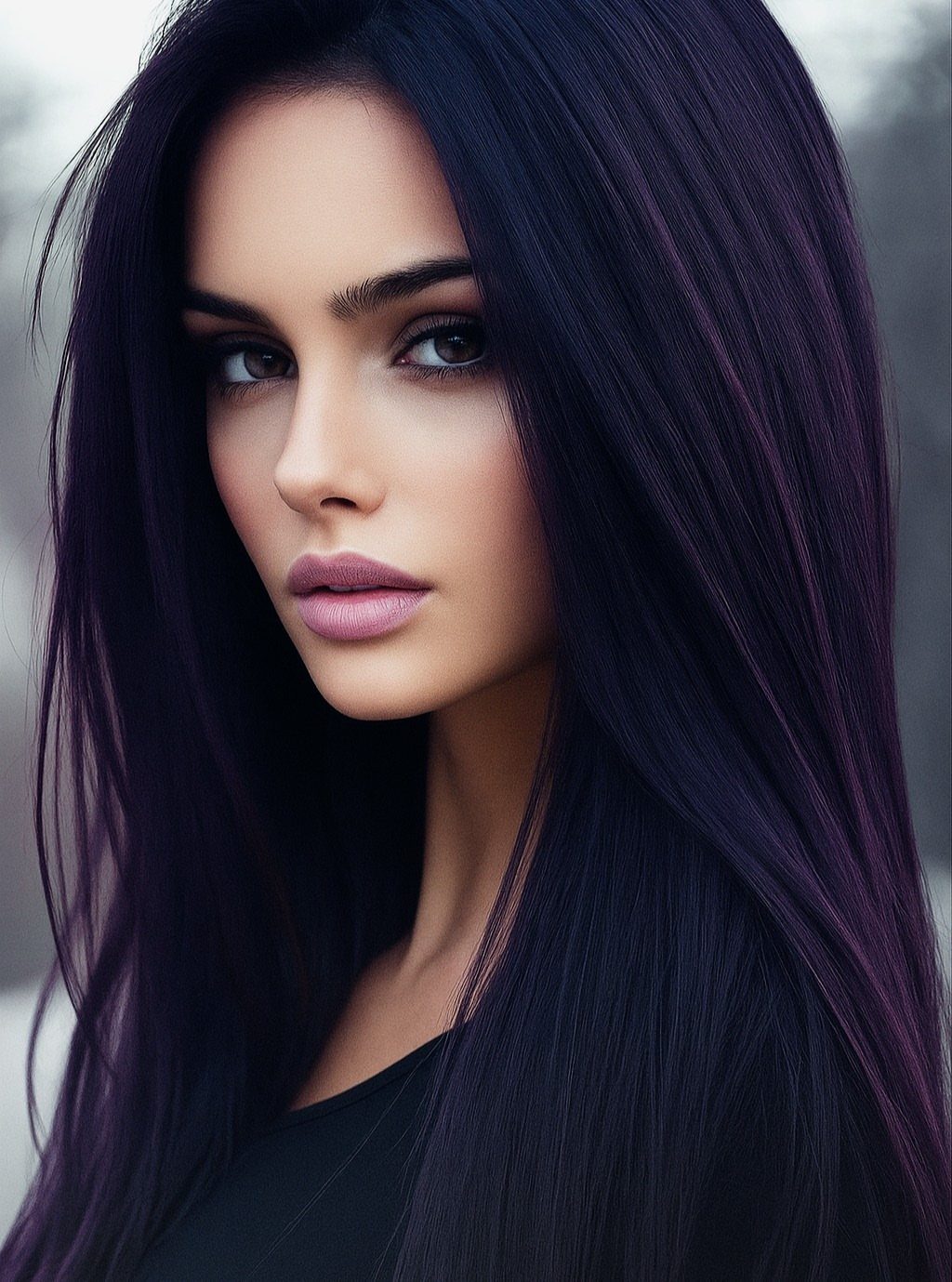
On straight hair, a violet-purple shade reflects the most light, so the color reads almost like polished glass. Without curl to break up the surface, the color reflects light in one clean band, so shine does most of the work.
A gloss treatment and a light smoothing serum matter more here than extra dye. Pink or berry lip colors sit well beside this shade.
The trade-off: straight hair shows uneven color and split ends instantly, so keep trims regular.
4. Dark Violet Roots with Black Ends
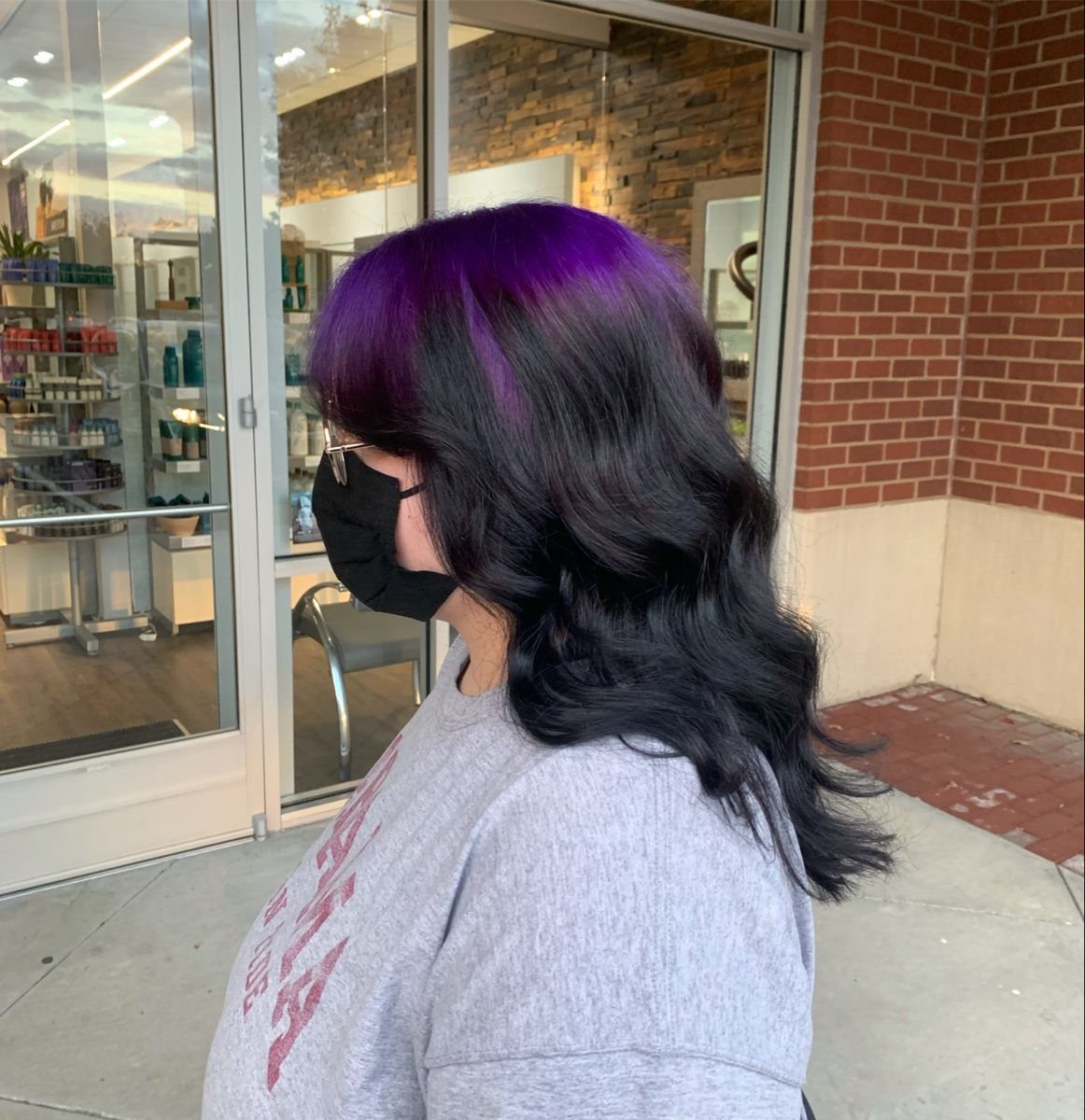
Dark violet at the roots melting into black ends is the lowest-effort way to wear the color.
With violet at the roots and black through the ends, any regrowth will show as a line near the scalp, so this look needs more frequent root touch-ups than the reverse.
Ask the colorist for a soft, blurred transition instead of a sharp break. Waves help hide the blend, which is why I like this look on a loose bend.
It suits anyone who wants violet near the face but a more neutral overall look.
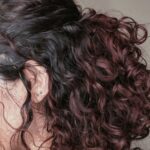
5. Curly Dark Violet Hair
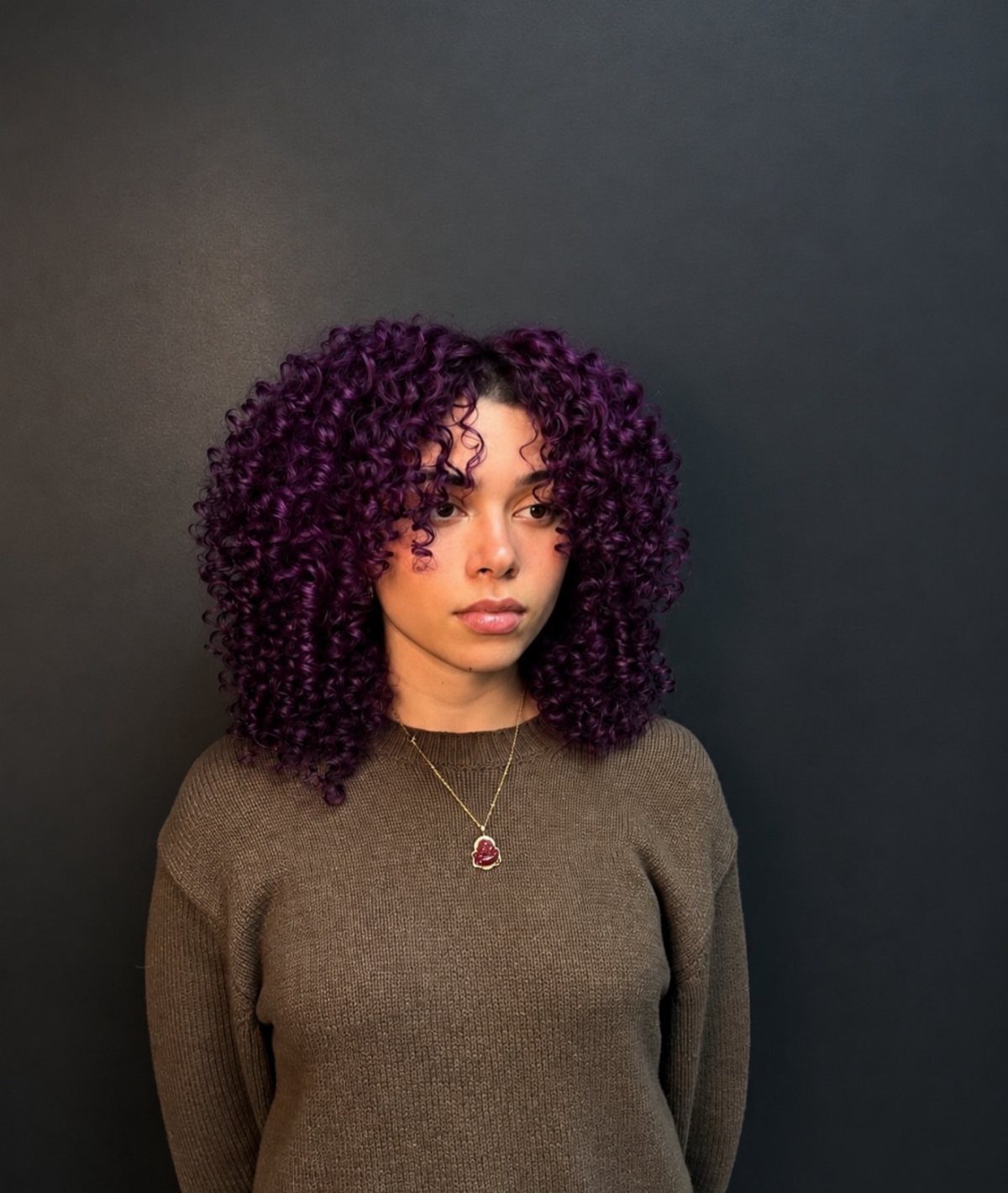
Curls give dark violet real depth, since the color pools in the coils and shifts from plum to nearly black as the hair moves. Volume does the styling for you.
Curly hair tends to run dry, and dye can add to that, so I would pair the color with a deep conditioner and a leave-in cream. Define curls while the hair is damp and avoid brushing once dry.
Warm browns and gold jewelry flatter this shade nicely.
Frequently Asked Questions
Can I dye purple over black hair?
Dark violet is the shade most likely to show on black hair without extra work, because it sits close to black in depth.
In low light it reads near-black, and on a curve or in the sun it shifts to plum.
A brighter violet would likely need more prep, and I can’t give you a lift timeline from what I know, so ask a colorist to confirm for your hair.
What hair color suits dark skin tone females?
Dark violet is a good option, especially with warm accents nearby.
On curly hair, deep violet reads almost black in shade and turns plum where the light hits the curls, and gold jewelry and warm brown tones nearby make that shift look richer on dark skin.
That range of tone gives depth without looking flat.
What is the 2 rarest hair color?
I can’t rank the rarest hair colors, because that isn’t something I’ve researched.
For violet, the practical point is that a dark shade fits into daily life without much fuss, since it reads as a deep, moody neutral at work and on weekends.